

The world’s richest people aren’t always building apps or chasing disruption. Here are three stories that reveal how unglamorous industries keep minting billionaires.
If you had to guess where the majority of today’s billionaires are being made, you’d probably point to Silicon Valley, Shenzhen, or some airless room full of servers humming away on renewable energy. We’ve gotten very used to the idea that tech founders dominate the rich lists these days, usually accompanied by language about disruption, scale, and changing the world via algorithm.
But there’s another kind of billionaire building wealth far from the spotlight. These fortunes are being made in industries that are often described (perhaps a little dismissively) as “boring”. These aren’t the kinds of businesses that trend on X, yet they seem to print cash with a reliability that most tech startups would kill for. And, in many cases, they’ve been doing so for decades.
The common thread isn’t glamour or innovation in the Silicon Valley sense. It’s patience. Infrastructure. Control. And a deep understanding of problems that most people don’t find interesting enough to try and solve.
Advertising that throws its wait around
Jean-Claude Decaux was the son of a shoe salesman, which feels like the sort of detail biographers include when they’re hinting at a rags-to-riches origin story. In Decaux’s case, it mattered. At 18, he got into an argument with his father about how the family shoe store’s window display should look. Instead of backing down, he started his own business making roadside billboards.
That first venture didn’t last. In 1963, French legislation clamped down on billboard advertising, effectively killing the business overnight. Many people would have taken the loss as a sign to try something else. Decaux treated it as a design problem. If you couldn’t put advertising on roads, where could you put it?

His answer arrived in 1964. Decaux approached the city of Lyon with a proposal that now seems obvious, but at the time was quietly radical: he would build and maintain bus shelters at his own cost. In return, he’d be allowed to sell advertising space on them. And so, JCDecaux was born.
If you’re finding it hard to believe that bus shelters were only invented in the 1960s (yes, before that people really just stood outside in the elements, waiting for their bus), it just shows how well Decaux’s invention cemented itself into our daily lives. Decaux’s idea was a win-win: the city got clean, well-lit shelters without spending taxpayer money, advertisers got captive audiences, and Decaux got a business model that was hard to copy and even harder to dislodge.
This was the invention of “street furniture” advertising: bus shelters, kiosks, public toilets, an approach that later expanded into airports and transit hubs. It wasn’t flashy, but it was embedded. Once a city signed a long-term contract, JCDecaux became part of the urban fabric.
By the time Jean-Claude Decaux died in 2016, his net worth was estimated at around $7 billion. JCDecaux had grown into the largest outdoor advertising company in the world, with ads on roughly 140,000 bus stops and 145 airports. In 2023, the company reported revenue of €3.57 billion and net income of just over €209 million.
The business is still majority-owned by the Decaux family. Two of Jean-Claude’s sons, Jean-François and Jean-Charles, alternate annually as CEOs. We have to wonder whether son number three (presumably also a Jean-something) followed in his father’s footsteps and got into a fight with his old man before he could take over the family business!
The world’s richest farmer
If outdoor advertising sounds a bit dull, pig farming sounds even less promising as a route to billionaire status. And yet Qin Yinglin, chairman and president of Muyuan Foodstuff, is the richest farmer on Earth.
Qin was born in 1965 in the rural Henan province and grew up poor. When he was in high school, his father scraped together enough money to buy 20 pigs. All but one died. For most families, that would have been the end of the experiment. For Qin, it became the beginning of an obsession.
He decided to study pig farming properly, enrolling at Henan Agricultural University to study animal husbandry. After graduating, he took a stable job at a state-owned food company, an “iron rice bowl” position that promised security for life. Despite the promise of stability, he quit after three years. In 1992, Qin and his wife, Qian Ying, who had trained as a veterinarian, moved back to his hometown and started raising pigs themselves. They began with 22. Within two years, they had 2,000. By 1997, that number had grown to 10,000.
In 2000, Qin founded what would become Muyuan Foodstuff. Unlike many competitors, Muyuan invested heavily in owning and controlling its own facilities. That decision would prove decisive in the long run. When African swine fever tore through China’s pork industry in 2019, killing millions of pigs and driving prices through the roof, weaker operators collapsed. Muyuan survived (and thrived) because it controlled its breeding, feeding, and processing environments more tightly than most.
Qin was blunt about the situation. The epidemic, he said, brought “both benefit and harm”. It would wipe out small players, but it would also create opportunities for stronger enterprises to grow. Muyuan increased automation, expanded capacity, and consolidated its position. By 2023, the company was slaughtering around 65 million pigs a year. Qin’s net worth goes up and down with the pork price, but is currently sitting at a tidy $21.9 billion.
There’s nothing romantic about industrial pig farming. But pork is China’s most consumed meat, which means that demand is both enormous and predictable. Qin didn’t need to invent a new appetite. He just needed to build the infrastructure to serve an existing one better than anyone else.
A fortune in the footwell
David MacNeil’s moment of inspiration came not in a lab or a boardroom, but in the footwell of a rental car in Scotland. In 1989, MacNeil noticed that the thick rubber floor mats in his rental car were far superior to anything available in the United States. They had raised lips to trap water and debris. They were practical. They just worked.
Unable to shake the idea, MacNeil tracked down the English manufacturer of the floor mat that impressed him so much and imported a container of them to the US, financing the deal by taking out a second mortgage on his house. He started selling them from his home in Clarendon Hills, Illinois, answering customer calls himself, sometimes at three in the morning.
It wasn’t flashy, but this is how WeatherTech was born.
At first, MacNeil imported products. But soon he became convinced that he could make better ones himself, and that they should be manufactured in the US. In 2007, he moved production entirely to America, opening facilities around Chicago and building a tightly controlled manufacturing operation.
Today, WeatherTech is a privately held company, 100% owned by MacNeil. It produces not just floor mats, but cargo liners, window deflectors, car covers, and a wide range of automotive accessories. Nearly all of its products are made in the US. Much of its plastic waste is recycled on-site. The company employs around 1,800 people.
MacNeil himself is worth around $2 billion. He’s perhaps best known in popular culture for paying $70 million for a Ferrari 250 GTO in 2018, setting a record for the most expensive car ever sold. It’s a suitably extravagant footnote to a fortune built on something most people never think about until it’s muddy.
Why boring works
These stories don’t follow the familiar tech arc. There are no unicorn valuations, no fevered rush to scale, no dramatic exits timed to the quarter.
What they share instead is a devotion to the ordinary. Shelter. Food. Cleanliness. The unchanging backdrops of daily life. The things we only notice when they fail. Each of these three founders understood that real power lies in what people rely on without thinking. So they built businesses that were not just successful, but inevitable – hard to copy, harder to remove.
We’re told that innovation means moving fast and breaking things. But there’s another kind that moves slowly and fixes them. That embeds itself so deeply into everyday life that it becomes invisible.
And invisibility, it turns out, is a very good place to hide a billion-dollar business.
About the author: Dominique Olivier
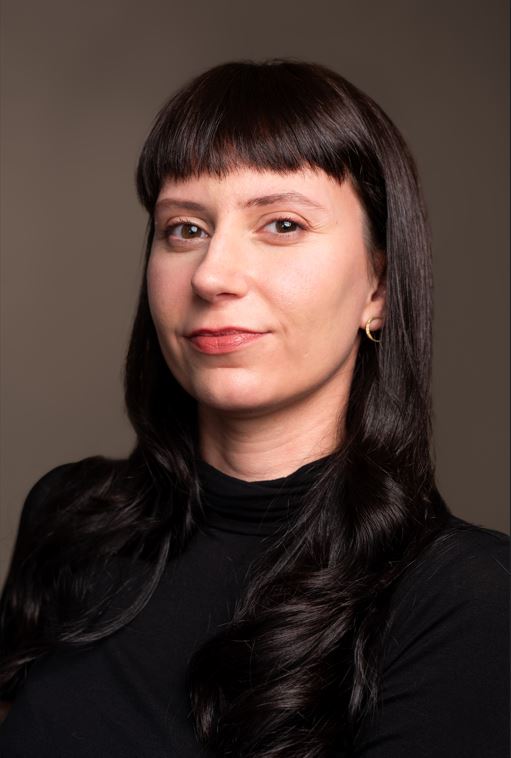
Dominique Olivier is the founder of human.writer, where she uses her love of storytelling and ideation to help brands solve problems.
She is a weekly columnist in Ghost Mail and collaborates with The Finance Ghost on Ghost Mail Weekender, a Sunday publication designed to help you be more interesting. She now also writes a regular column for Daily Maverick.
Dominique can be reached on LinkedIn here.


Lovely story!
The third Decaux son is indeed Jean-Sébastien and he is also in the family business 😊 I find the age spread of the sons interesting: 66, 56 and 49. Even Jean-Claude’s granddaughter joined the ranks in 2013. We’ll see if the business can make it past the third generation as per the myth 😅