
A now-viral comment from actor Timothée Chalamet reignited an old cultural debate: do classical art forms like opera and ballet still matter?
Earlier this week, my social media feeds inexplicably exploded with clips of famous actors doing ballet – from pre-Spiderman Tom Holland in rehearsal for Billy Elliott, to Patrick Swayze and his seemingly gravity-defying jumps. While this was a refreshing change of pace from the usual mixture of American politics and AI doomsday theories that populate my feed, I knew immediately that there was nothing random about this algorithm shift.
People were deliberately seeking out and posting these videos, some of which were decades old. They were making a point, and that could only mean one thing. Somewhere, a person of influence had said something controversial, and now the arts community was up in arms.
It didn’t take me long to track down the culprit: this unexpected cultural debate was sparked by an offhand remark from Dune star Timothée Chalamet.
Foot-in-mouth
The discussion – public and filmed – was about the future of cinema. Chalamet (who is currently hoping to get the Oscar nod for his latest film, Marty Supreme), was explaining why he feels protective of the medium he works in and why he wants to keep films culturally relevant in an era when audiences have more entertainment options than ever.
For some reason, he decided to make that point by saying this:
“I don’t want to be working in ballet, or opera, or things where it’s like, ‘hey, keep this thing alive, even though like no one cares about this anymore’. All respect to the ballet and opera people. I just lost 14 cents in viewership.”
Perhaps Chalamet merely meant to emphasise his point about cinema’s continuing popularity. But once the clip began circulating online, the reaction was swift. Opera houses, ballet companies and performers pointed out (sometimes politely, sometimes less so) that the art forms in question have survived centuries of social change, global wars and technological revolutions.
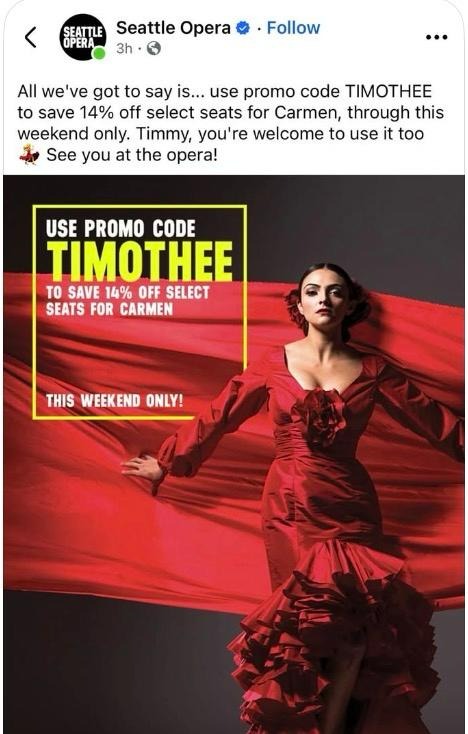
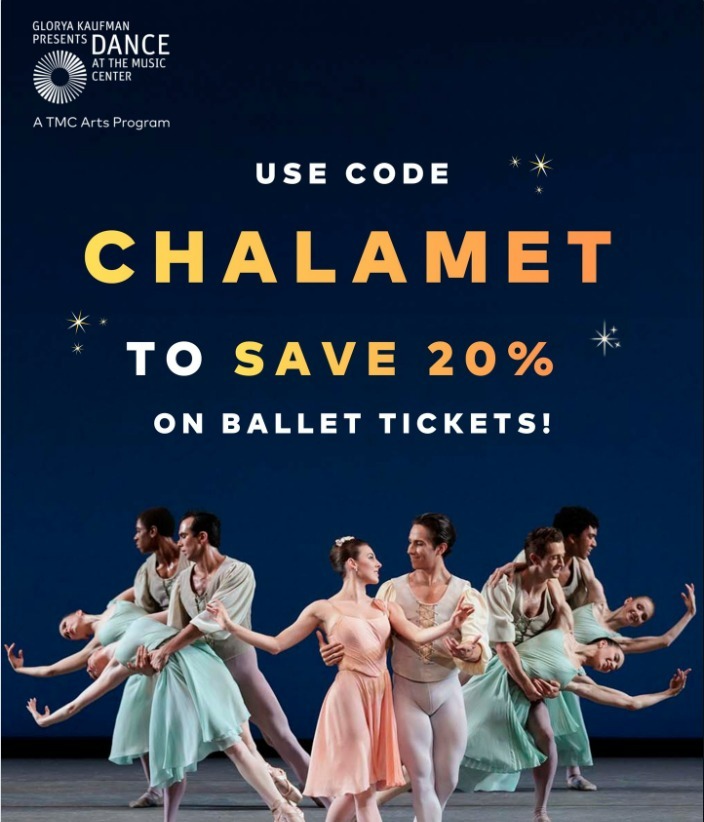
Some even made use of Chalamet’s foot-in-mouth moment to sell more seats:
Some critics also noted the irony of the situation. After all, Chalamet comes from a family with deep ties to the performing arts.
His mother, Nicole Flender, trained as a dancer, and his sister, Pauline Chalamet, also studied dance before pursuing acting. Due to his mother’s connections to ballet, Timothée spent his childhood in a federally subsidised artists’ building in Manhattan. He was also fast-tracked into the storied La Guardia High School of the Performing Arts thanks to his mother’s occupation.
Ballet, in other words, is not exactly an unfamiliar discipline in the Chalamet household – in fact, it is one that seems to have given young Timothée more than one boost up the ladder.
Incidentally, his alma mater also had thoughts on his statement:
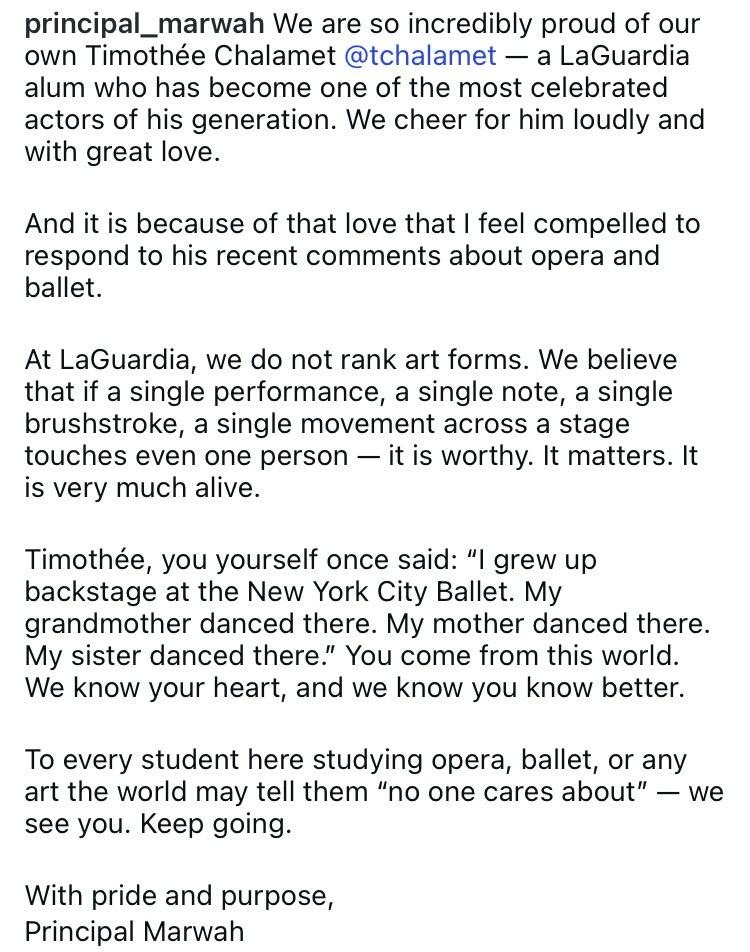
Nothing quite like being called out by your old high school principal on a public platform to humble you. Have some aloe vera for that burn, Timothée.
In fairness to Chalamet, he probably didn’t expect to trigger a global discussion about the relevance of classical art forms. Internet controversies rarely begin with that level of ambition. But if opera is truly an art form that nobody cares about anymore, it has been surviving that indifference for a remarkably long time. After all, it’s been around for more than 400 years.
How opera conquered Europe
Opera began in late 16th century Italy, as the result of a curious intellectual experiment. A group of writers and musicians in Florence became fascinated with ancient Greek theatre and began wondering whether those plays had once been sung rather than spoken. Their theory wasn’t entirely accurate, but the creative misunderstanding produced something unexpected: a new form of performance in which music and drama were fused into a single narrative experience. They named their new invention opera, which is the Italian word for “work”.
Early operas were small affairs, staged in aristocratic courts with modest orchestras and simple staging. Yet the concept spread quickly. By the 17th century, public opera houses were appearing across Italy, allowing audiences beyond the nobility to attend performances. Before long the format had travelled across Europe, where composers began experimenting with increasingly elaborate musical storytelling.
The plots were rarely subtle. Opera thrived on grand emotions and high stakes: doomed romances, political betrayals, supernatural interventions, mistaken identities, tragic misunderstandings, and the occasional character dramatically collapsing after a poisoned drink. If modern cinema thrives on spectacle and emotional intensity, opera perfected the formula centuries earlier.
It also produced early celebrities. Opera singers became some of the most famous performers of their era, drawing crowds that travelled between cities to hear them sing. Fans debated their favourite voices, critics wrote detailed reviews of performances, and rivalries between singers became minor cultural events in their own right.
By the 19th century, opera had grown into a fully developed cultural ecosystem, complete with elaborate theatres, passionate audiences, and composers who wrote music designed to push the limits of the human voice. The art form would evolve repeatedly over the next century, but its core attraction remained consistent. Opera offered audiences a combination of storytelling, music, and spectacle that was difficult to replicate anywhere else.
Which helps explain why certain performers eventually became legends. One of the most famous of them all was a woman named Maria Callas.
The divine diva
Maria Callas was born in New York in 1923 to Greek immigrant parents. Her birth name – Maria Kalogeropoulos – was eventually shortened to the more stage-friendly Callas.
As a teenager she moved with her mother to Greece, where she studied singing at the Athens Conservatory. Teachers quickly realised that her voice was unusual. It possessed an extraordinary range, capable of navigating both delicate lyrical passages and dramatic climaxes that would overwhelm many other singers. Technical ability alone, however, does not explain why Callas became famous.
Opera had long produced impressive vocalists, but Callas approached performance with something closer to an actor’s sensibility. She treated each role as a dramatic character rather than simply a musical challenge. When she stepped onto the stage, she wasn’t just delivering a sequence of difficult notes. She was inhabiting a story – and audiences noticed immediately.
During the 1950s, Callas performed at some of the most prestigious opera houses in the world, including Milan’s Teatro alla Scala, London’s Royal Opera House, and New York’s Metropolitan Opera House. Critics praised her dramatic intensity, while fans began referring to her with a reverent nickname: La Divina – the divine one.
Her performances helped revive a repertoire known as bel canto opera, a 19th century style that had largely fallen out of fashion. Through her interpretations of composers like Bellini and Donizetti, Callas brought these works back into the spotlight and inspired opera companies around the world to stage them again.
In the late 1950s and early 1960s, her once-powerful voice began to deteriorate. The exact reasons remain debated; some blamed the demanding roles she performed in quick succession, while others pointed to the dramatic weight loss she underwent during the height of her fame. Whatever the cause, her vocal decline happened quickly. By the mid-1960s her performing career had largely ended, yet the legend – and the effect she had on her artform – endured.
Recordings of her performances continue to circulate decades after her death in 1977, and many opera historians still consider Callas one of the most influential artists of the 20th century. She helped redefine what audiences expected from opera performers by proving that emotional storytelling could be just as important as vocal power.
Not the moment for a cheap shot
This brings us back to Chalamet’s awkward remark.
Every generation seems convinced that certain art forms are dying. Theatre was supposedly doomed by cinema. Cinema was supposedly doomed by television. Television was supposedly doomed by streaming. Streaming, according to some observers, is now busy undermining the film industry itself.
Creative industries have always existed in a state of mild existential anxiety. Opera and ballet are not exceptions. They require large orchestras, highly trained singers or dancers, elaborate sets, and audiences willing to sit through a three-hour performance in a language they may not understand. These are not the kinds of things that are designed for the pace of modern attention spans, nor do they easily adapt to the algorithmic logic of online platforms.
Yet despite these challenges, many opera houses continue to fill seats. New productions are staged every year. Young singers train for years, often decades, to master the craft. Somewhere in the world tonight, a performer will step onto a stage and deliver an aria that audiences have been listening to for centuries.
In a moment when many artists worry about the future of creative work, from artificial intelligence generating images to streaming platforms reshaping entire industries, it might be worth remembering that the arts have always depended on a fragile ecosystem of mutual influence. Film borrows from theatre. Theatre borrows from literature. Music borrows from all of them.
Opera itself began as an experiment inspired by ancient drama, and over time it shaped the development of stage performance, orchestral music, and even cinematic storytelling. Artists like Maria Callas did more than simply preserve a tradition. They transformed it.
Which is why dismissing another art form has always felt slightly misguided, especially when it comes from someone working in the arts themselves. The creative world is less like a competition and more like a long conversation stretching across centuries. Every generation inherits the work of the last, whether it realises it or not.
Opera has been part of that conversation for more than 400 years. And if history is any guide, we’ll probably still be listening to our favourite arias long after the latest internet controversy has faded into silence.
About the author: Dominique Olivier
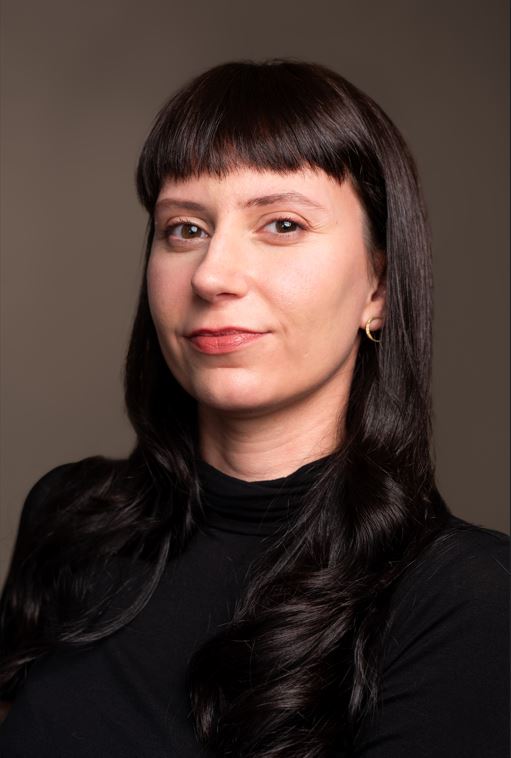
Dominique Olivier is the founder of human.writer, where she uses her love of storytelling and ideation to help brands solve problems.
She is a weekly columnist in Ghost Mail and collaborates with The Finance Ghost on Ghost Mail Weekender, a Sunday publication designed to help you be more interesting. She now also writes a regular column for Daily Maverick.
Dominique can be reached on LinkedIn here.