

Sunday, December 21, 2025
Home Blog Page 209

Will you take the Brait?

Brait’s net asset value per share is R8.30. The share price is R3.65. The market is trying to tell us something here and Ghost Grad Karel Zowitsky used the release of Brait’s integrated annual report as a good excuse to dig into the two major investments in the group.

It’s not unusual to see an investment holding company trading at a discount to net asset value (NAV) per share. It is unusual to see a large discount like over 55% at Brait. Either the market doesn’t believe the valuations or doesn’t like the prospects (or both).

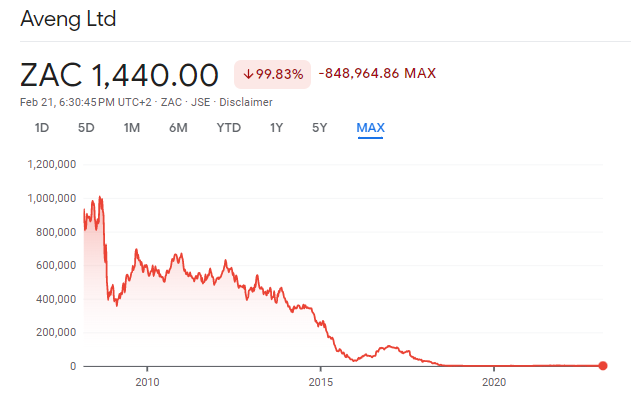
Perhaps the market is just scared. After all, Brait has a wonderful example of how things can go terribly wrong:

For market enthusiasts, Brait has also a pretty good example of why timing is important, as that terrible chart hides the recent performance:

There’s clearly a story here that needs to be told.

Brait is an investment holding company that has a primary listing on the Luxembourg Stock Exchange and a secondary listing on the Johannesburg Stock Exchange (JSE), offering investors exposure to unlisted companies that operate in the broad consumer sector.

One of these businesses will be extremely familiar to you: Virgin Active. We’ve all had a contract at some time in our lives. The difference lies in whether we actually used it.

So, let’s start with the gym business.

Farewell, masks

Of all the businesses out there that took pain in the pandemic, gyms were among the worst hit. Nobody enjoys exercising with a mask on.

Total membership is currently at around 75% of December 2019 levels. The important question to ask is whether these numbers will increase to pre-lockdown levels or stagnate.

From January to May 2022, Virgin Active saw a 12% increase in members. With masks out the way, it seems logical that this growth trend can continue for a while at least. Before getting too carried away, we need to remember that there are many factors at play.

Many people are hesitant to sign a contract that locks them into paying for a gym membership for at least 12 months when they might be unable to utilise the facilities for a period of time. I know many people who attempted to cancel their gym memberships during lockdowns and their calls and emails simply went unanswered. This is bad practice that does not create goodwill with members.

Affordability is another major concern. In the high inflationary environment we currently find ourselves in, families are feeling the crunch in their budgets rather than their abdominal muscles. Fuel and food prices are taking their toll and many are cutting out luxuries and unnecessary expenditure. Sadly, for many people, a gym a contract is one of the first expenses to be cut from the monthly debit order list.

Brait also highlights the negative impact of working from home trends. It makes sense – many people used to rather go to gym than sit in traffic.

Brait originally paid R12.7 billion for a 78.2% stake in Virgin Active in July 2015.

Today, Brait holds 70.6% (due to the dilutionary effect of subsequent capital raises) with a total cost including the initial purchase of R15.3 billion.

The value of the stake plus proceeds received to date is less than R9.3 billion, so you can see how shareholder value was destroyed by the lockdowns.

In case you need further proof of how severe the lockdowns were for the business, revenue fell from £602 million in FY19 to just £296 million in FY20 – literally less than half of the pre-pandemic level!

With a high proportion of fixed costs (the clubs don’t stop costing money just because they are shut), the lockdowns were a catastrophe.

You should note that a further dilution to a 67.4% stake is expected if the deal to acquire Kauai and Nu from Real Foods Group gets regulatory approval.

Taming the Tiger?

Brait owns a business called Premier that would remind you of Tiger Brands in terms of its product line, but not its recent performance. Brait is planning to separately list Premier, which is tricky in terms of getting the market timing right.

“Premier has completed its IPO readiness plans and will potentially proceed with the listing, market conditions permitting.”

Brait Integrated Annual Report 2022

Brait originally acquired 49.9% in Premier in 2011 for R1.07 billion. After the subsequent exercise of options and the implementation of a management incentive scheme, the current stake is 96.5% and the carrying value is nearly R9.3 billion vs. a total cost of R4.8 billion. Proceeds of R1.9 billion have been received over the years, so the correct comparison is value of R11.2 billion vs. a cost of R4.8 billion – easily Brait’s best investment.

Premier enjoys South African market share of 26% in bread, 26% in flour, 17% in maize, 17% in confectionary sugar and 17% in feminine care. These numbers sound similar but there’s obviously some rounding off. Still, it’s odd to see such consistent share across categories!

Over the past two years, Premier grew its revenue from R11 billion to over R14.5 billion and improved adjusted EBITDA margin from 9.3% to 10.3%.

This means that adjusted EBITDA increased by 44% over the two years of the pandemic, a vastly different result to the pain at Virgin Active.

It’s worth noting that R11.9 billion of the R14.5 billion revenue came from the Millbake division. I now understand why “making dough” is slang for making money! This division produces bread, maize, wheat and baking products and has achieved a revenue CAGR of 15% over the past three years. A newly commissioned bakery in Pretoria is expected to drive further growth.

If you are a Brait shareholder and you want to support your team, then Blue Ribbon bread is the one to put in your trolley.

With inflation top of mind for all of us, you’ll be interested to know that wheat constitutes around 50% of the cost of a loaf and fuel is 6%. A R1/litre increase in the fuel cost adds around 3.5 cents to the cost of a loaf of bread.

Much of the market share in confectionary has come from the R419 million bolt-on acquisition of Mister Sweet. Despite only being included in this result for 10 months, it contributed R540 million of the R763 million confectionary revenue. This sweet deal makes Premier a major player in the South African market in this category.

Will you take the Brait?

Things are looking up at Virgin Active and there’s an argument to be made that momentum will be strong from here. Premier has certainly been a star performer throughout the pandemic.

An investment decision regarding Brait needs to go a lot deeper than just the two major investments, as Brait’s balance sheet has had a tough journey. For example, there was an issue of R3 billion in exchangeable bonds, with accounting rules recognising R624 million as equity and the rest as debt.

For those who enjoy digging in the rough for an opportunity, Brait offers an exciting place to look. Let us know if you hold a position in Brait and what your thoughts are!

Value your business and make a positive impact

As the founders of bizval, we are celebrating Mandela Day by inviting you to value your business between 18th and 31st July. Use coupon code 46664 on checkout and we will donate 50% of the fee to Gugulethu Chess College.

Chess is more than just a game. It teaches critical skills ranging from strategic planning through to dealing with failure. Anyone who has run a business will immediately recognise the benefits of those skills. Anyone who has lived in South Africa will know how badly we need them.

You don’t have to look far to find research that supports the use of chess in schools. It leads to growth in cognitive abilities and even IQ test results. Chess is recognised as being particularly powerful as a tool to improve mathematics, an area where we are falling terribly short as a country. Naturally, improved science marks are also linked to chess.

Surprisingly, studies also link chess to improved reading and comprehension skills. The visualisation skills required for a strategic sequence in chess are equally helpful in dealing with the written word.

“The game of chess is not merely an idle amusement. Several very valuable qualities of the mind, useful in the course of human life, are to be acquired or strengthened by it, so as to become habits, ready on all occasions.”

Benjamin Franklin

Perhaps the best thing about chess is that it is incredibly affordable. All you need is a chess board and the pieces! Of course, you also need a committed person to introduce children to the game and develop their skills.

Such a person isn’t easy to find.

Introducing the Gugulethu Chess College

This is where Babalwa Rubusana comes in. Babalwa founded the Gugulethu Chess College to make a difference in the community in which she lives. Gugulethu is riddled with crime and lack of infrastructure, yet she doesn’t let this stop her.

Just this month, Babalwa registered 20 kids for the SA open chess championship in Cape Town and managed to accommodate 12 players from Johannesburg at short notice.

Despite sending proposals to government departments for funding since 2016, Babalwa says that she has never received even a single chess board. Babalwa relies on private funding from individuals and corporates for basic needs like boards, food and transport costs. Remember, these kids don’t have the means to pay for any of this.

At bizval, we know that our country is in desperate need of more entrepreneurs. The links between chess and improved school results are clear and the likelihood of success for an entrepreneur increases at higher levels of education. The Gugulethu Chess College is run by a passionate community builder who can make a significant impact with modest levels of funding.

For these reasons, we chose to support the Gugulethu Chess College this Mandela Day. You can follow their Facebook page at this link.

Value your business and support chess in schools: everyone wins!

The bizval valuation tool offers entrepreneurs an affordable way to value their businesses. Your favourite purple ghost built the back-end model based on years of investment banking experience, so you can rest assured that this is the real deal and that the answer is based on market practice.

In this video, I show you exactly how the tool works with the example of a chain of pizzerias:

To take advantage of this win-win situation of valuing your business and supporting the Gugulethu Chess College, head over to bizval.co and make sure you use coupon code 46664 on checkout to trigger the donation to Gugulethu Chess College.

At bizval, we value your company.

Ghost Bites Vol 48 (22)

Corporate finance corner (M&A / capital raises)

  • We’ve had such a busy run of deals on the JSE recently that I was surprised to see no announcements that fall into this category.

Financial updates

  • Pan African Resources has been the shiniest of the local gold miners, with the latest update being record production for the year ended June 2022. This has helped the company significantly reduce its debt. I dedicated a feature article to this update that you can read here.
  • Coronation Fund Managers has updated the market on total assets under management (AUM) as at 30 June 2022. Irritatingly, the announcements never give the comparative AUM, so I always have to go digging. The bear market has really hurt Coronation this year. AUM at 31 December 2021 was R662 billion. By the end of March it had dropped to R625 billion and now it sits at R580 billion.
  • Steinhoff’s pan-European discount retail subsidiary Pepco Group has released an update for the third quarter ended 30 June 2022. Like-for-like revenue growth was 4.9% vs. Q3’21 and total revenue growth in constant currency was 17.1%. On a year-to-date basis, revenue is up 17.4% in constant currency. This has been driven by a decent like-for-like growth and a rapid increase in the store footprint. In a time of high inflation, the group says that it is committed to maintaining its price leadership in the market. Here’s a nugget that I felt was worth repeating in full:

“Furthermore, against this backdrop, we are encouraged that the discount market across Europe is now much larger than at the time of the previous financial crisis in 2007-08 which means that a much larger customer base is more familiar with and more frequently shops across this channel.”

Pepco Group Q3 trading announcement
  • Schroder European REIT has announced an update on the independent valuation of the property portfolio and rent collection as at 30 June 2022. The portfolio valuation of €218.4 million is a -0.4% decrease vs. the preceding quarter. Negative drivers were increased vacancy assumptions in an office investment in Paris and higher capital expenditure provisions for upgrading of heating, aircon and renewable energy at an industrial investment in the Netherlands. There was good news in Germany, with a five-year lease extension for a Stuttgart office offsetting some of the negative impact. Schroder has reminded the market that 100% of the portfolio leases are subject to indexation, so rising inflation is starting to contribute to rental growth.
  • It’s interesting to note that Metrofile has appointed BDO South Africa as its next auditor, after the mandatory audit firm rotation that will see Deloitte bid goodbye to Metrofile. We are firmly in a “Big 5” audit firm environment these days, not just Big 4.
  • Sebata Holdings still hasn’t released results for the year ended March 2022 and has had to announce another delay, with results now expected on 18th July.

Operational updates

  • Anglo American has partnered with Nippon Steel Corporation to work together towards lower carbon steelmaking. This relationship is based on the premium physical qualities of Anglo’s iron ore and it helps that the companies have a working relationship spanning over five decades. Most of Anglo’s Scope 3 emissions are linked to materials sold to the steelmaking industry. By developing high-quality products and more carbon-efficient steelmaking methods with Nippon Steel, there are clear benefits to both companies (and all of us).
  • Kibo Energy’s 10-year take-or-pay power purchase agreement for a 2.7MW plastic-to-syngas power plant in Gauteng has been extended to 20 years. This project is the company’s first under its Sustineri Energy joint venture, in which Kibo Energy holds 65% and Industrial Green Energy Solutions (Pty) Ltd holds the other 35%. This improves the projected internal rate of return (IRR) range from 11% – 14% to 15% – 18%. Construction is scheduled to begin in Q1 2023 and project commissioning should be 11 to 14 months thereafter.
  • African Equity Empowerment Investments (AEEI) is still in dispute with British Telecommunications South Africa regarding whether the call option was validly exercised. The company has renewed its cautionary announcement in this regard.

Share buybacks and dividends

Notable shuffling of (expensive) chairs

  • Jubilee Metals has announced an impressive board appointment. Tracey Kerr has been appointed as an independent non-executive director. Ms Kerr was previously the Group Head of Sustainable Development at Anglo American Plc, so this is yet another example of positive momentum at Jubilee.
  • Interestingly, Dis-Chem co-founder Lynette Saltzman has resigned as a director so that she can focus on her operational role within the beauty category in the business. Dealing with governance matters really isn’t fun, particularly when you built a business from the ground up. I think it’s great to see Ms Saltzman focusing on where the real business is done. Hint: that’s not the boardroom.

Director dealings

  • Nothing to report today!

Unusual things

  • Trustco is one of those companies that is never far away from drama. The company has been fighting with the JSE over its listing. Trustco doesn’t like being listed on the JSE (and has made that fact known to anyone willing to listen), yet the company is also fighting in court to avoid suspension. In February this year, Trustco applied to the Financial Services Tribunal for a reconsideration of the JSE’s suspension decision. Also in February, Trustco launched an urgent application in the High Court for an interim interdict against the suspension. On 13 July, the Tribunal dismissed Trustco’s application, leaving the company with one week to take any steps it deems necessary. This now sits with the court as an urgent application, with the JSE agreeing to postpone the suspension until the court has ruled. Trustco has lost nearly 90% of its value in the past three years, so I won’t cry any tears if this one disappears from the market.

If you enjoyed Ghost Bites, then make sure you’re on the mailing list for a daily dose of market insights in Ghost Mail. It’s free! SIGN UP HERE >>>

Who’s doing what in the African M&A space?

DealMakers AFRICA

Developer, owner and operator of commercial and industrial renewable energy systems in Africa, CrossBoundary Energy (CBE), has received a US$40 million equity investment from KLP Norfund Investments. The funds will be used by CBE to scale its investments in renewable energy solutions across Africa.

Proparco, the Development Finance Institution partly owned by the French Development Agency, together with the East African private equity fund Ascent Rift Valley Fund II, has acquired a majority stake in Kenyan healthcare facility Diani Beach Hospital. Financial details were undisclosed.

Nigerian full-service fintech and banking infrastructure provider Bloc, has acquired Orchestrate (Getwallets), a provider of multipayment options. The undisclosed cash and equity deal will boost Bloc’s capacity to offer fintech infrastructure such as online payment, subscription management, virtual wallets, bill payments and invoicing.

Spedag Interfreight, an African focused international freight forwarding expert in East Africa, has been acquired by CEVA Logistics for an undisclosed sum.

Investissuers & Partenaires (I&P) through its fund IPAE 2 has invested in DELTA SA, a Senegalese company specialising in the sanitation and construction. The support will strengthen the company’s governance, organisational and technical capacities plus its regional expansion objectives.

Swvl, a tech-enabled mass transit solutions provider founded in Egypt, has announced the acquisition of Mexico-based Urbvan Mobility.

Solar Panda, a Kenyan manufacturer and retailer of pay-as-you-go solar household systems, has secured US$8 million in series A funding to be used to scale activities across the country. The funding round was led by Oikocredit and EDFI ElectriFI.

SolarTaxi, a Ghanaian e-mobility company, has raised undisclosed funding from Persistent Energy, an investor in the off-grid and e-mobility sector in sub-Saharan Africa. Funds will be used as working capital to expand the business.

Creditchek has raised US$240,000 in a funding round led by Atom Capital with participation from Aidi Ventures and others. The investment will be used to build the credit data infrastructure to assess and verify creditworthiness of customers.

Nigerian decentralised finance platform Stakefair (formerly BetDemand) has raised US$670,000 in pre-seed funding from investors which include Adaverse, Nestcoin, Kepple Africa Ventures, Canza Finance and Voltron Capital among others. The startup which has launched a no-loss staking platform will now expand its services to include a business-2-business API service.

DealMakers AFRICA is the Continent’s M&A publication
www.dealmakersafrica.com

Who’s doing what this week in the South African M&A space?

Exchange Listed Companies

Glencore has disposed of its stake in BaseCore Metals (a base metal streams and royalties joint venture with Ontario Pension Plan Board) to NYSE- and TSX-listed Sandstorm Gold in a cash and equity deal valued at US$525 million.

In a similar deal, South32 is to sell a package of four non-core base metals royalties to LSE-listed Anglo Pacific Group for US$185 million plus contingent payments of up to $15 million. Of this $103 million will be paid in cash and $82 million in Anglo Pacific shares resulting in South32 holding a 16.9% stake in Anglo Pacific.

The Board of Transcend Residential Property Fund has received a firm intention offer from Emira Property Fund to make a general offer to acquire up to 100% of the ordinary shares in the company for a cash consideration of R5.38 per share on an ex-distribution basis. Currently Emira holds 40.69% of Transcends’ issued shares.

Capital & Regional has disposed of the residential development project in Walthamstow to specialist residential developer Long Harbour for c.£21,65 million. Proceeds will be used to reduce debt.

Old Mutual Africa (Old Mutual) has taken a significant stake in UAP Old Mutual Life Assurance Uganda following an injection of funds in a move to recapitalise the company. The life insurer’s compliance was threatened as it fell short of its solvency margins. UAP which has a 53% stake in the Ugandan business is owned by Old Mutual.

Unlisted Companies

Hyperclear, a Mauritian headquartered technology investment company, has acquired from Apex Partners, Principa, a local African and analytics software firm with operations in SA, the UK and Middle East. Principa provides data-driven solutions to the retail credit industry. Financial details were undisclosed.

DigsConnect.com, a local digital student accommodation platform which matches landlords with students seeking accommodation, has closed a pre-Series A extension round. The undisclosed investment was secured from Launch Africa, Goodwater Capital, Five35 Ventures and Delta Ventures. Funds will be used to drive international growth.

Juta and Company has acquired MedicalBrief, a weekly digest of local and global medical matters.

Infra Impact Mid-Market Infrastructure Fund 1, has acquired a minority stake in Cybersmart, a local internet service provider and fibre network operator. The funding will be used by Cybersmart to solidify its brand and accelerate the rollout of connectivity solutions.

Imperial, acquired in 2021 by DP World, has expanded its African presence with the purchase, via its Market Access business, of a controlling stake in Africa FMCG Distribution (AFMCG). Part of the Chanrai Group of Companies, Nigerian-based AFMCG is a multi-faceted business offering nationwide and route-to-market solutions across multiple channels.

California-based seller of fresh strawberries and other berries Driscoll’s is to purchase Haygrove Africa Trading, a local supplier of blueberries in sub-Saharan Africa. Financial details were undisclosed.

DealMakers is SA’s M&A publication
www.dealmakerssouthafrica.com

Weekly corporate finance activity by SA exchange-listed companies

As part of its update to the market on its Yamana Gold deal, Gold Fields announced it will list on the Toronto Stock Exchange. This announcement together with the promise of higher dividends should sweeten its proposed takeover.

Naspers and Prosus continued with their open-ended share repurchase programmes. This week the companies announced that during the period 4th to 8th July 2022, a total of 6,240,339 Prosus shares were acquired for an aggregate €418,95 million and 659,095 Naspers shares for R1,75 billion.

British American Tobacco repurchased a further 960,000 shares this week for a total of £32,56 million. The purchased shares will be held in treasury with the number of shares permitted to be repurchased set at 229,400,000.

Glencore this week repurchased 7,529,983 shares for a total consideration of £31,92 million in terms of its existing buyback programme which is expected to end in August 2022.

One company issued a profit warning. The company was: Sebata,

Four companies this week issued or withdrew a cautionary notice. The companies were: Sebata, Pembury Lifestyle, African Equity Empowerment and Ascendis Health.

DealMakers is SA’s M&A publication
www.dealmakerssouthafrica.com

Thorts: A scheme of arrangement – shareholders’ approval rights

A company may reorganise its shares/securities by implementing a scheme of arrangement if approved by a supermajority of at least seventy-five percent of the shareholder votes exercised on the scheme, provided that other statutory requirements are satisfied.

Once shareholders approve a scheme of arrangement by a supermajority, it is binding on all shareholders. The dissenting shareholders, however, are not left without recourse. They may approach the court within ten business days after the date on which the shareholders voted on the arrangement, as contemplated in section 115(3), or exercise their appraisal rights in terms of s164.

Generally, when proposing an arrangement to holders of all shares ranking pari passu, all shareholders will be entitled to vote on such a proposition. However, which class of shares is entitled to vote on an arrangement proposed to holders of only one class of shares in a company with different share classes that do not rank pari passu? We will briefly respond to this question.

The Companies Act 71 of 2008

S114(1) of the Companies Act 71 of 2008 (the Act) provides that a company’s board may propose and implement an arrangement between the company and the holders of any class of shares. In other words, a proposition between a company and holders of one class of shares in a company with varying share classes is legally sound. Transactions in respect of consolidation of class securities, division of class securities, expropriation of class securities, exchanging securities in the company for other securities, reacquisition of securities, or a combination thereof may be implemented by way of a s114 arrangement.

Before a proposed arrangement is implemented, shareholder approval must be obtained in compliance with s115(2), read with s115(4) of the Act. S115(2) requires the proposition to be approved: (i) by a special resolution adopted by persons entitled to exercise voting rights on such a matter; (ii) at a meeting called for that purpose; and (iii) at which sufficient persons are present to exercise, in aggregate, at least 25% of all the voting rights that are entitled to be exercised on that matter, or a higher percentage as may be determined by the company’s Memorandum of Incorporation. Furthermore, the voting rights that are controlled by the acquiring party, a person related to the acquiring party, or a person acting in concert with either of them must not be included in calculating the requirements of a quorum or a special resolution for purposes of s115(2).

Share classes that do not rank pari passu

While s311(2) of the Companies Act 61 of 1973 (the 1973 Act) expressly provided that an arrangement proposed between a company and any class of its members must be agreed by a majority representing three-fourths of the votes exercisable by that class of members present and voting either in person or by proxy at the meeting, such expressive language regarding class resolutions does not form part of the wording in s115(2) of the Act. S311(2) of the 1973 Act also provides that if a class arrangement is approved, it will be binding on that class.

In Verimark Holdings Limited v Brait Specialised Trustees (Pty) Ltd NO and Two Others (2009) ZAGPJHC 45, Malan J held, for the purposes of s311(2), that an arrangement that is proposed to class members entitles those members “to whom the offer is made” to vote on such arrangement. In paragraph 10, Malan J confirmed that categorisation of a class of members for purposes of s311(2) involves a determination of the “similarity of rights and not the similarity of interests”. In a recent case, Sand Grove Opportunities Master Fund Ltd and Others v Distell Group Holding Ltd and Others (6378/2022) (2022) ZAWCHC 46, Binns-Ward J endorsed the approach adopted in the Verimark case on the issue of categorisation of classes of shareholders when observing that, for the purposes of differentiating shareholders into separate classes, the focus is on dissimilarity of shareholders’ rights, not interests. According to Binns-Ward J, the shareholders’ rights should be sufficiently similar to make it feasible for them to consult together regarding, for example, a proposed arrangement.

Unlike s311 of the 1973 Act, s115(2) of the Act requires, inter alia, approval by a special resolution adopted by “persons entitled to exercise voting rights on such a matter”. The Distell case in paragraph 81, states that “section 115 provides for a company meeting and not a meeting of classes of shareholders as used to be the case under section 311”. Binns-Ward J goes on to state that “it is incumbent on the directors, presumably following the advice of the independent board and with due attention to the content of the independent expert’s report, to consider and determine on the most appropriate manner in which to comply with section 115(2)”. Furthermore, Binns-Ward J states in paragraph 88 that “any company concerned with convening a meeting in terms of section 115(2) must conduct itself mindful of the same considerations that the court used when deciding an application in terms of section 311 of the Companies Act 61 of 1973”.

Being mindful of the above principles, we submit that the determination of the approval procedure required with regard to an arrangement proposed to holders of a share class must begin by establishing whether any existing share classes have distinguishable rights in relation to the arrangement or not. If so, it is such class that is entitled to vote on the arrangement. Put differently, the shareholders to whom the same proposition is made, and whose rights will be affected in the same manner by the proposed arrangement, will constitute the scheme participants and should be allowed to consult on common rights. General votes – for example, of all shareholders whose interests are affected in some manner by the arrangement, rather than those whose rights are affected in the same manner – would otherwise have the potential of leading to absurd results, in that a particular class of shareholders may have their shares reorganised in circumstances where none of them has consented thereto. By way of example, if the share class of the scheme participants constitute only 10% of the issued shares, a resolution approved by all shareholders, including those to whom a classification arrangement was not proposed, would result in the reorganisation of the share class of the scheme participants only.

The Distell case also establishes (correctly, we submit) that the responsibility to make the determination of whether a special resolution from a particular class of shareholders is required rests with the company’s board. In doing so, it should follow the advice of the independent board and have due regard to the content of the independent expert’s report.

The role of the TRP in respect of regulated companies

The Distell case also reaffirmed the mandate of the Takeover Regulation Panel (TRP) in relation to schemes of arrangement. In paragraph 81, the court held that the TRP is permitted “to direct the holding of an appropriately constituted separate meeting” by class shareholders for purposes of s115(2). Binns-Ward J cited s119(2)(b)(ii) of the Companies Act, in terms of which the TRP needs “to ensure that all holders of ‘voting securities of an offeree regulated company are afforded equitable treatment, having regards to the circumstances’”.
As a result of this case, we believe that the TRP will be more vigilant in ensuring the equitable treatment of shareholders where an arrangement is proposed to a particular class of shareholders in a company with varying classes of shares, and that the principles set out in the Distell case are likely to be considered in the exercise of its mandate.

Conclusion

While all shareholders of a company may be entitled to vote on an arrangement that is proposed to all shares of the company for purposes of s115(2) read with 115(4), it might be difficult to determine whom the “persons entitled” to vote on a class scheme should be for the purposes of s115(2). In light of the Distell case, we submit that all circumstances, including the rights attached to the class of shares, the identity of the holders of such shares, the advice of the independent board, and the independent expert’s report should be taken into consideration when deciding on whether or not a special resolution passed by a specific class of shareholders is required for the purposes of s115(2).

Julius Oosthuizen is HOD, Prince Mathibela a Trainee Associate, and Olwethuthando Ndlovu, a Candidate Legal Practitioner in Corporate Commercial | ENSafrica.

This article first appeared in DealMakers, SA’s quarterly M&A publication

DealMakers is SA’s M&A publication
www.dealmakerssouthafrica.com

Pan African Resources: more gold and less debt

The gold sector has been a source of great disappointment for me. Most irritatingly, when I bought a basket of gold shares at the beginning of 2021 without spending enough time researching the sector, I managed to leave Pan African Resources out of the portfolio. That was a mistake.

Pan African has just wrapped up the financial year ended June 2022. With full reporting only due in September, the group has released an operational update that kicks off with an exciting headline:

“Record annual gold production and significant reduction in net senior debt.”

Every CEO dreams of being able to tell a story like that to the market, especially when competitors have either had major production hiccups or are busy chasing huge international deals.

Over the past year, Pan African has been the top performer in the sector:

More gold

Production is only up by 2% vs. FY21, so don’t get carried here with expecting tech company growth rates. Still, that’s a move in the right direction. Pan African didn’t expect such a favourable result this year, as actual production of 205,459oz of gold is around 5% higher than initial guidance.

There are five major mining operations in the group and four of them performed better than last year. The Sheba and Consort underground operations saw a disappointing drop of nearly 30% in production. This is thankfully the second smallest operation in the group.

Pan African has given conservative guidance for FY23, with a plan to maintain production at FY22 levels.

Less debt

The gold price hasn’t been terribly exciting over the last year, but it has been at a level that allows Pan African to make money. When coupled with strong production numbers, that means a year of debt reduction and value creation for shareholders.

The extent of the reduction is astonishing. Debt is down 71.5% year-on-year or 59.8% since the end of December 2021. Pan African Resources reports in US dollars and so these numbers are subject to the wildly volatile dollar movements. I checked in the integrated report and it looks like the debt is with local banks and denominated in rand, so I would prefer to consider the percentages based on the change in the rand value. In that case, debt is down 68% year-on-year, which is still excellent of course.

More energy

Pan African has commissioned a 10MW solar PV renewable energy plant at Evander, the first of this scale in the South African mining industry. The Barberton 8MW solar PV renewable energy plant site establishment has also commenced.

Fewer injuries

Pan African has a strong safety record. There were improvements in the recordable injury frequency rate (RIFR) and the lost time injury frequency rate (LTIFR). Far more impressively, Barberton Mines achieved 2 million fatality free shifts on 10 May 2022 and the Evander / Elikhulu operations achieved 2.5 million fatality free shifts on 19 January 2022.

More blueberries

I just couldn’t help but highlight an unusual ESG update. At Barberton, the commercial harvesting of blueberries has commenced.

Frankly, based on how the gold price is behaving at a time in the world when it should be doing well, perhaps blueberries would be the most profitable route forward.

I look forward to the full results in September, particularly with details around costs and margins. This is where things have gone wrong for gold miners, as the gold price isn’t increasing at a fast enough rate to offset the inflationary pressures on mining costs.

Ghost Bites Vol 47 (22)

Corporate finance corner (M&A / capital raises)

  • There’s more action in the property sector, with Emira Property Fund making a general offer to acquire all the shares it doesn’t already hold in Transcend Residential Property Fund. Emira holds a 40.69% stake, a position that has been built up since late 2018 through underwriting acquisitive growth by Transcend i.e. injecting capital for ongoing property purchases. Emira’s rationale talks to an overarching theme on our market: JSE investors have gone cold on multi-layered structures that offer various entry points into the same or a similar basket of assets, usually resulting in a significant discount to underlying value. The offer price of R5.38 per share looks somewhat stingy though, with a premium of just 10.5% to the 90-day volume weighted average price (VWAP). This is significantly lower than the control premium we typically see in JSE buyout offers. Despite this, a major holder of 16.7% of Transcend has already said yes. This tells you something about the lack of liquidity in the stock, as Transcend has a market cap of under R1 billion. Transcend’s net asset value at 31 December 2021 was R8.08 and the company has reiterated guidance for a FY22 dividend of 57.50 cents. The offer price is a guided forward yield of 10.7%. Transcend will issue a response circular in due course. Take note that this is a general offer, not a scheme of arrangement and attempted delisting. In other words, Emira is happy to mop up any number of shares at this price.
  • Old Mutual has released the circular related to the proposed Bula Tsela B-BBEE transaction. This is a complicated structure that will see a 4.2% stake held by three types of investors through the issuance of new shares. An employee ownership scheme will hold around 1.6%, a community trust will hold 1.3% and qualifying members of the public will hold 1.3%. The shares held by the public will be listed on a B-BBEE exchange within the next 5 years, so there’s no liquidity here for a long time. There’s a useful summary on the Old Mutual website that I’ve included below. You can find all the documents, including the circular and earnings transcript, at this link on the Old Mutual site.

Earnings updates

  • None – come back tomorrow!

Share buybacks and dividends

Notable shuffling of (expensive) chairs

  • The board changes at Buka Investments (previously Imbalie Beauty and I can’t find a new website yet) have been made, with the ex-CEO staying on in a non-executive role. I have to highlight the appointment of a certain Werner Grobbelaar, who has such an interesting variety of degrees that it warrants a screenshot. For more on Buka Investments, read this feature article by Ghost Grad Kreeti Panday.
  • The CEO of Newpark REIT (the tiny property fund that owns the JSE building and 24 Central in Sandton along with a couple of other properties) has resigned to “focus on other opportunities” – I would also be bored if I was running a portfolio that I could count on one hand. Auri Benatar will be taking over and has previous experience as the Head of Acquisitions and Disposals at Redefine, so that’s an interesting development. Pun intended. This share almost never trades on the JSE, which is rather ironic since they own the building.

Director dealings

  • A director of PSG closed out a zero-cost collar structure with a South African bank that was related to a loan agreement. The bank exercised its call option and bought R8.7 million worth of shares at a price of R49.33. The current traded price is around R85.
  • Capitalworks is a long-standing partner of listed food business RFG Holdings. After the private equity investment house bought R195k worth of shares at the end of June and another R154k earlier this month, there have been more purchases with an aggregate value of nearly R108k. This is announced on the market because two of the RFG Holdings directors are from Capitalworks.

Unusual things

  • I don’t usually comment on institutional ownership, as this can change significantly for a multitude of reasons. With the Tiger Brands share price having caught a bid in the past month, I’ll highlight that the PIC has increased its stake above 15%. At least we know who one of the recent buyers was.
  • Steinhoff is going to bleed more cash for its poor prior behaviour, with an administrative fine from BaFin (the financial regulator in Germany) for late publication of the 2016/2017 annual financials and for failing to publish voting rights notifications within the prescribed period. They don’t play games in Germany. The fine is a whopping €11.3 million (R192 million) payable in three similar-sized tranches between March 2023 and September 2024. Steinhoff has lost around half its value this year, so I’m very glad I took my profit after the strong run in 2021. The company will be hosting a virtual analyst day on Friday 29th July.
  • Jubilee Metals has announced important updates regarding the copper and cobalt strategy in Zambia. The cobalt refining circuit at the Sable Refinery entered the commission phase during June 2022 and commercial production is targeted for August 2022. The Project Roan concentrator has reached 65% of designated capacity and should reach 100% by the end of July, which would mean 830 tonnes of copper concentrate per month. Jubilee has come a long way, with operations across PGMs and chrome in South Africa and cobalt and copper in Zambia.

If you enjoyed Ghost Bites, then make sure you’re on the mailing list for a daily dose of market insights in Ghost Mail. It’s free! SIGN UP HERE >>>

Ghost Stories Ep2: Justin Clarke (OrbVest)

At times when global markets are falling, inflation is rising and there are no clear signals on whether to buy or sell – like now – a diversified portfolio that includes an alternative asset class looks appealing. In OrbVest’s view, medical real estate in the US can be considered a “safe-haven asset” because it offers a stable income stream alongside wealth preservation.

Medical tenants are reluctant to move, so they enter into long-term leases. With net leases commonly in place (i.e. costs are for the account of the tenant) and escalation clauses generally built into the leases, these medical real estate assets offer attractive US dollar returns and protection against inflation.

OrbVest has now made this even more attractive for South African investors, with a minimum investment size of just $1,000 and the ability to invest into OrbVest Diversified Holdings (ODH), spreading risk beyond a single tenant or building.

To help us understand more about the OrbVest business, Justin Clarke (Operational Director at OrbVest) joined me on this episode of Ghost Stories. Before delving into this asset class and the structure behind the investment opportunity, Justin shared his fascinating back-story as the founder of Private Property. The business managed to survive two global crises and attracted funding from Tiger Global Management as part of a wild journey of building a tech platform during the early days of the internet.

This episode includes great insights into Justin’s life as a founder and now his role at OrbVest, so there’s truly something here for everyone.

Click here to read more about OrbVest. Please remember that past performance is no guarantee of future returns. OrbVest SA (Pty) Ltd is a registered FSP with registration number 50483.

Listen to the episode using the podcast player below:

Verified by MonsterInsights