
Listen to the podcast here:
The World Economic Forum Annual Meeting in Davos offered fewer illusions, and more realism. The rules-based order is no longer assumed. Geopolitics is now embedded in balance sheets. Scale matters. Delivery matters more.
In the final episode of our Davos Debrief podcast series, Investec Group Chief Executive Fani Titi argues that the defining advantage in today’s global economy is adaptability – the ability of countries and companies to operate amid volatility without waiting for certainty.
Hosted by seasoned broadcaster, Jeremy Maggs, the No Ordinary Wednesday podcast unpacks the latest economic, business and political news in South Africa, with an all-star cast of investment and wealth managers, economists and financial planners from Investec. Listen in every second Wednesday for an in-depth look at what’s moving markets, shaping the economy, and changing the game for your wallet and your business.
Scroll down to read the transcript of this conversation.
Also on Apple Podcasts and Spotify:
Transcript
00:00 – Introduction
Jeremy Maggs: Hello, and welcome to No Ordinary Wednesday, an Investec podcast where we step back from the noise to examine the forces shaping the global economy.
This episode brings our three-part Davos Debrief series to a close, recorded on the ground at this week’s World Economic Forum Annual Meeting in Switzerland.
Over the past two episodes, we’ve explored:
· The global investment landscape with Investec’s Chief Investment Strategist, Chris Holdsworth, and
· The AI agenda shaping growth with Lyndon Subroyen, Investec’s Global Head of Digital and Technology.
Today, we pull it all together.
Davos 2026 convened around a stark question: how do we cooperate in a more contested world?
From geopolitical fragmentation and trade realignment, to AI disruption, infrastructure constraints and climate-linked capital flows, the tone was serious and pragmatic.
And world leaders didn’t sugar-coat the moment.
- Ursula von der Leyen argued that Europe must toughen its economic and strategic posture, while strengthening its own resilience and autonomy.
- Canadian Prime Minister Mark Carney warned that the old rules-based global order can no longer be taken for granted and that countries will need to adapt pragmatically to a more fractured global economy.
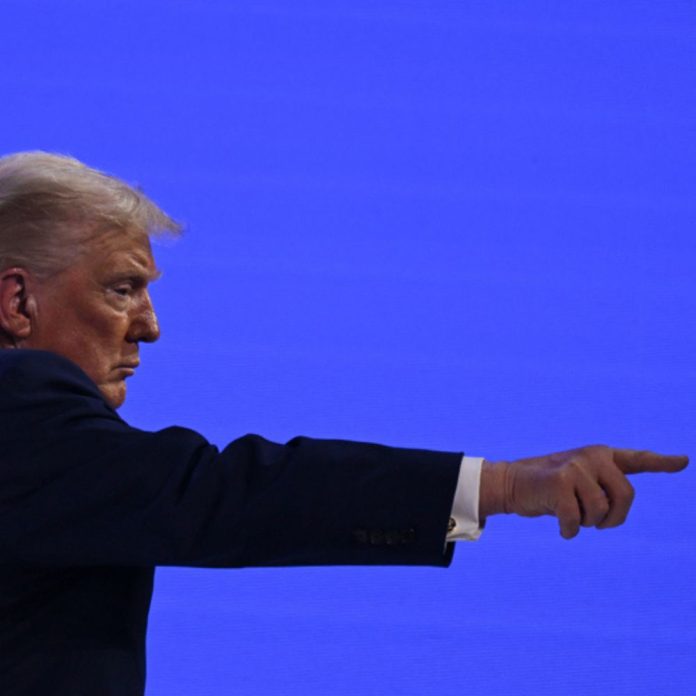
- And US President Donald Trump, in characteristically blunt fashion, had a strongly nationalistic economic posture, emphasising US achievements, critiquing global partners, and asserting US interests.
Against that backdrop, what does all of this mean for South Africa, for Africa, and for institutions like Investec that operate at the intersection of global capital and real-economy delivery?
To explore that, I’m joined by Fani Titi, Group Chief Executive of Investec.
Fani, welcome – and thank you for joining us for this Davos wrap-up.
02:00 – How would you summarise the mood at Davos 2026?
Jeremy Maggs: Fani, you’ve just come out of a week of intense conversations in Davos – private meetings, closed-door sessions, and some very public speeches. How would you summarise the mood of the conference, and what stood out for you?
Fan Titi: I think Davos this year was quite interesting in that the US position on global geopolitics was quite dominant. Europe was anxious to indicate that they can adjust to the new world order, that Europe can be independent, that Europe can in time defend itself. And in fact, that Europe’s economy needs to change in significant ways– that the union must have more united regulation, must be more uniform so that they can compete.
So that was the predominant theme – the American position and how America and the superpowers specifically are acting in the world. And the fact that the old rules-based order is over in this contested space where it appears that might, both economic and military, seem to dictate what happens next. How do countries and companies adjust to that? So that was that was the overall mood.
And second was just the sense that technology is developing at quite a rapid pace, in particular artificial intelligence, and how this may affect countries in terms of how workers may be displaced on the one hand and second, how innovation can be sped up as countries and companies adopt artificial intelligence.
I was a bit disappointed that there wasn’t that much focus on sustainability as much as the theme of the conference talked about prosperity within planetary bounds. That alone is, as you can see, some kind of a deference to Trump because they didn’t call it sustainability as such – “prosperity within planetary boundaries”.
But overall good interactions, really leading thought and practitioners in the place. And I think we will go out of Davos with a lot more to think about and really being able to act differently.
03:54 – What is Davos telling us about the global economy?
Jeremy Maggs: Davos is often criticised as a talk shop, but markets still pay attention to its signals. From your conversations this year, what did Davos tell us about where the global economy is really heading?
Fani Titi: I think there was a sense that while the world has fractured both in terms of traditional alliances, in terms of trade and in terms of the use of power, as it were, that the global economy is still continuing to grow, that there has been a level of resilience.
We’ve seen how China has adjusted to the US tariff policies. And in fact, China has grown over the last year at about 5% or so. The US also is growing at quite a surprisingly rapid pace. We haven’t seen the level of inflation that we expected would be an outcome of the tariff policies that we saw.
I must say though, that tariff levels have settled at lower than was initially anticipated. So that may be that confidence is a little higher despite the level of uncertainty that is within the system at the moment.
04:56 – Is cooperation still realistic?
Jeremy Maggs: The official WEF theme this year was “A spirit of dialogue”, but the reality is a world that’s more fragmented. From where you sit, is cooperation still realistic, or are we simply learning how to do business in a permanently contested global economy?
Fani Titi: I think we have to take the world as it is, not as we would like to see it. So, the old order, as I said, a rules-based global system, is largely over. At the moment you’ve got what Mark Carney called the hegemons – the powerful and the super scalers like China – where you have large production capabilities, you have the scale that can overwhelm smaller markets and smaller countries. So that’s the reality in which we live.
And within that reality, I think that smaller countries and middle countries have to act differently. Understand that scale is important, understand that power is important, and in that context, I think smarter, newer, and more flexible alliances are important.
In fact, Mark Carney talked about a principle of variable geometry where you are very pragmatic, you look for friends and allies and for different outcomes, you may well have different alliances.
But you have to be pragmatic, you have to be clear about national interest, you have to be clear about where you can compete. It’s contested but I think there is still a way for both countries and corporates to do business.
06:20 – How explicitly are geopolitics influencing capital allocation today?
Jeremy Maggs: At Davos this year, geopolitics wasn’t discussed as an abstract risk – it’s being priced directly into supply chains, balance sheets and investment decisions. In your conversations with global banking peers and investors, how explicitly are you seeing geopolitics influence capital allocation today?
Fani Titi: I think you cannot be agnostic to the fact that there is a level of alignment both with respect to trade, both with respect to supply chains and of course to how capital is allocated. And we have to be smart about how we make our decisions.
In the end capital looks for safety, capital looks for returns and where there is a capacity to deliver on projects, I think capital will be able to be sourced.
So, for South Africa, for instance, and for Africa, being able to demonstrate that policies are clear and are pragmatic and reasonable, and that there is a level of delivery on projects and that investors have safety around their investments and that they can get their capital back if and when they want to, to divest of the investments that they have made.
It’s a world still full of opportunity although there is a high degree of uncertainty, and of course it is challenging just given the geopolitics of today.
07:36 – From a UK lens, is stability becoming a competitive advantage again?
Jeremy Maggs: It’s not surprising then that investors are placing a growing premium on policy stability and predictability. From a UK lens, is that stability becoming a competitive advantage again – particularly for long-term capital and financial services firms?
Fani Titi: I think the UK is placed in a rather interesting position. Firstly, the UK has a much closer relationship with the US, in fact, they have been able to negotiate a trade deal that looks fairly competitive, if you look at other trade deals that have been negotiated with the US.
The UK is working to get a lot closer to Europe again. And given that the UK is a fairly small power militarily and economically, I think being able to strike smart alliances with Europe, with Southeast Asia, with China – we saw the Chancellor going to China for some for some discussions.
We’ve actually just seen just this week that the Chinese embassy, the new Chinese embassy, has been approved in terms of a new location and, where China is able to build a much larger embassy and we hope that reciprocally in Beijing, the UK will be able to do that.
So, I think the UK is well placed, but it has to be much smarter around the alliances that that she strikes.
The UK is a very flexible country culturally and has generally been able to attract talent and its proximity to Europe obviously gives it a level of advantage.
I expect more deregulation in the UK. As the current Labour government has indicated with the direction of travel, I expect that they will continue down the policy of being more business friendly.
So, I think while policy stabilises under Labour, the UK remains an attractive investment destination.
For us as Investec, we continue to invest. We are investing in a mid-market corporate capability there, and we continue to invest in our private client strategy.
We are excited about that economy. Our market shares are small in the UK and our ability to be agile and to take opportunity of the changing landscape places us in a very good position there so we are excited about the UK opportunity.
09:43 – Sentiment around emerging markets and global portfolios
Jeremy Maggs: Against a backdrop of a weakening dollar, emerging markets are no longer being framed as “high growth by default”, but as selective opportunities. What was the sentiment around where EMs fit into global portfolios today?
Fani Titi: Look, I think you’ve seen a lot of flows into emerging markets. You’ve seen strengthening of certain currencies like the South African rand, as the economic outlook and policy certainty has moved rather positively. And I think in a world that is so contested, diversification is quite important.
As we go forward, we hope that risk premia around emerging markets will reduce allowing for better capital deployment into those economies, better growth and better allocation into emerging markets. So, we are hopeful about capital flows and investment flows into emerging markets.
10:36 – What would unlock faster capital deployment into African infrastructure?
Jeremy Maggs: Talking of emerging markets, one consistent Africa theme at Davos was that capital is available, but infrastructure – energy, logistics, digital – remains the binding constraint. From an investor perspective, what would unlock faster capital deployment into African infrastructure?
Fani Titi: I think there were lot of discussions on the continent of Africa, and I think there is within Africa a realisation that we have to have more free trade – a movement of goods and a movement of people.
Regulatory inconsistency and payment rails within the continent need to improve much more significantly.
And of course, investment in digital infrastructure. For instance, when you think when you think about cloud and you think about data centres – those require energy lots of energy and we know that Africa has a number of countries being constrained in terms of energy. So, there are a number of these constraints that have to be dealt with, but Africans are on top of it.
I was very encouraged in one of the meetings on how to improve the digital infrastructure to enable trade intra-Africa and how to strengthen the African Continental Free Trade Agreement going forward. A lot more happening.
With respect to South Africa and the continent, you have seen more investment into the continent, in fact we saw a very interesting announcement by Nedbank that they have bid to take control of a bank in Kenya. We’ve heard similar noises from our competitors in South Africa. So, I think the African opportunity is there.
Africa has the benefit of demographics. And in fact, by the turn of this century probably close to 20-25% of the workforce of the world will be African. So, if policy can develop much more rapidly, if free trade can develop much more rapidly, if infrastructure investment can develop, Africa can benefit hugely from its demographic dividend.
12:29 – In this global environment, what does good leadership look like?
Jeremy Maggs: One of the most striking things at WEF2026 was how leaders sounded fiscally, politically and institutionally. In this environment, what does good leadership actually look like? And what separates countries and companies that adapt successfully from those that fall behind?
Fani Titi: I think the answer is in the question. How do countries adapt to a changing environment? There’s a level of uncertainty. Old norms are no longer in place. So, an ability to clearly understand the changing landscape and to be clear about where as a country or as a company you are positioned, what are your natural advantages – whether it be with respect to countries, is it location? Is it natural resources? Is it technology and people talent? Understanding those and understanding how in a fractured world you can be pragmatic, you can be adaptable and you can think of self-interest within the context of a competitive world.
So, I think understanding and accepting that there is volatility, there is change, there is fast pace of change given technology that you have to be agile. That applies equally to countries as it applies to companies.
And being able to strike partnerships. As an example, for us as Investec, we have a number of technology partnerships. For instance, with Microsoft, we had a good opportunity to talk to some of the leaders at Microsoft to see how we can strengthen our partnership. We use them for cloud, we use them for a lot of our enterprise capabilities. That’s how partnership enables a company to move forward. But you have to be agile.
You have to be adaptable as you indicated in your question and really have to be courageous because in most cases you will not be certain of what is around the corner. As an example, in 2020, we thought we were onto a good path and COVID was around the corner.
In today’s, world geopolitics dominates what we have to deal with. America used to be a source of stability, it is now to a large extent a source of volatility and instability. So, understanding these changes and being ready to be pragmatic and to act with speed and with courage.
16:17 – Key takeaways from WEF2026
Jeremy Maggs: If there are three takeaways global investors and business leaders should carry with them from Davos 2026, what would they be?
Fani Titi: I suppose the fact that we are in a world that is contested where the old rules and norms that we had gotten used to, and that offered a level of protection, that those are no longer in place.
When you think about investing, either in a business or in a country, you’ve got to think quite heavily about geopolitically how that country is positioned.
Understanding how the leadership of a country, the leadership of a business is adaptable, pragmatic, and they can think clearly through the cloud of uncertainty that is out there.
Also, for countries and for companies, understanding how they’re embracing technology and how they’re harnessing the power of technology.
And for countries understanding the impact, for instance, on their populations of technology, are there education systems in countries adaptable enough and of the kind of quality that can take advantage of the change in in the landscape?
And just generally understanding whether for countries specifically whether their governance is of the right quality to ensure continued competitiveness within a challenging world.
I think it’s a world where if you are minded to see opportunity within the landscape of risk and volatility, you can do well. So, quality of leadership, the ability to adapt and being pragmatic really and striking partnerships and alliances that make sense. That will define countries that win, that will define companies that win.