
Both are footnotes in a much older human habit: wanting something most when we’re told it’s off-limits.
Humans are curious creatures. Tell us something is forbidden and suddenly it’s the only thing we want to see. Hide information and we’ll dig for it. Try to erase something and we’ll screenshot it, repost it, remix it, and turn it into a meme before the PR company has finished drafting the apology statement.
Psychologists have a term for this tendency. The internet does too. And Barbra Streisand, somewhat unwillingly, gave it a name and a face.
A photo nobody cared about (until everybody did)
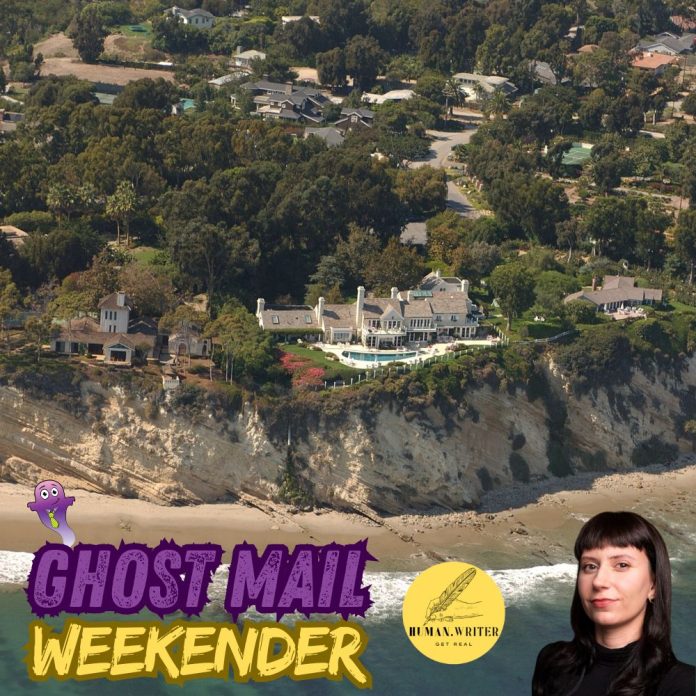
The year was 2003, and photographer Kenneth Adelman was flying over the Californian coastline in a helicopter. His goal wasn’t voyeurism. Adelman was working on the California Coastal Records Project, a nonprofit initiative designed to document coastal erosion. The series of photographs that he was taking were publicly available, free for non-commercial use, and frequently accessed by researchers and government bodies.
Among the more than 12,000 images that Adelman uploaded was one that happened to include Barbra Streisand’s Malibu mansion. At the time, almost no one noticed. But somehow, Streisand got wind of this and decided to sue.
Citing privacy concerns and legitimate fears around harassment and stalking, she filed a $50 million lawsuit against Adelman, arguing that the photograph exposed details of her residence and therefore endangered her safety. From her perspective, the move made sense. Remove the image, reduce the risk, regain control. It’s worth noting that at the time of the lawsuit the image in question had been downloaded only six times, and two of those downloads were by Streisand’s own legal team.
Streisand and her lawyers hoped that the photograph would quietly disappear and the world would be none the wiser. Instead, the lawsuit did something remarkable: it turned a mostly ignored aerial photograph into one of the most famous celebrity property images on the internet.
Within a month of the filing, the photo had been viewed more than 400,000 times. News outlets republished it. Blogs dissected it. People who had never heard a single Barbra Streisand song suddenly knew where she lived and what her house looked like from above. As if that wasn’t bad enough, Streisand also lost the case and was ordered to pay Adelman’s legal fees. The photo remains online to this day.
Years later, in her 2023 autobiography My Name Is Barbra, Streisand reflected on the episode with candour. Her issue, she explained, was never the photo itself – it was the attachment of her name to it. She believed she was standing up for a principle. In retrospect, she admitted, it was a mistake.
Why suppression so often backfires
The phenomenon now commonly known as the Streisand effect describes what happens when attempts to suppress, censor, or remove information end up amplifying it instead. In other words, the harder someone tries to make something disappear, the more attention it attracts.
This isn’t just an internet quirk. It’s a deeply human one. Attempts to control information have existed for as long as information itself. Books have been banned, artworks destroyed, speeches silenced. What’s changed since the advent of the internet is the speed and scale with which information can be accessed and shared. Online suppression doesn’t just fail quietly – it fails spectacularly.
Cease-and-desist letters are a common starting point. A polite but firm “please remove this content” lands in someone’s inbox. Sometimes it works. But often, especially when the request feels heavy-handed or unjustified, the result is the opposite. The letter gets shared, screenshots circulate, and in no time at all, the story becomes news.
Seeking an injunction to remove content can trigger the same effect. The legal action itself becomes a story, and the content you hoped to bury gets a second, louder life in headlines, think pieces, and social feeds.
When banning makes things more popular
One of the clearest demonstrations of the Streisand effect comes from an unlikely place: libraries. A study examining banned books in the United States found that titles on the banned list saw their circulation increased by an average of 12% compared to similar, non-banned books. It makes sense if you think about it – the act of banning signals scandal. If this book was dangerous, controversial, or forbidden, then it must be worth reading. It turns out the best thing an author can do to sell books in the US is to write something so controversial that it ends up on the banned list, but not so controversial that it alienates readers completely!
It’s not just the contents of forbidden books that get us salivating – we even go crazy for illegal numbers. This is what happened in 2007, when companies using Advanced Access Content System (AACS) encryption attempted to suppress a 128-bit numerical key that could be used to decrypt HD DVDs.
Not exactly a salacious or particularly interesting piece of information on its own, is it? The companies issued cease-and-desist letters demanding the key be removed from high-profile sites like Digg. What followed was internet folklore: the number spread everywhere. It appeared in forum signatures, chat rooms, blog posts, and comment sections. It was printed on T-shirts, tattooed onto bodies, and turned into songs on YouTube.
By the afternoon of Tuesday 1 May 2007, the number was still relatively contained. A Google search for the encryption key returned just over 9,000 results. By the following morning, that figure had exploded to nearly 300,000. By Friday of the same week, the BBC reported that almost 700,000 webpages were hosting the key. This was despite – or rather, because of – the fact that two weeks earlier the AACS Licensing Authority had sent Google a DMCA notice demanding that the search engine stop returning results for it.
A few years later, the same dynamic played out on a much larger, messier stage. In 2012, a UK high court ordered five major internet service providers to block access to The Pirate Bay, the Swedish file-sharing site that had long irritated copyright holders and governments alike. The ruling was meant to curb piracy by making the site harder to reach, effectively cutting it off at the source. Instead, it functioned as a global publicity campaign.
News outlets around the world reported on the ban, often explaining in detail what The Pirate Bay was and why authorities were so eager to shut it down. Curious users who had no idea that it was possible to (illegally) download films off the internet went looking for the site. Seasoned users shared workarounds, mirror links, and VPN tutorials with missionary zeal. Within days, traffic to the site had surged, increasing by more than 12 million visits.
Clearly, blocking access didn’t eliminate demand. In fact, we could argue that getting sued was the best marketing result that The Pirate Bay team ever achieved. The attempt to close the door simply taught millions of people where the door was and how to slip through it.
The people will not be denied access
The Streisand effect isn’t really about celebrities, pirates, or encryption keys. It’s about control, and our instinctive resistance to losing it. The moment someone tries to decide what we’re allowed to see, know, or talk about, curiosity turns into defiance. Information becomes more than data; it becomes a symbol. And accessing it feels like reclaiming agency.
In a reality where information moves faster than authority ever can, silence is no longer enforced – it’s negotiated. And more often than not, the loudest thing you can do online is try to make something go away. Barbra Streisand didn’t invent human curiosity, and the Swedish founders of The Pirate Bay didn’t perfect it. They simply revealed an uncomfortable truth of the digital age: attention is stubborn, curiosity is contagious, and once the internet smells secrecy, it cannot look away.
About the author: Dominique Olivier

Dominique Olivier is the founder of human.writer, where she uses her love of storytelling and ideation to help brands solve problems.
She is a weekly columnist in Ghost Mail and collaborates with The Finance Ghost on Ghost Mail Weekender, a Sunday publication designed to help you be more interesting. She now also writes a regular column for Daily Maverick.
Dominique can be reached on LinkedIn here.


I love the science of human psychology and how it translates into behaviour. We’re all so unique, yet so alike. It’s so easy to see the Streisand Effect in action particulary when it comes to limited time deals, which is probably why major shopping festivals like Black Friday do so well. At least now I can explain my uncontrollable urge to splurge around those periods!