
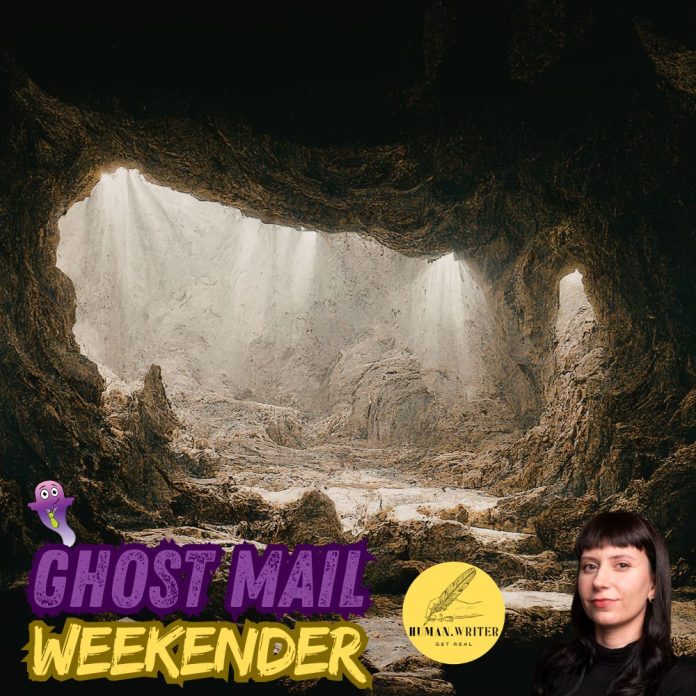
A desperate bid to create Kentucky’s next cave attraction spiralled into one of America’s first media frenzies. Floyd Collins went underground in a bid to attract tourists and ended up as the spectacle they came to see.
Let’s go back in time together, dear reader.
The year is 1925, and you are a traveller passing through Cave City, Kentucky. The name of this place is not foreign to you – even those who have never visited this area before have heard the stories of the massive network of caves that stretches for kilometres under the surface of this little town. Perhaps some of your friends or relatives have visited this place and paid their coins for the privilege of being chaperoned into the caves by one of the many local guides.
Even though cave tourism is at the height of its popularity in the US, the ratio of tourists to poor farmers trying to make a living is so unbalanced that locals are in constant competition with each other over the right to own and show caves, practically pulling at visitors like vultures squabbling over scraps. On most days, the town is eerily quiet.
This day is different though – today, this sleepy little town is wide awake and bustling with activity. The streets are flooded with out-of-towners. The local hotel is fully booked, and the only restaurant in town has run out of food to serve. Tourists are paying enterprising homeowners premium rates to sleep on their bedroom floors, or in their mattress-lined bathtubs. On the outskirts of town, a gathering that closely resembles a large fair is taking place, with stands erected to sell hamburgers, hot dogs and souvenirs. Moonshiners lurk around the outskirts, selling suspicious-looking bottles (remember, we’re deep in the Prohibition era here). There is even a juggler present.
“What is the occasion?” you ask an attendee of the festival, expecting to hear that it is the town mayor’s birthday, or perhaps some religious day of celebration. The answer surprises you: all of these people – about 10,000 in total – are here because a man is stuck in a nearby cave.

That man is Floyd Collins, and this is what happened to him.
Back to where it started
William Floyd Collins was born in 1887 on the Collins family farm, about 6 kilometers from Mammoth Cave, the sprawling cave system that gave Cave City both its name and its purpose. Floyd began exploring caves as a child, initially searching for Native American artifacts he could sell to visitors at the Mammoth Cave Hotel. By adulthood, cave exploration had evolved from curiosity into something closer to a long-shot business strategy.
Like most of their neighbours, the Collins family attempted to make a living by farming on the thin and sandy soil, and as a result they were quite poor. This looked like it might change in 1917, when Floyd discovered a cave (which he later named Great Crystal Cave) on their land. The Collins did what any ambitious operators in the Cave Wars era would have done: they immediately set about turning the cave into a tourist attraction. The plan was solid, the name was enticing and the cave was impressive, but unfortunately, geography proved stubborn. Floyd’s Great Crystal Cave was simply too remote, and visitor numbers remained underwhelming.
While location was definitely the crux of the problem, sly competitors certainly didn’t help. By the 1920s, dozens of rival “show caves” were in operation across the region, all operated by families who were equally poor and desperate. Competition was creative and, at times, spectacularly dishonest. Promoters dressed as police officers would position themselves along the road to intercept visitors, confidently informing them that the caves they sought were unsafe or closed before redirecting them to “better” or “safer” caves (read: their own). In more committed moments of entrepreneurship, rivals burned ticket booths, blocked access roads and vandalised competing sites. Everyone was chasing the same prize – passing tourists with spending money – and the margins for success were thin.
Floyd, who was equal parts explorer and entrepreneur, knew exactly what he needed next – a cave closer to the main entrance to Mammoth Cave, where tourist traffic flowed more naturally. In early 1925, he believed he had his breakthrough. Working largely alone, he discovered and began enlarging a narrow opening that would later be known as Sand Cave. Risking life and limb on a hope, he crawled through tight underground passages, some no higher than 22 centimeters in places, convinced that somewhere just ahead of him lay a larger chamber – and perhaps the changing of his family’s fortunes.
An opportunity for disaster
For weeks, Floyd worked methodically to make Sand Cave accessible enough for future tourists, clearing rocks by hand and carrying them out of the cave one bucketfull at a time. Then, on 30 January 1925, after several hours underground, his gas lamp began to fade. Floyd knew what this meant: he needed to exit the cave before it ran out completely, otherwise he would soon be stranded in complete darkness.
As he hastily tried to get out, he became trapped in a narrow horizontal passage. In an attempt to wriggle out, he managed to knock over his gas lamp, breaking it and dousing himself in darkness. It was a bad situation, but Floyd wasn’t panicking yet – he was an experienced caver, and he knew this particular cave very well. Could he navigate it in the dark? He reckoned he could. He felt with his foot for something that he could step against in order to boost himself out of the passage, and accidentally pressed down on an unstable rock hanging out of the ceiling of the passage. The 12kg rock immediately became detached and pinned his left ankle, simultaneously bringing down torrents of loose gravel that buried his entire body. Only his neck and head remained free.
Floyd was trapped on his back in complete darkness, 46 meters from the entrance of the cave and 17 meters underground, on the other side of a passage so narrow that few men were brave or limber enough to squeeze through. The cave he hoped to turn into an attraction had apparently decided to keep him.
Call in the cavalry
Neighbours eventually realised Collins was missing. They located him quickly (it was well known that he was working at Sand Cave), but faced an immediate logistical problem: almost no one could physically reach him through the tight passageways. Only his younger brother, Homer, who was smaller and more agile, was able (and willing) to squeeze through in order to assess the situation and to bring food and water. Word of the trapped caver spread quickly. Soon, the media arrived. Then came the crowds.
Newspaper reporter William “Skeets” Miller of The Courier-Journal was the second person to brave the narrow cave passages in order to interview Floyd in person. He began writing vivid updates from the scene, which were published across the state. His reporting, transmitted by telegraph and amplified by the still-novel medium of radio, transformed the rescue attempt into a national fixation. Within days, Sand Cave had become the tourist destination that Floyd had hoped it would.
A race against time
There was, however, a grim operational downside to all this attention. The sheer number of spectators lighting campfires warmed the winter air enough to melt natural ice inside Sand Cave. Icy water began pooling underground, including inside the passage where Floyd lay trapped. Over the course of 17 long days, rescue teams tried multiple approaches to get him free. One attempt to hoist him out of the passage by harness only injured him further, and engineers eventually concluded that the only viable option was to dig a vertical shaft down toward his position – an enormous undertaking for the time, as it had to be done with nothing but shovels and pickaxes.
They worked against the clock. At every juncture, the cave presented a new challenge. Melting ice resulted in slippery mud underfoot. Stabilising beams began to splinter and crack. Regular cave-ins spooked rescuers and eventually completely cut off the only passage that connected Foyed to the outside world, making it impossible for supplies to be taken to him. On 16 February 1925, after 11 days of digging, miner Ed Brenner finally reached Floyd. He was already dead, having succumbed several days earlier, most likely from exposure. The man who had spent his life searching for commercially viable caves had instead become the centre of one of the largest media spectacles of the interwar years.
And this particular cave system was not finished with him yet.
The afterlife of Floyd Collins
Initially, Floyd’s body remained where he died, and funeral services were held above ground. His brother Homer, deeply unhappy with the arrangement, later organised an effort to retrieve the remains. On 23 April 1925, diggers employed and paid by Homer successfully removed Floyd’s body and buried him in the family cemetery beneath a stalagmite headstone.
One might reasonably expect the story to end there. It did not. In 1927, with tourism revenues struggling and finances tight, Floyd’s father sold the family farm to dentist Dr. Harry B. Thomas. Included in the deal was a clause that feels, even by Cave Wars standards, unusually grim: Dr. Thomas would own everything on the Collins farm, including the houses, the farming equipment, the Great Crystal Cave… and Floyd’s buried body. Wasting no time at all, Dr. Thomas exhumed Floyd’s remains and had them displayed in a glass-topped coffin inside the reopened Great Crystal Cave Cave. For the price of $10,000, the man who spent his last days wishing to be rescued from a cave was instead returned to one.
Visitors soon began arriving to view the embalmed remains of the man billed as the “Greatest Cave Explorer Ever Known”. For a brief moment in 1929 it seemed as though Floyd would finally be free, when a duo of grave robbers stole his body and attempted to throw it into the Green River. It landed in a bush instead, where it was found by sniffer dogs and returned to its resting place in the cave. The theft prompted Dr. Thomas to secure the coffin with two thick metal chains and a pair of large padlocks. No further attempts at theft were made. For decades – 32 years in total – Floyd Collins remained chained inside the cave he discovered, a prisoner of the tourism economy he had once hoped to master.
Finally, at rest
In 1961, the US government purchased Great Crystal Cave with Floyd still inside, and public access was eventually closed. Only in 1989 – an astonishing 64 years after his death – were his remains finally re-interred in a Baptist cemetery. By then, history had vindicated much of his original instinct.
The Great Crystal Cave proved far more valuable than even Floyd’s wildest estimations suggested. The government acquisition price of $285,000 (over $2 million in today’s terms) confirmed what he had long believed: the limestone beneath Kentucky held serious economic promise. Even more striking, modern cave mapping confirmed his long-held hunch that all of the region’s caves were interconnected. Today, the Mammoth cave system stretches across almost 650 kilometers, securing its status as the world’s longest known cave network.
The Sand Cave rescue became one of the first modern media spectacles, thanks to a convergence of real-time reporting, mass curiosity and roadside commerce. It demonstrated, years before most marketers would formally articulate it, that attention itself can become an economic force. Tourism, at its most intense, has always hovered near the boundary between fascination and spectacle. The same public appetite that fills national parks and heritage sites can, under the right conditions, transform misfortune into morbid attraction.
Floyd Collins went underground in 1925 hoping to build the next great show cave. Instead, the cave built the show around him.
The facts presented in this article were referenced from the incredibly detailed research and writings of Lucas Reilly. Reilly spent months interviewing park rangers, reading archived newspapers and even visiting Mammoth Cave himself. You can appreciate his work on Cave City and Floyd Collins here.
About the author: Dominique Olivier

Dominique Olivier is the founder of human.writer, where she uses her love of storytelling and ideation to help brands solve problems.
She is a weekly columnist in Ghost Mail and collaborates with The Finance Ghost on Ghost Mail Weekender, a Sunday publication designed to help you be more interesting. She now also writes a regular column for Daily Maverick.
Dominique can be reached on LinkedIn here.