
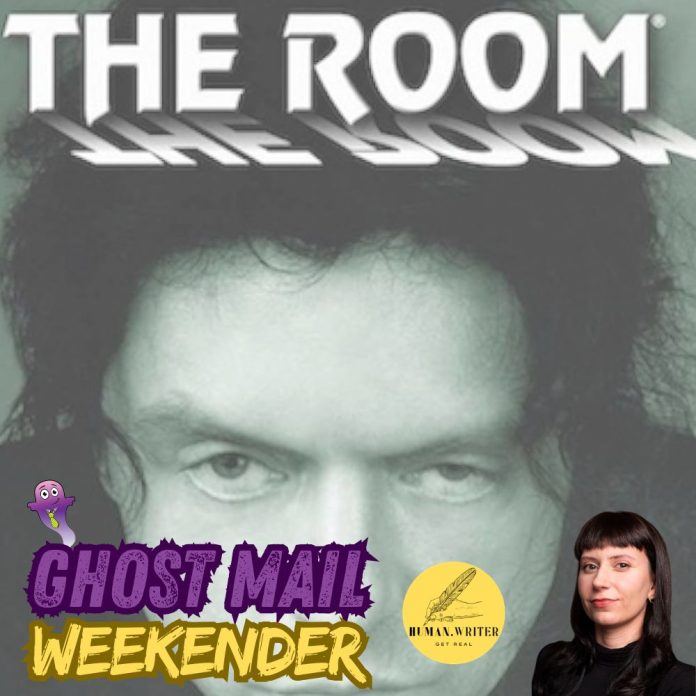
A film widely labelled as “the worst ever made” has spent two decades selling out midnight screenings. This raises an awkward possibility: maybe the line between “bad” and “good” is less stable than we like to think.
In most industries, success is relatively easy to measure. If a restaurant is full, the food is probably good. If a book sells millions of copies, it must be a good read. You would think that films surely work the same way: a big opening weekend signals victory. A box office flop signals failure.
Cinema history, however, occasionally produces an outlier that doesn’t fit this formula.
The Room, a 2003 independent romantic drama written, directed, produced and financed by the mysterious Tommy Wiseau, is widely described as one of the worst films ever made (earning itself the nickname “The Citizen Kane of bad movies”). Critics have dismissed it as incompetent. Reviewers have compared watching it to experiencing a minor head injury. Yet the film continues to sell out midnight screenings around the world, more than twenty years after its release.
This raises a question that becomes harder to answer the longer you sit with it: if a movie fails at the box office but develops a cult following, did it really fail at all? Is there really such a thing as a bad film – and if so, does that mean those who love The Room have bad taste?
A mystery man with a lot of money
To understand how The Room came to exist, one must first understand its writer, director, producer and leading man, Tommy Wiseau – and that is no easy feat. This is a man whose biography has remained shrouded in mystery despite decades of public curiosity about his distinctive look, his indecipherable accent, his fluctuating backstory and his seemingly bottomless reserve of funds.

Wiseau has spent years offering fragments of personal history like puzzle pieces from entirely different boxes. In various interviews he has claimed, at different times, to have lived in France “a long time ago”, to have grown up in New Orleans, and to have an entire extended family in Chalmette, Louisiana. In a 2010 interview he suggested a birth year around 1968 or 1969. Greg Sestero – Wiseau’s friend, co-star in The Room, and eventual chronicler in the memoir The Disaster Artist – later wrote that immigration documents he had seen suggested that Wiseau was born significantly earlier, somewhere in the mid-to-late 1950s, in an Eastern Bloc country. Wiseau himself has never confirmed any claims about his age or country of origin, although in 2017 he publicly acknowledged for the first time that he grew up “in Europe”. Beyond that, the trail becomes hazy again.
According to Sestero’s writing (which was informed by the stories Wiseau told him), Tommy Wiseau started the American chapter of his life in the San Francisco Bay Area, where he worked a series of ordinary jobs like restaurant busboy, street vendor and hospital janitor. During this period he also launched a small clothing business called Street Fashions USA, selling discounted and irregularly dyed blue jeans at Fisherman’s Wharf. The venture apparently did reasonably well, employing several workers and attracting steady tourist traffic.
At some point – precisely when or how remains unclear, obviously – Wiseau’s financial situation improved dramatically. He allegedly began purchasing and renting retail spaces in San Francisco and later in Los Angeles, eventually earning enough money to become independently wealthy. The details of these investments have never been fully explained, but the outcome was obvious to those around him: by the late 1990s, Wiseau had the kind of money that allowed him to pursue unusual creative ambitions without worrying too much about the financial consequences.
Which is how the world eventually ended up with The Room.
Money to burn
For most aspiring filmmakers, producing a feature film requires years of fundraising, pitching and compromise. Wiseau solved the problem in a more direct way: he financed the entire project himself. When the idea for The Room took hold in the early 2000s (initially as a stage play that no-one would print, then briefly as a novel that no-one would publish, and finally as a film), there was no studio oversight, no nervous investor(s) and very little reason for him to listen when collaborators suggested restraint.
If he wanted to build elaborate sets instead of filming on location, he did. If he wanted to shoot scenes repeatedly until they felt right, he did that too. He financed the project entirely himself and ultimately spent roughly $6 million (more than $10 million in today’s money) producing and marketing the film. Where this money came from has never been fully clarified (unsurprisingly). What is clear is that the budget was spent with enthusiasm.
Wiseau purchased expensive film equipment instead of renting it. He built elaborate sets of rooftops and alleyways for scenes that could easily have been filmed on location. Entire sections of the cast and crew were replaced multiple times during production. Dialogue sequences that should have taken minutes to film sometimes required hours or even days, largely because Wiseau (who also starred in the leading role) frequently forgot his lines or his position in the frame.
By the time filming wrapped, more than one hundred people had worked on the project, and Wiseau himself had accumulated a remarkable list of credits: actor, writer, producer, director and executive producer.
It was, by all accounts, an impressive effort. But would it result in an impressive film?
The box office speaks
The answer to that question depends entirely on your definition of “impressive”, dear reader. Because while most viewers agree that the film is terrible, they also agree that it definitely leaves an impression.
I could write a whole separate article about the contents of the film and the many, many ways that it flies in the face of conventional filmmaking, but for the purposes of this piece I’ll stick to my premise and direct you to a single scene from the film instead – that should give you a good idea of what we’re dealing with:
Not good.
When The Room finally arrived in theatres, audiences were… confused. Many walked out before the film hit the 20 minute mark. The film was screened for two weeks in a handful of California cinemas and earned $1,900 before disappearing from theatres. At one cinema, the ticket window reportedly displayed two helpful notices next to the poster for The Room: “NO REFUNDS” and a real review describing the movie as “like getting stabbed in the head”.
Paramount Pictures rejected the film within twenty-four hours of Wiseau submitting it for distribution. With few marketing options available, Wiseau promoted the movie himself through a single billboard in Hollywood, featuring nothing more than the name of the movie and a striking black-and-white close-up of his own face, captured with one eye mid-blink. The image – locally known as “Evil Man” – was so confusing that many viewers thought The Room was a horror film. The billboard cost about $5,000 a month, and Wiseau kept it up, unchanged, for over five years.
By all conventional Hollywood standards, the film was a box office bomb. And yet, something unusual happened once a particular audience discovered it.
The makings of a disasterpiece
One early audience member, filmmaker Michael Rousselet, attended a screening near the end of the film’s original theatrical run and found himself laughing – not at the jokes (because those are awful), but at the film’s strange and unintentional humour.
The dialogue was repetitive. Characters entered scenes and vanished without explanation. Emotional moments arrived at baffling times. Johnny, the film’s central character, begins many conversations with the same cheerful greeting: “Oh, hi.” Conversations often end abruptly with someone declaring, “Don’t worry about it,” which rarely resolves whatever problem was just discussed.
Instead of treating the screening as a serious drama, Rousselet began watching it as though it were a live comedy. He invited friends to attend the next showing and encouraged them to shout commentary at the screen. Soon they were returning repeatedly, bringing more people each time.
Before long, new traditions had formed. Audience members began throwing plastic spoons at the screen, a reference to an inexplicable framed photograph of a spoon visible in Johnny’s apartment. Footballs were tossed between rows of seats during rooftop scenes. Fans quoted stilted lines of dialogue in unison and shouted insults at the characters.
What had begun as a failed romantic drama had accidentally become interactive theatre. After the film was pulled from cinemas, Wiseau began receiving emails from viewers who had attended those chaotic final screenings. Many of them told him they loved the film. Encouraged by the response, he booked a single midnight screening in Los Angeles in 2004. It sold out.
Another screening followed the next month. That one sold out too. Soon the film was playing monthly screenings that continued for years, attracting devoted audiences who treated each showing as a communal participation event. The phenomenon spread across the country and midnight screenings appeared in other cities. Fans dressed as characters, recited dialogue and introduced newcomers to the strange rituals surrounding the film.
In Ottawa, Canada, one theatre screened The Room every month for 80 consecutive months. And screenings are still happening today, in countries all over the world. Financially speaking, the project was a disaster. Even today, after multiple rereleases and years of cult screenings, The Room has earned just over $5.2 million worldwide. That figure still falls short of its original production budget of $6 million, but it raises the question: if a movie loses money but remains culturally relevant for decades, does that still count as failure?
Who decides what “good” means?
At some point the conversation moves beyond The Room itself and into a broader question about art.
Who decides whether a movie (or a book, or a song, or a painting) is good?
Critics evaluate craftsmanship. Awards bodies reward technical excellence. Film studios focus on profitability. Each group has its own set of criteria, and these criteria often overlap, but not always. Audiences bring something else entirely: emotional experience.
A technically flawless film that nobody wants to watch again may impress critics but fade quickly from cultural memory. Meanwhile, a technically flawed film that audiences enjoy returning to can take on a life of its own.
In that sense, The Room exposes a small weakness in the usual hierarchy of taste: a niche where something is so bad that it goes full circle and becomes good again. After all, it’s difficult to dismiss a movie as a flop when people are still happily gathering in theatres to watch it two decades later.
About the author: Dominique Olivier

Dominique Olivier is the founder of human.writer, where she uses her love of storytelling and ideation to help brands solve problems.
She is a weekly columnist in Ghost Mail and collaborates with The Finance Ghost on Ghost Mail Weekender, a Sunday publication designed to help you be more interesting. She now also writes a regular column for Daily Maverick.
Dominique can be reached on LinkedIn here.


Great story!
I love cult films but haven’t seen The Room yet 😅 A good selection of older ones can be found in the Mystery Science Theater 3000 series, highlighting the interactive appeal of this “genre”. Some “bad” movies, like Peter Jackson’s debuts Bad Taste and Braindead / Dead Alive are actually funny and well rated. I have rewatched the latter many times and it never disappoints!
It’s fun to look at the ratings histograms of these films at e.g. IMDb. A true cult film has a two-pronged distribution with a peak at 1, a peak at 10 and a deep valley in between. “The Room” checks out 😁