Thursday, December 4, 2025
Home Blog Page 127

The ETF revolution: A global boom

4

In recent years, the global investment landscape has experienced an unprecedented surge in the popularity of Exchange-Traded Funds (ETFs). These financial instruments, once considered a niche product, have now become a dominant force in the investment world

In PwC’s recent report titled: ETFs 2026: The next big leap report, it was revealed that 58% of respondents expect global exchange-traded fund assets under management (AuM) to reach USD 18 trillion by 2026. An additional 84% expect online platforms to represent the primary source of future demand for ETFs.

The global ETF boom represents a fundamental shift in the way individuals and institutions approach investment strategies. ETFs have become the cool kid on the block, drawing in investors the world over with the allure of transparency, cost-efficiency, diversification, and tax benefits. As the ETF industry continues to innovate and expand, it is positioned to play an even more significant role in the future of investing.

Over the past few decades, traditional investing was synonymous with unit trusts and actively managed portfolios. However, the rise of ETFs has transformed the way individuals and institutions alike navigate their investment strategies. But what’s fueling this ETF revolution?

At the core of this transformation are several key factors that collectively explain the unprecedented global ETF boom.

Chief Investment Officer at Satrix* Kingsley Williams, offers compelling insights into the phenomenon.

Reason 1: Certainty in Investment Strategy

One of the primary driving forces behind the ETF boom is the desire for greater certainty in investment strategies. Traditional unit trusts often relied on discretionary management, which could introduce unpredictability into investors’ portfolios. In contrast, ETFs are rooted in rules-based or systematic strategies, typically linked to specific indices. This approach provides investors with unparalleled transparency and consistency, instilling confidence that a fund tracking an index will adhere steadfastly to its intended strategy.

Investors appreciate the assurance that an ETF’s rules-based approach offers. It ensures that the fund will unemotionally rebalance back to its stated objective, consistently delivering what’s on the label. This level of predictability is particularly appealing to investors who are designing or managing an overall solution to achieve a particular investment outcome.

Reason 2: Performance Benefits of Indexation

The second reason contributing to the ETF boom revolves around the performance benefits of indexation versus actively managed funds. The arithmetic of active management often leads to underperformance of a majority of active funds relative to an indexed alternative, due to various factors, including higher fees, market volatility, and human biases. In contrast, index-based strategies present a compelling proposition by delivering reliable returns over the medium to long term.

This is a critical advantage that ETFs offer. By tracking well-constructed indices, these funds bypass the pitfalls of active management and enable investors to enjoy the full benefits of market growth without the drag of excessive fees and potential underperformance.

Reason 3: Drive for Lower-Cost Strategies

The cost of investing is a paramount consideration for investors, both individual and institutional. Herein lies another driver of the ETF boom: the pursuit of lower-cost investment strategies. ETFs, with their cost-effective structure, have emerged as an attractive choice for investors looking to maximise their returns.

The magic of compounding, often referred to as the eighth wonder of the world, is amplified when investors minimise the tyranny of compounded costs over an extended period. ETFs facilitate this cost-efficiency, allowing investors to accumulate wealth with greater efficiency.

Reason 4: Protection from Transaction Costs

One of the distinctive design features of ETFs is their ability to protect existing investors from the costs associated with other investors entering or exiting the fund. This mechanism, akin to the user pay principle, ensures that those transacting in the fund bear the associated costs, shielding long-term investors from negative impacts.

This unique characteristic provides peace of mind to investors, knowing that the actions of others entering or exiting the fund won’t disrupt their performance. It aligns the interests of all investors within the ETF, making it an ideal choice for those seeking stability and predictability.

Reason 5: Increased Investment Strategy Choices

ETFs have democratised investing by offering an extensive range of investment strategy choices. This democratisation is achieved through the ease of launching ETFs and the protection against transaction costs. These factors enable asset managers to introduce diverse strategies to the market, providing investors with more options to construct their portfolios.

Investors now have greater freedom to tailor their investment strategies to their precise needs, whether they seek exposure to specific sectors, asset classes, or themes. This enhanced flexibility has made ETFs a preferred instrument for constructing diversified portfolios.

Reason 6: Access to Diverse Asset Classes

Another compelling aspect of ETFs is their ability to make various asset classes accessible through the stock exchange mechanism. While traditional exchanges primarily catered to equities, ETFs have expanded the horizon by offering exposure to bonds, money market instruments, currencies, commodities, and more.

The beauty of this approach is that investors can interact with these diverse asset classes as easily as they would with equities. This added convenience has revolutionised access to traditionally opaque markets, bringing transparency and liquidity to asset classes that are challenging to navigate directly, and are often inaccessible to direct retail investors.

Reason 7: Unlocking Tax Benefits

In specific markets, ETFs unlock tax benefits that further enhance the returns they deliver to investors. While the intricacies of tax considerations may vary by jurisdiction, understanding these nuances can be vital for investors, especially when accessing global investment strategies.

For example, some ETF structures may provide more tax-efficient ways to access certain markets or assets compared to traditional unit trusts. These tax advantages make ETFs an attractive choice for investors keen on optimising their investment outcomes.

Reason 8: Growth Potential in South Africa

While the ETF boom has swept across the globe, individual markets are at different stages of adoption. In South Africa, for instance, the take-up of index strategies and ETFs is still in its relative infancy. However, promising signs suggest a bright future for ETFs in the region.

Currently, South Africa lags behind more mature markets like Europe and the United States in terms of ETF adoption. There is an approximately 15% [1] take-up across local equity indexed strategies so there is still a lot of runway in our market in terms of adoption. Predictions indicate that global ETF assets under management will continue to experience robust growth, with South Africa poised to play a part in this expansion.

Reason 9: Unlocking Untapped Markets in Africa

The influence of South African ETFs has extended beyond its borders. These ETFs have been cross-listed in various other African nations, including Namibia, Botswana, Ghana, Mauritius, Kenya, and Nigeria.

Many of these markets are dominated by cash-type investment strategies or bonds due to high-interest rates. Furthermore, investors in these regions often struggle to access global investment strategies due to regulatory hurdles.

This cross-listing approach has enabled South African ETFs to contribute to the broader African investment landscape. ETFs are bridging this gap by providing a convenient and cost-effective way to facilitate access to a broader range of asset classes and investment strategies. This democratisation of investment opportunities empowers individuals and institutions across the continent to diversify their portfolios and seek returns beyond their domestic markets.

The Broader Context

The global ETF boom is not a solitary phenomenon but part of a broader shift in how individuals perceive and approach investing. Only a few years ago, there was skepticism about this investment option, especially in markets like South Africa, where the investment landscape appeared distinct and challenging. Concerns were raised about the country’s resource-heavy stock market and its concentration relative to global counterparts.

However, as time has passed, real-world data and tangible results have begun to reshape investor perceptions. The emergence of ETFs with proven track records has made a compelling case for these investment vehicles. The numbers speak for themselves, as clients have increasingly compared the returns generated by ETFs to those from other investment options.

Financial education has played a pivotal role in this transformation. As investors become more aware of the array of options available to them, platforms like SatrixNOW have made it easier for individuals to explore ETFs and embark on their investment journey with confidence.


[1] Source: Satrix & Morningstar across all (ASISA) SA Equity & Real Estate categories, 30 June 2023


*Satrix, a division of Sanlam Investment Management

Satrix Logo

CIS disclosure

Satrix Investments (Pty) Ltd is an approved FSP in term of the Financial Advisory and Intermediary Services Act (FAIS). The information does not constitute advice as contemplated in FAIS. Use or rely on this information at your own risk. Consult your Financial Adviser before making an investment decision. Satrix Managers is a registered Manager in terms of the Collective Investment Schemes Control Act, 2002.

While every effort has been made to ensure the reasonableness and accuracy of the information contained in this document (“the information”), the FSPs, their shareholders, subsidiaries, clients, agents, officers and employees do not make any representations or warranties regarding the accuracy or suitability of the information and shall not be held responsible and disclaims all liability for any loss, liability and damage whatsoever suffered as a result of or which may be attributable, directly or indirectly, to any use of or reliance upon the information. 

Ghost Bites (Datatec | Europa Metals | Richemont | Kibo Energy | Sasol | Southern Palladium | South32 | Textainer)

Listen to the latest episode of Ghost Wrap here, brought to you by Mazars:


Datatec reports massive growth in earnings (JSE: DTC)

Networking and cyber security are solid underlying drivers of growth

Datatec has released its interim numbers for the six months to August and they tell quite a story, with revenue up 14.7% and EBITDA up 39.2%. Continuing HEPS grew by 80% – in US dollars! Earnings from continuing operations is the right metric because Analysys Mason was in the base period, so it distorts the growth if we include it in the base for the calculation. This business was disposed of in September 2022.

Datatec remains a very low margin business though, with EBITDA margin of just 2.9%. That’s at least better than 2.4% in the comparable period, with an uptick in gross margin (driven by forex movements) as the primary reason for the improved EBITDA performance.

Looking at divisional results, Westcon International is the largest contributor to group revenue at 67%. It grew revenue by 14.9% and gross profit by 33.4%, with gross margin up from 9.5% to 11.0%. That’s good news.

The next largest is Logicalis International at 23% of revenue, although this is a structurally more profitable business with a contribution of 38% of gross profit (vs. 49% at Westcon International). It grew revenue by 12.1% and EBITDA by 41%.

The smallest is Logicalis Latin America, contributing 10% of group revenue and growing by 20.2%. with EBITDA swinging from a $1 million loss to a $5.8 million profit, representing a margin of 2.2%.

Perhaps the only blemish is a 57.5% increase in net debt, which drove the group net interest charge up from $15.8 million to $25.1 million. For context, EBITDA was $80.6 million.


Europa Metals has submitted its mining licence application (JSE: EUZ)

The submission envisages a life of mine of 15 years

Without a doubt, the names of regulators in Spain seem to be much more exotic than in South Africa. The recipient of Europa Metals’ mining right application is the Junta of Castille and Leon, with all documentation covering the exploitation, restoration and environment impact now submitted.

The Toral project’s 18-year operations (including a life of mine of 15 years) will create over 360 direct employment opportunities and 1,400 indirect jobs.

This is a major milestone, with the share price closing 18% higher in appreciation.


The FARFETCH – YOOX Net-a-Porter deal gets the green light (JSE: CFR)

Richemont will receive shares in FARFETCH

Personally, I still believe that the FARFETCH business model lives up to the name. We covered the company in Magic Markets Premium and we didn’t like the story. It’s down over 61% this year.

Richemont isn’t quite sure what else to do with the YOOX Net-a-Porter (YNAP) business, so the attempt to make it work is based on selling a 47.5% to FARFETCH and being paid in shares in the company. In addition to this, Symphony Global (an investment vehicle of Mohammed Alabbar) will take a 3.2% in YNAP. Naturally, the idea here is that most Richemont Maisons make their products available on the FARFETCH marketplace.

This ideal was announced a while ago, with the latest news being that the European Commission has given regulatory approval to the transaction and related partnership.


Kibo Energy’s subsidiary has a new JV partner (JSE: KBO)

The joint venture deal in Mast Energy Developments has been going on for a while

After a rearrangement of the investor consortium, Proventure Group has signed a replacement first definitive and binding joint venture agreement with Mast Energy Holdings, a subsidiary of Kibo Energy. Proventure is a renewable energy investment group based in India.

Proventure is required to make an initial interim payment of £2 million. The long-stop date for completion of the joint venture agreement has been extended to 30 November 2023, with a balance of £3.9 million being payable. The parties will also look to execute a second joint venture.


Sasol’s energy business is improving, but chemicals are hurting (JSE: SOL)

The production and sales update for Q1’24 has been released

Sasol operates in a world that is filled with volatility and uncertainty. Product demand tends to be all over the place and inflationary pressure on costs is substantial. It’s not an easy business to run.

In a production and sales update for the first quarter, Sasol highlighted that the Energy business has seen improved performance year-on-year. Within that segment, the mining business improved productivity by 9% and the coal stockpile continues to be built, with own production supplemented by external coal purchasing. Export sales of coal were flat year-on-year, thanks to ongoing issues at Transnet Freight Rail. In the gas business, production is 11% higher than the prior year and natural gas and methane rich gas volumes increased by 4% and 7% respectively. Finally, the fuels business saw production at Secunda Operations increase by 7% and Natref’s run rate increase by the same percentage. Liquid fuel sales grew 6%.

The Chemicals business doesn’t have a positive story to tell, with external sales volume up by 5% but revenue down by a whopping 28% because the average sales basket price has dropped 31%. If we dig deeper, we find that Chemicals Africa saw revenue fall by 23% despite volumes up 7%, although Transnet remains a serious issue here. Chemicals America saw a 28% drop in revenue and a 16% increase in volumes. Chemicals Eurasia was hardest hit, with revenue down 33% and volumes down by 13%.

It’s a mixed bag overall, as is typical of such a volatile group.


Southern Palladium releases geotechnical study results (JSE: SDL)

You’ll be thrilled to learn that there are no chromite stringers in the hanging wall

I always enjoy the release of drilling results, as I get to read a long announcement without having the slightest clue what is actually going on. Geotechnical study results are clearly no different, as I learnt from Southern Palladium.

Aside from all the super technical terminology, there’s a note from management that the study at Bengwenyama has yielded promising results. The other good news is that the Department of Mineral Resources and Energy (DMRE) has confirmed the acceptance of the Mining Right application.


South32 reaffirms FY24 production guidance (JSE: S32)

Manganese has been a highlight this quarter

South32 has released a quarterly report for the three months to September, representing the first quarter of the FY24 year. Production guidance for the full year is unchanged across all operations, which is good news.

Manganese production increased by 4%, with a quarterly record at South African manganese and a solid performance in Australia as well. Alumina production increased by 3%, as did aluminium production. Copper production fell 16%, zinc production was down 6% and nickel fell 14%. Silver was up 23% and lead was up 16%. Finally, metallurgical coal fell by 18%.

Net debt increased significantly, up by $299 million to $782 million during the quarter. Lower commodity prices were a factor here, as was a temporary increase in working capital. Despite this, $22 million was invested in share buybacks, with the company now 95% through its repurchase programme.

In terms of major projects, South32 commenced federal permitting at the Hermosa project and remains on-track to complete the feasibility study for the Taylor zinc-lead-silver deposit in the second quarter.


Textainer attracts a substantial buyout offer (JSE: TEX)

The share price closed 41% higher in a major payday for shareholders

Textainer is a locally-listed group and is one of the world’s largest lessors of intermodal containers. It has attracted the affection and money of Stonepeak, an alternative investment firm specialising in infrastructure and real assets.

Textainer common shareholders will receive $50 per share in cash, representing a premium of 46% to the closing share price on 20th October. After 16 years of being publicly traded, the company is likely headed for the exit, as I can’t see shareholders turning this down.

Interestingly, the merger agreement including something called a “go-shop” period that lasts for 30 days, permitting Textainer and its financial advisor to actively solicit alternative acquisition proposals. It would be quite an outcome if a bidding war emerged, but I wouldn’t count on it.

The company expects to continue its quarterly dividend until the deal closes.


Little Bites:

  • Director dealings:
    • Des de Beer has bought yet more shares in Lighthouse Properties (JSE: LTE), this time worth R4.7 million.
    • An associate of a director of Standard Bank (JSE: SBK) has sold shares worth R2.8 million.
    • The group managing executive of Nedbank (JSE: NED) retail and business banking has sold shares worth R904k.
    • A director of a major subsidiary of Bell Equipment (JSE: BEL) has bought shares worth R53k.
  • This is going to sound like something you’ve already heard in Ghost Bites recently, but Gemfields (JSE: GML) has now completed its share buyback programme. The reason they gave an update just the other day is because they had gone through a threshold that triggers an announcement, whereas this announcement is because the full programme has been completed. In summary, the buyback programme of $10 million was completed at an average share price of R3.1739.
  • If you are interested in Hulamin (JSE: HLM), watch out for an investor presentation coming on 25 October. It should be available on the website.

Ghost Global: lessons from 100 Magic Markets research reports (part 1)

The Magic Markets team is two years into the Magic Markets Premium journey, having recently released the 100th podcast and research report on that platform. The Finance Ghost and Mohammed Nalla also have nearly 150 free weekly Magic Markets shows under their belts.

In short: there’s been a lot going on.

To celebrate the 100-show milestone, I asked the hosts to each pick a handful of insights from the various research activities. Demonstrating the breadth of research coverage and variety of industries, part 1 of this series includes insights from Swatch, TripAdvisor and John Deere.

Swatch: life comes at you fast

In business as in life, disruption can come at you at any time and from any direction. The quartz crisis, which affected Switzerland’s watch industry in the 1970s and 1980s, is a prime example. Swiss watchmakers (who prided themselves on aeons of mechanical expertise and craftsmanship) were blindsided by the rise of quartz technology, which made watches more accurate and affordable.

Suddenly, you didn’t need something expensive just to tell the time.

For context, the Swiss watch industry captured a staggering 50% share of the global watch market before the 1970s. By the late 1970s, quartz timepieces had overtaken mechanical watches in the market, and the Swiss watch industry’s 1,600 watchmakers at the start of that decade had dwindled to just 600.

The lesson here is that even well-established industries and companies can face unexpected challenges. Investors should always be vigilant and open to the possibility of disruption. It doesn’t happen often, but when it does, it can reshape entire markets.

Lab-grown vs. mined diamonds, we are looking at you.

Tripadvisor: the power of Google as a gatekeeper

Google is the go-to interface between internet users and countless businesses worldwide. Although Microsoft is trying hard to make headway with Bing as an alternative, nobody “Bings it” just yet. They Google it.

They don’t “Tripadvisor it” either, unfortunately. Despite this company being a household name, the lesson is clear: if you need to keep paying Google to reach consumers, your business has a structural flaw.

Tripadvisor’s business has been significantly impacted by changes in Google’s search algorithms and advertising practices, underscoring the importance of diversifying customer acquisition channels and not relying too heavily on a single platform. This is especially true when that platform is also one of your biggest competitors!

To make it worse for Tripadvisor, the unit economics are also weak. The share price has lost more than two-thirds of its value over the past five years and there’s no indication of things improving.

John Deere: tractors, but with internet?

The digitisation of industrial companies is a trend that has been reshaping traditional manufacturing and services. Companies like John Deere have been transitioning towards offering “as-a-service” models, where they provide not just equipment but ongoing services and data-driven insights.

This is the classic “internet of things” trend – and in this case, the tractors are the things.

Investors should recognise that even in traditional industries – and is there an industrial industry more traditional than agriculture? – digital transformation is driving innovation and new revenue streams. Companies that adapt to these changes can remain competitive and capture new growth opportunities. Those that don’t will sadly fall behind the curve.

And if you need a good example of why John Deere likes the combination of hardware and service revenue, look no further than the house that Apple built!

Investing in global stocks requires careful research, regular monitoring and an ability to spot changing market dynamics. That’s a lot to try do on your own, which is why Magic Markets Premium brings you a weekly research report and podcast on global stocks. At just R99/month, it’s a bargain. To celebrate the 100th report, you can use the coupon MAGIC100EPS on checkout to pay R899/annum instead of the usual R999/annum. Be quick! This deal is only valid until the end of October.

About the author:

Dominique Olivier is a fine arts graduate who recently learnt what HEPS means. Although she’s really enjoying learning about the markets, she still doesn’t regret studying art instead.

She brings her love of storytelling and trivia to Ghost Mail, with The Finance Ghost adding a sprinkling of investment knowledge to her work.

Dominique is a freelance writer at Wordy Girl Writes and can be reached on LinkedIn here.

Unlock the Stock: Lesaka Technologies

Unlock the Stock is a platform designed to let retail investors experience life as a sell-side analyst. Corporate management teams give a presentation and then we open the floor to an interactive Q&A session, facilitated by the hosts.

This year, Unlock the Stock is delivered to you in proud association with A2X, a stock exchange playing an integral part in the progression of the South African marketplace. To find out more, visit the A2X website.

We are also very grateful to the South African team from Lumi Global, who look after the webinar technology for us.

In the 27th edition of Unlock the Stock, we welcomed Lesaka Technologies to the platform for the first time. The management team gave a presentation on the performance and strategy and took numerous questions from attendees.

As usual, I co-hosted the event with Mark Tobin of Coffee Microcaps and the team from Keyter Rech Investor Solutions. Watch the recording here:

Ghost Bites (Coronation | Finbond | Gemfields | Merafe | Reinet | Santova | Tiger Brands)

Listen to the latest episode of Ghost Wrap here, brought to you by Mazars:


Coronation loves making us go look for historical AUM (JSE: CML)

This really frustrates me

Every time that Coronation announces its assets under management (AUM) on SENS, the company neglects to include comparable levels. This is irritating and it makes me want to highlight the reason why that might be the case.

If you go digging on their website, there is a chart dealing with annual AUM going all the way back to 1993. I’m afraid that the last decade tells quite the story:

When AUM has essentially gone nowhere in 10 years and costs have been rising, it shouldn’t come as a shock to see a net income chart that looks like this:

I often hear the argument that Coronation is attractive as a dividend paying stock. Even if we ignore the recent tax problem, I’m afraid that this is a classic case of the dividend yield not even offsetting the share price decline, so the total return is practically non-existent.

The lesson here? Don’t invest in a stagnant business just because of the dividend. Different strokes for different folks I suppose, but I can’t get my head around taking equity risk on something that isn’t growing.

This historical performance is important context when looking at the results for the year ended September 2023. Although we only have a trading statement to work off at this stage, it’s detailed enough to get a good idea of what the performance looks like in this period.

The tax fight with SARS is heading to the Constitutional Court. It was worth 205 cents per share in this period, so this has been the driver of the drop in HEPS of between 164.8 cents and 201.4 cents. It’s also important to reference fund management earnings per share as a purer view on operational performance, with earnings down by between 212.8 cents and 251.5 cents per share. Through that lens, the tax issue is certainly the largest driver of the drop, but it’s not like the core business is going in the right direction either.

With South African investors under pressure from every angle, it’s hard to get excited about Coronation’s prospects.


Finbond is much closer to being profitable (JSE: FGL)

Core growth metrics are looking positive

Finbond has had a tough time, including in the US where regulatory changes in Illinois hurt the business. Things are looking considerably better for the six months ended August, although the group is still loss-making with a headline loss per share of -2.3 cents vs. a loss of -8.2 cents in the comparable period.

The value of loans advanced increased by 23.2% and total revenue was 14.3% higher. As encouraging as that is, the overhang of stimulus in the US is that US volumes are still only 75% of pre-COVID levels, as customer savings levels are 30% higher than pre-COVID.

One of the problems with higher growth is that the loans in the US are 18- to 24-month products, yet the expected credit loss must be recognised at the commencement of the loan. The interest is only earned over the period of the loan. This drives a substantial lag in profitability. Another issue for profitability is the fixed cost base, so scale is important and needs to improve.

It’s interesting to note that the average size of a retail deposit at Finbond Mutual Bank is over R356k, with a weighted average interest rate of 9.3% and weighted average deposit term of 27.9 months. The group has R583 million in retail deposits. This is still much smaller than the R2.4 billion in commercial paper in South Africa. The rest of the funding is in the US, worth R466 million. The balance sheet is built around a strategy of having long-term liabilities and short-term assets, which minimises liquidity risk.

And in case you’re wondering, the average consumer loan size in South Africa is just under R2k. The entire loan portfolio turns over approximately four times a year.

The net impairment is 21.7% of revenue.

Finbond is trading at 35 cents per share. It’s up around 30% in six months but has lost 90% of its value over five years. I must say, it’s looking kinda interesting as a more speculative play.


Gemfields gives a summary of its share buybacks (JSE: GML)

The company has repurchased 4.59% of its issued share capital since November 2022

Under JSE rules, a company must make an announcement once 3% of issued shares have been repurchased. Gemfields is operating under the general authority at the last AGM to repurchase shares and has reached 4.59% of the shares that were in issue at the date of that meeting.

This means that R176 million has been invested in share buybacks at an average price of R3.1751 per share. That’s practically the same as the current traded price.


Merafe reports on nine-month production figures (JSE: MRF)

There was a deliberate reduction in production over the winter months

Merafe has reported its attributable ferrochrome production from the Glencore Merafe Chrome Venture for the third quarter ended September. It came in at 40kt, way below the run-rate for the nine-month number of 225kt.

This is because of a pullback in production in response to market conditions, with only one smelter operating over the winter season when electricity was more expensive.

For the nine months, production is 21.4% lower year-on-year.


Reinet’s fund NAV dipped this quarter (JSE: RNI)

This is a precursor to the NAV of the listed company

The bulk of Reinet’s NAV is captured in Reinet Fund, which includes the investments in Pension Insurance Corporation, British American Tobacco and others. The group always releases the NAV of the fund before releasing the NAV of the group. The NAV itself is different at group level but the direction of travel is usually consistent.

As at 30 September, the NAV per share of Reinet Fund was €32.79. This has dipped by 0.6% in the past three months.


The cycle seems to be turning against Santova (JSE: SNV)

This had to happen eventually

Logistics group Santova has been a darling of the local small cap universe, with the share price up 133% over five years. If you bought in the depths of COVID, you’re up 277% over three years.

The group was a net beneficiary of supply chain pressures across the world, assisted by a solid expansion strategy. At some point though, the cyclical nature of logistics had to play a role.

In a trading statement dealing with the six months to August 2023, HEPS is down by between 20.9% and 25.9%. The actual guided range is 57.87 cents to 61.78 cents vs. 78.11 cents in the comparable period.

The share price closed 3% lower on the day of the announcement at R7.61.


Noel Doyle is on his way out at Tiger Brands (JSE: TBS)

It won’t do much for his self-esteem that the market rallied in response

Markets are cruel things. They well and truly don’t care about your feelings. Noel Doyle has “jointly agreed” to part ways with Tiger Brands, with the company saying that “new leadership was required to respond to the challenges currently facing the company” – in other words, he was asked to leave after over 20 years of service with the company. The market responded with the share price closing 11% higher.

If you ever want to know what the challenges are, just walk to the baked beans aisle at your local grocery store. There, you will see Koo beans priced at a premium to various other competitors because of the supposed strength of the brand. I am quite sure that consumers eating baked beans don’t really care about the strength of the brand at a time when prices have basically doubled over the past couple of years. Ditto for Albany Bread, which is more expensive than competitors.

Doyle’s replacement is Tjaart Kruger. He is no stranger to Tiger Brands, having worked in the group from 2001 to 2007. He then ran Premier Foods from 2011 to 2021. Kruger has signed a 26-month contract with Tiger Brands, which is a weirdly specific tenure. It also means that this a transitionary period in leadership, as the group will be looking for a CEO to take over from Kruger. Doyle will remain available to Tiger Brands until March 2024 to help with the handover.

In case you still don’t believe me about the baked beans, perhaps a trading statement for the year ended September 2023 will convince you. The performance at segmental level varies considerably (as one might expect), with HEPS from total operations expected to differ by between -5% and 2% vs. the comparable period. Notably, the Groceries and Snacks & Treats businesses are experiencing overall volume declines.

KOO sometimes isn’t the best you can do.


Little Bites:

  • Director dealings:
    • The CEO of Equites (JSE: EQU) has sold shares worth R26 million. This represents around 18% of his stake in the company. The share price is down 28% this year and this sale won’t do the trajectory any favours.
    • A director of a major subsidiary of Woolworths (JSE: WHL) sold shares worth R5.1 million. The Woolworths share price is down 16% in 90 days, so I wouldn’t ignore that.
    • A prescribed officer at ADvTECH (JSE: ADH) has sold shares worth R2.6 million.
    • Des de Beer has bought another R1.75 million worth of shares in Lighthouse Properties (JSE: LTE)
    • There have been various recent off-market purchases of shares in DRA Global (JSE: DRA) by Apex Partners, an associate of director Charles Pettit.
  • As part of the buyout and delisting of Transcend Residential Property Fund (JSE: TPF) by Emira Property Fund (JSE: EMI), there is a “clean-out dividend” to be paid to Transcend shareholders to cover the period from 1 April 2023 until the date of the implementation of the deal. The board has determined that this dividend is 29.44 cents per share.
  • CORRECTION: The Quilter (JSE: QLT) odd-lot offer doesn’t follow the usual approach at all. It applies to 200 shares rather than 100, but more importantly you needed to be on the register on 28 April to qualify.
  • The weirdness around aReit Prop (JSE: APO) never seems to end. In an announcement dealing with a special resolution for financial assistance, I learnt that aReit Prop can’t collect the rentals directly on a property because it hasn’t been able to finalise a VAT registration since March 2022. The company hopes to finalise this in October 2023. Even more hilariously, the website doesn’t work (or at least not when I tried to access it).

Ghost Bites (Mondi | Sasol | Vunani)

Listen to the latest episode of Ghost Wrap here, brought to you by Mazars:


The market expected more from Mondi (JSE: MNP)

The share price didn’t enjoy the quarterly earnings release

Mondi closed 6.8% lower after providing a quarterly trading update dealing with the three months ended September. Market demand was “soft” and selling prices came under pressure, a combination that investors never want to see.

To add to this pressure on EBITDA, there was a far lower forestry fair value gain in this quarter. The fair value gains sit in EBITDA, which is part of why the earnings can be this volatile:

It’s difficult for cyclical companies to make long-term decisions, but Mondi still believes in the structural growth in the packaging markets that it serves. For this reason, the €1.2 billion expansionary projects pipeline remains in place and is running within budget.


Sasol asks shareholders to give it flexibility on the convertible bonds (JSE: SOL)

If shareholders give the green light, the convertible bonds can be equity settled

In November 2022, Sasol announced that $750 million had been raised through the issuance of convertible bonds. The conversion is currently cash-settled, with Sasol wanting shareholders to give the company the flexibility to settle any future conversion by issuing ordinary shares instead.

The problem for Sasol is that if the only way to settle the conversion is through cash rather than shares, then the company constantly has this potential conversion hanging over its head. If shares can be issued instead, it frees up cash for other corporate purposes.

Of course, for shareholders, the prospect of equity settlement is dilutionary and technically puts an overhang on the share price instead of on the management team.

For this reason, Sasol is asking shareholders extra nicely to say yes. In case you’re interested, the circular can be found here.


Vunani’s earnings drop but the divi is steady (JSE: VUN)

If you read carefully, the insurance business is carrying the team

Vunani reported a 4% increase in revenue and premiums and a 7% drop in profit after tax for the six months ended August. There are many things that happen between those two numbers, including fair value movements.

We therefore need to dig deeper into the business. The largest revenue contributor is the insurance business, responsible for 36.5% of group revenue. It’s also the major growth driver in the group, up roughly 25%.

The next largest segment is asset administration, with revenue up by 6.8%. This segment contributes over 30% of group revenue.

Fund management is up next, with this segment heading in the wrong direction. It’s down roughly 12.5% in revenue. Because of the operating leverage in that business, profit is down 47%.

Within the smaller investment banking business, advisory revenue fell to R14.8 million but at least that business turned positive at profit level, so costs were presumably cut. No such luck in institutional securities broking, with that race-to-the-bottom business reporting yet another loss. Revenue was flat and the loss has worsened from R940k to R3.4 million.

Overall, HEPS fell by 10.8% to 18.2 cents and the dividend was steady at 9 cents per share.


Little Bites:

  • Director dealings:
    • You’ll never believe it, but Des de Beer bought R352k worth of shares in Lighthouse Properties (JSE: LTE)
    • I’ve seen some views in the market that the extensive sales of shares by the CEO of Truworths (JSE: TRU), Michael Mark, is a strong sell signal. These sales related to share options issued many years ago. Given that information and Michael Mark’s age, I’m still not sure these are such a strong signal, especially as many shares are also being retained when the options are being exercised.
    • The CFO of Mpact (JSE: MPT) and his associates have sold shares in the company worth R67k.
    • An associate of a director of Brimstone Investment Corporation (JSE: BRN) sold shares worth R42k.
  • Primeserv (JSE: PMV) announced the acquisition of a business back in May 2023 for almost R11 million. The resolutive conditions have now been fulfilled. A resolutive condition is different to a suspensive condition in that the deal actually closes when there are resolutive conditions, with an attempt made to subsequently unscramble the egg if a resolutive condition isn’t met. It’s rare to see this in practice because it can be a practical nightmare.

Who’s doing what this week in the South African M&A space?

0

Exchange-Listed Companies

BHP along with its joint venture partner Mitsubishi Development, are to disinvest from the Australian Blackwater and Daunia mines. Two wholly owned subsidiaries of Whitehaven Coal will acquire the mines for a cash consideration of up to US$4,1 billion. Completion of the transaction is expected to occur in the June 2024 quarter.

Omnia has taken a minority stake in Swedish-based Hypex Bio Explosive Technology. Omnia sees the deal as a strategic partnership; one that will enhance the ongoing development and commercial rollout of Hypex’s HP emulsion technology in key markets and will provide BME, Omnia’s provider of blasting solutions subsidiary, with access to state-of-the-art technology. Financial details were undisclosed.

Hyprop Investments has concluded a sale agreement to acquire Table Bay Mall for R1,6 billion. The company notes that an additional R23,3 million will be paid in respect of the cost of the solar panels currently being installed at the mall – a sign of our times. The addition of this asset to its portfolio is consistent with the company’s strategy to increase its exposure to the Western Cape. The acquisition is classified as a category 2 transaction, so shareholder approval is not required.

In another property transaction announced this week Accelerate Property Fund has disposed of two office properties in the Eastgate area – Pri-movie Park situated at 185 Katherine Street and 1 Charles Crescent. The purchaser, Micawber 832, will pay a combined R117 million. Accelerate shareholders are not required to approve this transaction.

Concert parties African Equity Empowerment Investments (AEEI) and Sekunjalo Investment Holdings (SIH) have made an offer to AEEI shareholders to acquire their shares for R1.15 per share. The offer price is a 28% premium on the share price of R0.90 prior to the announcement. The offer is for a maximum 144,336,812 shares (SIH holds a 70.6% stake in AEEI which is excluded from the offer) for a maximum offer consideration of c.R166 million. At the time of the announcement 47.27% of shares held by eligible shareholders had undertaken to vote in favour of the delisting resolution.

Following a strategic review of its businesses against a backdrop of the current economic, political and competitive landscape, Sasfin has announced the disposal of its Capital Equipment Finance and Commercial Property Finance businesses to African Bank for an aggregate consideration of c. R3,26 billion. Post the transaction, Sasfin will retain its Wealth, Rental Finance and focused Banking businesses which it aims to strengthen and scale.

Boland Rugby has announced a transformative equity partnership with Stellenbosch Academy of Sport, a subsidiary of Remgro, and a consortium comprising companies controlled by the Motsepe family. Remgro and African Rainbow Capital Investments will each own a 37% of the Boland Rugby Union – with the union retaining the remaining 26%.

Deneb Investments via its subsidiary Sargas, has disposed of properties considered non-core to its growth strategy. The properties, situated at 40 Leicester Road, Mobeni West in Durban, are to be sold to Groforce Investments for a cash consideration of R65 million. The disposal consideration will be used to settle outstanding debt.

Unlisted Companies

The Hollard Group, a mass-market life insurance company, has announced a strategic investment in SA-based insurtech, Simply Financial Services, a registered FSP and insurance software developer. The undisclosed investment by Hollard will enable the insurance disruptor to scale the business and target a larger pool of individuals and businesses.

Licensed open-access fibre infrastructure provider, Frogfoot Networks, has acquired Garden Route Networks and Route Networks as it expands its connectivity capabilities in parts of South Africa’s coastal region. Financial details were not disclosed.

Global financial services provider Apex Group has announced the sale by its BEE partner Ditikeni Trust of a minority stake in the South African subsidiary Apex Fund Services to a B-BBEE consortium. The stake has been sold to a consortium led by Ntiso Investment Holdings and Akhona Group. Financial details were undisclosed. In addition, Apex announced the successful close of the acquisition of Boutique Collective Investments (BCI) and Boutique Investment Partners (BIP). BCI is a collective investments scheme manager with a core business focus on third-party branded portfolios while BIP is an independent investment management and consulting firm providing multi-manager and consulting services to South African independent financial advisers and their retail and institutional clients.

Belgium headquartered P95, a provider of clinical and observational services to vaccine developers, is to merge with local clinical research organisation OnQ Research. Post the transaction P95-OnQ will have a physical presence in 30 countries with offices in Europe, Latin America, Asia and Africa with services covering both regulatory-grade real-world evidence and full-service interventional clinical trial research.

South African owner and operator of serviced last-mile logistic parks, Inospace, has acquired a landmark A-grade industrial facility in Paarden Eiland from the liquidators of shipbuilder Nautic Africa. The vacant property was purchased at a rate of R8,900/m² and has a gross lettable area of 8,400m² under a 22-metre-high roof.

Knife Capital, the Cape-based venture capital investment manager, has led a Series A funding round by Outsized. The talent-on-demand platform enables large enterprise clients and consulting firms in Asia-Pacific, Africa and the Middle East to implement flexible workforce models.

DealMakers is SA’s M&A publication.
www.dealmakerssouthafrica.com

Weekly corporate finance activity by SA exchange-listed companies

0

Zeder has declared an ad-hoc gross special dividend of 10 cents per share (R154 million) in its interim results. This is the second special dividend to shareholders; earlier this year the company announced a special dividend of 5 cents per share (R77 million) which was paid out in August.

Exemplar REITail is proposing an equity raise by issuing up to 99,687,204 shares for cash in a private placing via a bookbuild process. The raise is intended to create the headroom for debt-funded growth.

Shareholders of Prosus N shares are to receive a capital repayment of €0.07 (R1.41) per share. Those shareholders not wishing to receive a capital repayment can instead elect to receive a dividend.

Several listed companies reported repurchasing shares this week. They were:

Gemfields has repurchased an additional 40,062,001 ordinary shares for a total consideration of R126,19 million. The repurchased shares will be held as treasury shares.

Prosus and Naspers continued with their open-ended share repurchase programmes. During the period 9 – 13 October 2023, a further 3,525,732 Prosus shares were repurchased for an aggregate €99,47 million and a further 337,605 Naspers shares for a total consideration of R1,05 billion.

Glencore intends to complete its programme to repurchase the company’s ordinary shares on the open market for an aggregate value of $1,2 billion by February 2024. This week the company repurchased a further 9,65,000 shares for a total consideration of £44,53 million.

South32 continued with its programme of repurchasing shares in the open market. This week a further 2,019,525 shares were acquired at an aggregate cost of A$7,04 million.

Primary Health Properties plc is to take a secondary inward listing on the Health Care REIT sector of the JSE. The UK-based company, an investor in modern primary healthcare premises across the UK and Ireland, has a primary listing on the LSE and is included on the FTSE 250 Index. The REIT will commence trading on the main board of the JSE on 24 October 2023.

With effect from 26 October 2023, Vodacom’s shares will trade on A2X. The company will retain its primary listing on the JSE and its issued share capital will be unaffected by the additional listing.

The JSE has warned shareholders of aReit Prop, AH-Vest and Sasfin that the companies may face suspension and possible removal of their listings from the bourse if the companies fail to release financial statements before 31 October 2023.

One company issued a profit warning this week: Pick n Pay (update).

Three companies issued or withdrew a cautionary notice: Ellies, enX and Afristrat Investment.

DealMakers is SA’s M&A publication.
www.dealmakerssouthafrica.com

Who’s doing what in the African M&A space?

0

DealMakers AFRICA

Afreximbank’s impact investment subsidiary, The Fund for Export Development in Africa (FEDA) has invested in the Cabinda Oil Refinery in Angola. Financial terms were not disclosed. The 60,000 barrel per day refinery is an integrated modular oil refining platform being developed by joint venture partners Gemcorp and Sonangol.

Verod Capital and AfricInvest have acquired a majority stake in ICT solutions provider, iSON Xperiences. The companies did not disclose the value or size of the stake, but this is a follow-on investment for AfricInvest who first invested back in 2018. iSON operates in 19 countries, 16 of which are in Africa and serves more than 500 million end-users across multiple sectors.

Oasis Capital Ghana has announced its first complete exit from the Oasis Africa Fund 1, through the successful exit of its holdings in Legacy Girls College in Ghana.

Orosur Mining, a minerals explorer and developer operating in Columbia, Argentina and Brazil, has expanded into Africa with the announcement of a joint venture with Nigeria’s Jurassic Mines. The 70%:30% joint venture partners have agreed to explore a number of exploration licences across Nigeria, considered to be highly prospective for lithium mineralisation. The 70% stake is structured as a two-phase earn-in of US$3 million expenditure for a 51% stake and $2 million for the remaining 19%.

Shell and Saudi Aramco have partnered up to join the bidding for Wataniya Petroleum, a subsidiary of the Egyptian military-owned, National Service Products Organization. Other contenders include ADNOC, North Petroleum International Company, Emirates National Oil Company and TAQA Arabia.

Crafty Workshop, an Egyptian edtech founded in 2019, has raised US$400,00 in seed funding from EdVentures. This is a follow-on investment for the edtech investor who first invested in 2019. The e-learning platform specialises in the creative industries and also serves as a vocational training provider.

Nigerian insurtech startup Haba has announced a US$75,000 pre-seed funding raise from undisclosed investors. The funding will be used to enhance the company’s service capabilities, strengthen its technical team and increase its marketing reach to grow its individual customer base.

Access Afya, a Kenyan healthcare operating system, has raised a significant investment from the Philips Foundation and the UBS Optimus Foundation. The exact size of the funding was not disclosed.

DealMakers AFRICA is the Continent’s M&A publication.
www.dealmakersafrica.com

Ghost Bites (Accelerate Property Fund | BHP | EOH | Pick n Pay | Quilter)

Listen to the latest episode of Ghost Wrap here, brought to you by Mazars:


Accelerate sells off two difficult office buildings (JSE: APF)

The purchasers no doubt have interesting plans for these buildings

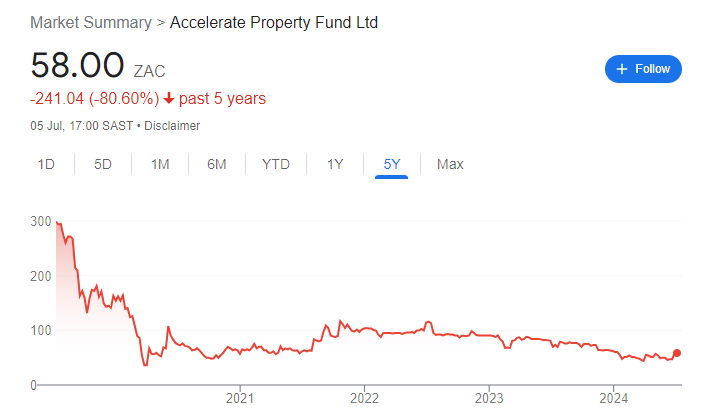
Accelerate Property Fund needs to reduce debt and doesn’t have the time to focus on particularly difficult buildings. Two such buildings are the Pri-movie Park office and warehouse and the 1 Charles Crescent office building, both in Eastgate. The fund has sold both buildings at a combined price of R117 million.

The vacancy levels are gigantic. The purchaser (a consortium of four family trusts including a couple of guys I knew at university) must have something different planned for the properties, as a condition to the deal is that Accelerate must sign the required resolutions for the re-zoning of the properties.


BHP disposes of two coal assets in Australia (JSE: BHG)

Two mines in the BHP Mitsubishi Alliance are being sold to Whitehaven Coal

The Blackwater and Daunia mines are being sold for a combined cash consideration of up to $4.1 billion. BHP holds 50% in these assets through the BHP Mitsubishi Alliance metallurgical coal joint venture in Australia.

$2.1 billion in cash is payable on completion, with $1.1 billion payable in cash over three years. The remaining $0.9 billion is structured as an earn-out over 3 years. It’s interesting to note that $100 million is payable as a deposit, which would act as a break fee in certain circumstances i.e. the sellers will retain this amount if the buyers walk away.

The net proceeds of the deal will be used to reduce debt.

In a separate announcement dealing with an operational review for the quarter ended September, BHP noted that it is on track to achieve full-year production and unit cost guidance at all its assets. The highlight in this quarter was an 11% increase in copper production year-on-year.

Of course, meeting guidance doesn’t mean that all production has moved higher. It just means that performance is in line with expectations. For example, iron ore and metallurgical coal are both down year-on-year, as is nickel. When looking at quarterly numbers, the timing of maintenance programmes at individual assets can have a big impact.

The bigger concern is that average realised prices have fallen in this quarter vs. the second half of 2023 for literally every single commodity in the group.


EOH’s operating profit is 35% higher, but is that enough? (JSE: EOH)

Even after the rights issue, there’s a lot of debt here

EOH’s revenue from continuing operations could only increase by 3.3% for the year ended July. That’s pedestrian at best, although the good news is that operating profit from continuing operations increased by 35%. A very important number is adjusted EBITDA from continuing operations, as this is a proxy for cash profits. It decreased by 11.5% to R322 million.

The adjusted EBITDA margin for the continuing operations is only 5.2%, which really isn’t anything to get excited about. This remains a low margin, unexciting business. It just happens to have a rollercoaster of a corporate history.

There is still a headline loss per share from continuing operations, but that’s because of the level of debt in this financial year. R678 million was repaid during the year, the bulk of which came from the R555 million equity raise. The problem is that the balance at the end of July 2023 is R683 million just in interest-bearing bank loans, so that’s still a whole lotta debt in this environment. If you include bank overdrafts and the ring-fenced project finance loan from the IDC, it’s up to R833 million.

Stephen van Coller as extended his contract as CEO by six months until March 2024. He did his job in terms of saving the existence of EOH and helping it achieve a stable balance sheet. There’s also a change to the CFO role, with Marialet Greeff an an internal appointment to replace Megan Pydigadu.

It may be steady, but is it now a good investment? With such a modest EBITDA margin and this much debt still on the balance sheet, I’m not excited by this story. Neither are the outgoing execs, it seems.


Pick n Pay laid bare just how bad it is (JSE: PIK)

If you had been paying attention to the stores around you, this wasn’t a surprise

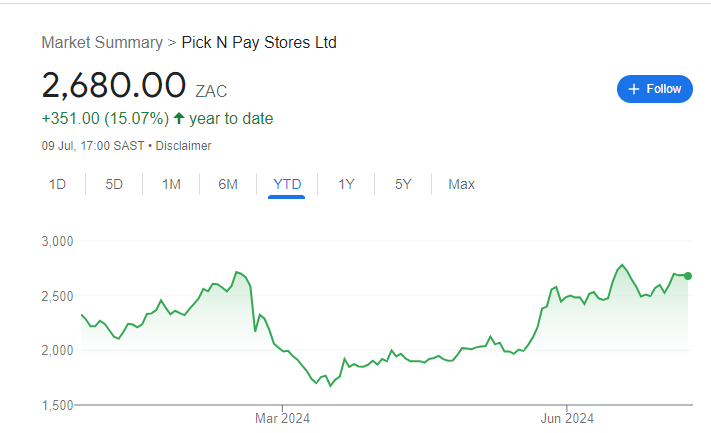
You know those green scooters that you keep seeing literally everywhere? The ones with the Checkers Sixty60 branding? That also counts as stock research. Common sense would’ve gotten you a long way this year with avoiding being on the wrong side of this chart:

The 12.5% drop on Wednesday after the release of results could’ve been avoided just by reading the trading statement, which made it clear that Pick n Pay is now loss-making even before considering diesel costs.

The reason for this starts very high up the income statement, with turnover up by just 5.4% and gross profit margin dropping from 19.4% to 18.5%. Trading expenses jumped by 13.7%. That’s a disaster, driving a decrease in trading profit of 97.5%.

The group made just R31.8 million in trading profit in the 26 weeks to 27 August, with a loss before tax of R837.2 million because of a huge increase in net finance charges. Unsurprisingly, the interim dividend is a thing of the past.

Of course, the announcement raises the R396 million spent on load shedding and blames this for Pick n Pay’s inability to respond to a more promotional environment. What it doesn’t say is that Shoprite (and others) are operating in exactly the same conditions, so it’s all relative. The reality for Pick n Pay is that years of strategic misstep chickens have now come home to roost.

If we are going to scratch around like chickens for the positives, then Boxer grew 16.1% and Pick n Pay Clothing (in my opinion the best business in the group) grew 13.8%. Online sales growth was 76.3%, although one would expect to see a big number there. Value-added services income grew by 13.5%.

Sean Summers has one hell of a task on his hands.


Quilter achieved a mixed result in the third quarter (JSE: QLT)

Net inflows in the core business are only slightly positive

When measuring the performance of an asset or wealth management business, assets under management and administration (AuMA) is a metric that only tells part of the story. These companies cannot control the movements in global asset values, with this factor having the biggest impact on AuMA. To really measure the performance of the company, you need to look at net flows and whether the manager is attracting new clients or not.

At Quilter, Old Mutual’s old wealth management business in the UK, some parts of the business are showing decent growth. This includes the Quilter distribution channel, with net inflows year-to-date of 16% of opening AuMA in the High Net Worth segment and 11% in the Affluent segment. In contrast, the independent financial advisor (IFA) channel on the Quilter platform experienced a net outflow. Another useful metric to consider is sales per Quilter advisor as a measure of productivity, up 23% year-on-year.

The non-core business experienced outflows consistent with the run-rate in the first half, after adjusting for once-off fund closures.

With all said and done, AuMA of £101.4 billion as at the end of September was very similar to the £101.7 billion level reported at the end of June.


Little Bites:

  • Director dealings:
    • Des de Beer has bought another R1.7 million worth of shares in Lighthouse Properties (JSE: LTE). That’s not all folks, because he’s also bought R2.67 million worth of shares in Resilient REIT (JSE: RES).
  • Impala Platinum (JSE: IMP) released an announcement clarifying the broader scope of the financial assistance resolution put forward in the AGM notice. The reason for the increased scope vs. previous years is because of the need to implement a B-BBEE transaction as part of the acquisition of Royal Bafokeng Platinum.
  • Following his investment in Apex Group, Mcebisi Jonas has resigned as a non-executive director of Sygnia (JSE: SYG) as this is a competing business interest.
  • Languishing at below R5 per share, Transaction Capital (JSE: TCP) announced that Coronation is at least buying the dip of all dips, increasing its stake in the company from 19.85% to 20.15%.
  • In 2022, Sasol (JSE: SOL) announced the appointment of Andreas Schierenbeck as a non-executive director, with much hype around the contribution he would make to decarbonisation efforts. He didn’t stick around for long, now resigning from the board based on increasing demands on his time away from Sasol and the risk of conflict of interests based on energy sector opportunities being pursued by the group.
Verified by MonsterInsights