Home Blog Page 265

Unlock the Stock: Mpact Limited and TWK Investments

Unlock the Stock is a platform designed to let retail investors experience life as a sell-side analyst. Companies do a presentation and then we open the floor to an interactive Q&A session, facilitated by the hosts.

I co-host these events with Mark Tobin, a highly experienced markets analyst who combines an Irish accent with deep knowledge in the Australian market (I know, right?) and the team from Keyter Rech Investor Solutions.

You can find all the previous events on the YouTube channel at this link.

In this Unlock the Stock event on 14th April 2022, we hosted Mpact Limited and TWK Investments. Both of these groups are involved in the heartland of our economy, with Mpact focused on the “circular economy” (recycled products) and TWK servicing the agriculture industry.

Sit back, relax and enjoy this video recording of our session with Mpact and TWK:

Tongaat: a horror story

You may need a strong coffee to get through this update in one piece. If you feel like helping Tongaat out of its sticky situation, you may want to add sugar to it.

Tongaat primarily operates in KwaZulu-Natal, a province that is making a strong case to be the destination for the next Survivor series. The riots simply added to problems that Tongaat already had, with years of poor maintenance leading to lower production, higher costs and more capital expenditure. We will get to the floods later.

I often write about operating leverage, which refers to the proportion of fixed vs. variable costs. With high operating leverage (more fixed costs), the good times are great and the bad times are horrible. Manufacturing companies typically have high operating leverage and Tongaat is no different, so a 9% drop in sugar production caused havoc on profitability.

It didn’t help that the last quarter of the year saw a shift to low margin bulk sugar sales, while consumers turned to cheaper private label brands rather than “miller brands” in the sugar aisle.

Against this backdrop, it’s not surprising that the South African operations are expected to report a loss for the year ended March 2022. The resultant pressure on local cash flows is terrible news for Tongaat, as most of the group’s debt is carried by the South African operations. More on the balance sheet to come.

Things weren’t great in the Zimbabwe sugar operations, with the usual macroeconomic issues driving a higher proportion of sales in Zimbabwe Dollars rather than US Dollars. This made it more difficult to repatriate profits, which isn’t good news when a company is struggling with its balance sheet.

The narrative was positive in Mozambique at least, with higher domestic and export sales. The future looks good as well, with extensive cane root replanting with modern varieties completed and set to benefit the business over the next two years.

The Botswana sugar packing operation was negatively impacted by aggressive pricing by competitors. Cheaper sugar imports entering the country hampered this part of the business.

If you thought the sugar businesses sound difficult, you will be interested to know that Tongaat also has a property division based in KwaZulu-Natal. I think that getting people to pay their TV Licences is probably easier than trying to sell property in that province. Tongaat remains convinced that the intrinsic value of the portfolio is intact and that a sales pipeline is being built for the 2023 financial year.

Net borrowings at the end of March 2022 were R6.8 billion (up from R5.8 billion a year ago) of which R5.5 billion is owed to South African lenders. The balance is trade finance provided by the South African Sugar Association.

Based on how horrible the last few months have been, the envisaged rights offer has been increased to between R4 billion and R5 billion. This is a company with a market cap of just R500 million!

A trading statement covering the year to March 2022 confirms the extent of the pain, with Tongaat expected to suffer a drop of at least 120% in earnings per share. This implies a loss per share of at least -358 cents per share vs. a profit per share of 1,794 cents in the prior period (which did include results of businesses that have subsequently been sold).

But that’s not all, folks. Subsequent to this financial period, the province Tongaat calls home was hammered by terrible floods. Tongaat notes that production started looking stronger until the flooding caused the mills and refinery to stop production.

There has thankfully been no significant damage to the milling infrastructure, but mills were shut for the past 10 days and production can only resume once farmers can access waterlogged fields to harvest cane.

The refinery site was flooded and municipal services to the site have been “compromised” so resumption of normal operations may be delayed.

In summary, this really has been a horror story for investors.

Mediclinic doing well in the recovery room

Mediclinic has provided a trading update for the year ended March 2022. With full results scheduled for release on 25 May, this gives the market a taste of what happened in that period.

As I’ve written many times before on this platform, the hospital groups were not beneficiaries of the pandemic. The cancellation of elective procedures caused havoc with operating margins. The latest results demonstrate that a recovery from that tough period is well underway.

Revenue grew by 8% and group EBITDA margin came in at around 16%, a 180bps improvement from the 14.2% result in the prior year. Revenue is now ahead of the FY20 period (GBP3.2 billion vs. GBP3 billion) but EBITDA margin hasn’t fully recovered yet, running 150bps below the FY20 margin of 17.5%.

Investors will appreciate the improvements in the balance sheet. After a tough period in FY21 with low cash conversion of profit into cash generated from operations (just 77%), a 125% conversion rate in FY22 reflects a period in which working capital swung positively.

Thanks to strong cash conversion, the group net debt / EBITDA ratio has improved from 5.1x to 4.0x. Importantly, this is better than the 4.3x reported in FY20.

Mediclinic’s share price is trading only slightly below pre-pandemic levels and is up around 7% this year.

Grindrod: a mixed bag of news

Grindrod has released a trading update that includes information on the floods in KZN. I’m not surprised to see this, as the market was talking about every business with possible exposure and Grindrod certainly featured on that list.

Like all great company updates, it starts with the good news.

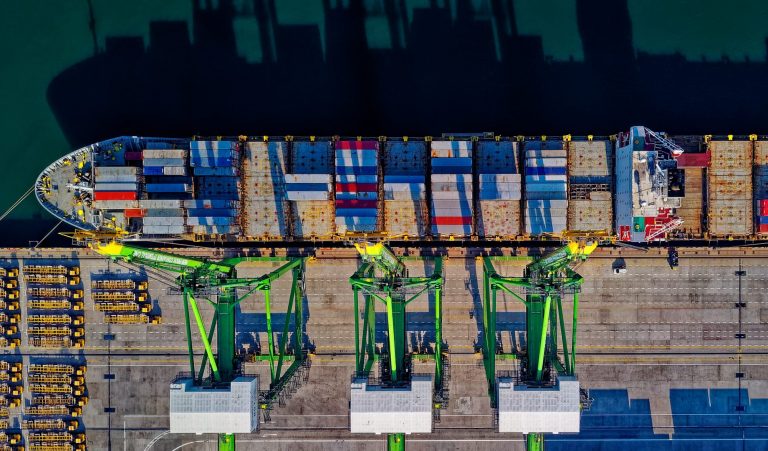
In the first quarter of 2022, Ports and Terminals achieved strong volume growth. Ports volumes were up 11% and Terminals drybulk volumes were up 48% vs. the prior period.

Grindrod also highlights the Coastal Shipping and Clearing and Forwarding business in the Logistics segment, which delivered earnings growth of 39% over the prior period. This business benefits from a recovery in sea-borne trade to pre-pandemic levels.

Grindrod Bank’s earnings were up 9% on the prior period despite continuing with a cautious approach, indicated by the large liquidity surplus.

We now get to the bad news.

The container depots, terminals and warehouse facilities in Central Durban were impacted, with five sites presently suspended and likely to remain that way for several weeks. It’s not every day that you’ll see a sentence like “activity to recover customer containers and restore facilities has commenced” – this was a serious natural disaster.

Unrelated to the flood damage, the Matola Terminal has suffered force majeure after a ship collision damaged the infrastructure. Ship-loading operations are expected to commence this month.

The announcement follows the standard approach of a you-know-what sandwich, starting and ending with positive news and putting all the ugly bits in the middle. The good stuff starts again with an update related to the disposal of the fuel carrier fleet in Botswana at carrying value. This means that Grindrod has fully exited the fuel and automotive road transportation business, in line with the group strategy of focusing on core assets.

Finally, the remaining two tranches of preference share debt of R150 million in the Private Equity and Property business has been settled.

Transnet declares force majeure

Force majeure is a legal construct that is common in agreements. It allows for one of the parties to be released from liability in a scenario where the ability to perform under the contract is made impossible based on unforeseeable circumstances.

As you can imagine, this becomes open to interpretation and all kinds of fighting. The only winners in these scenarios are the lawyers.

On Thursday, both Thungela and Exxaro announced that Transnet had notified them on 8th April that the state-owned company was now operating under force majeure.

Transnet was already underperforming in these contracts, with just 58.3Mt of coal delivered to the Richards Bay Coal Terminal in 2021 vs. annual capacity of 77Mt. In other words, Transnet has been letting every taxpayer down at a time when coal prices were flying and local producers were trying to take advantage of an upswing in the cycle.

The factors that Transnet is using to justify the force majeure are legal proceedings relating to the irregular locomotive acquisition and maintenance contracts, as well as “rife vandalism” on the coal line. Thungela chose not to give its view on whether these are truly beyond Transnet’s control, while Exxaro was blunter in its view that it disagrees with Transnet’s assessment.

Because Transnet was so broken already, Thungela notes that it doesn’t believe that this development will have a material impact on the 2022 operational outlook. Exxaro’s view was that the impact cannot be determined until negotiations are finalised.

Transnet hopes to conclude new five-year agreements with the coal exporters by 30 June 2022. This is sadly a perfect example of South Africa scoring yet another own goal.

Mr Price writes another cheque

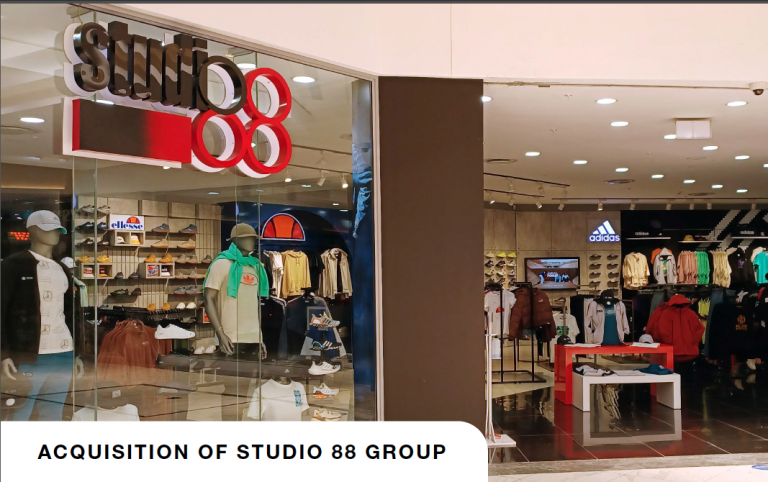
Mr Price has been on the acquisition trail with a vengeance. The latest deal is for Studio 88 Group, a substantial retail group that operates several fashion chain stores.

Mr Price will buy a 70% stake in the company from RMB Ventures and the current management of Studio 88, so this is a classic private equity exit. RMB Ventures will sell out completely and the management team will sell half of their interests. Importantly, the seven senior management team members who are shareholders will retain their positions and will remain as shareholders, ensuring alignment with Mr Price.

This is a significant deal for Mr Price with a transaction value of R3.3 billion, or around 6% of the company’s market capitalisation. Mr Price has been cash-flush and has made it clear to the market that deals are the way forward, so the acquisition is funded entirely through existing cash resources.

This creates a lower-risk deal (as the banks won’t come knocking if it starts going wrong), which is a good thing as every acquisition is always a risky move and Mr Price has been doing more deals recently than some private equity funds!

With revenue in the last financial year of R5.6 billion, Studio 88 Group is the largest independent retailer of branded leisure, lifestyle and sporting apparel and footwear in South Africa. Retail outlets include Studio 88, SideStep, Skipper Bar, John Craig and other chains. There are over 700 stores targeting aspirational customers, so this is different to the usual Mr Price value proposition.

This acquisition has helped me realise that I’m truly on the wrong side of 30, as I don’t know most of these brands. I can confirm that aspirational fashion takes a backseat when a chunk of monthly income is going into buying nappies for Toddler Ghost.

Where Studio 88 does have overlap with Mr Price’s model is in the focus on cash sales. Studio 88 is exclusively cash-based (vs. selling on credit), so the money is being made on gross profit margin rather than interest on a debtors book.

Studio 88 will become the group’s second largest trading division. With this footprint included, Mr Price Group would have over 2,400 stores and employ over 25,000 people.

The enterprise value is R4.7 billion and EBITDA for the year ended September 2021 was R630 million, so the EV/EBITDA multiple is 7.5x which is reasonable in my view. On a last twelve months basis to February 2022, EBITDA was R765 million, so there is strong underlying growth (and the multiple is actually just over 6x). I’m pleased to see that these numbers are on a sensible pre-IFRS 16 basis, which means EBITDA is net of rent payments. This may sound ridiculous to you (it certainly does to me), but current accounting rules push lease payments below the operating profit line and into the interest paid line.

If you read my weekly Ghost Mail publication earlier this week, you would know my feelings around current accounting rules.

Mr Price’s stated vision is to become the most valuable retailer in Africa. This isn’t possible without moving outside of the core value proposition, so Mr Price sees this acquisition as a way to plug a gap in the group. Aspirational (i.e. brand-conscious) customers aren’t currently being serviced by Mr Price. Studio 88 has achieved a compound annual growth rate (CAGR) of over 20% in both revenue and operating profit for the last 10 years, so the management team clearly knows what it is doing.

This is a Category 2 deal for Mr Price, so shareholders will not be asked to vote on it. Regulatory approvals (like the Competition Commission) will need to be obtained by no later than 31 October 2022.

Mr Price closed 6.9% higher, so that’s as close to a “shareholder vote” as the deal will get.

Captain Capitec still on a charge

Capitec is a wonderful example of a company where the valuation has moved into a different solar system from the rest of the market. The company has been one of the single greatest success stories of modern times on the JSE and continues to grow. It needs to, as the valuation is beyond demanding.

There’s been a lot of noise in the market around Capitec and there are still those who simply don’t believe the numbers. In the absence of concrete proof to the contrary (whether from Viceroy or elsewhere), I will rely on the audited numbers released by the company.

Those numbers tell quite a story.

Before getting into the details, I’ll prepare you by noting that headline earnings per share (HEPS) increased by 84% in the year ended February 2022 to R73 per share. I know what you’re thinking – “this was a recovery year vs. Covid” – and you are right, when it comes to most companies. For the year ended February 2020, HEPS was R54.28 per share. Earnings are 34.5% higher over a two-year period that included the largest economic shock of our lifetimes.

The dividend story is even stronger, up 128% to R36.40 per share. To top it off, there’s a special dividend of R15 per share. Ignoring the special dividend, Capitec is only on a dividend yield of 1.6%. This is a result of the enormous valuation placed on the company by the market.

If we look deeper, we find a year that boasted 14% growth in active clients to 18.1 million and 17% growth in clients using digital channels to 10.1 million. Such high growth numbers mean that Capitec continues to win market share.

The financials tell an interesting story around the strategy.

Total interest income (the bread and butter) only increased by 6%. Net loan fee income, which is related to this, also increased 6%. This is nothing to get excited about, obviously. The magic is happening on other income lines like net insurance income (up 60%) and net transaction income (up 21%). Don’t ignore funeral plan income, up 39%.

These ancillary services are aggregated into what banks refer to as “non-interest revenue” – a key driver of return on equity as this income is not directly related to assets or liabilities on the balance sheet.

A huge 55% decrease in credit impairments (a R4.3 billion favourable swing) gave the result a strong boost. After impairments, net income increased by 55%.

Expenses grew substantially in this period, up 33%. The narrative in the result suggests that the main driver is employee costs (up 57%). This has caused the cost-to-income ratio to jump to 47% from 42%, of which 300bps is directly attributable to employee cost growth. Although that’s still a much better cost-to-income ratio than competitors, investors will keep an eye on this.

Thanks to such positive JAWS (the net income growth rate minus the expenses growth rate), profit after tax shot up by 91% and headline earnings increased by 84%.

Return on equity (ROE) has improved from 17% to 26% and the net asset value per share (a key concept in banks) increased by 20% to R308.88.

Here’s the kicker: Capitec closed 1.5% lower yesterday at just under R2,270 per share. That’s a price/book multiple of 7.35x (price divided by net asset value per share). The effective ROE (which combines ROE as reported and the value the market is placing on the equity) is thus just 3.5%.

I know from my work on Magic Markets Premium that some of the best companies in the world (like Microsoft) trade at these levels of effective ROE.

The valuation just doesn’t seem to matter with Capitec, as the share price is up nearly 64% over the past twelve months and is 11.5% higher this year.

The market is pricing in a great deal of growth and to Capitec’s credit, they keep on delivering it. After dominating in consumer banking, even the business banking efforts are looking really good (accounts up 31% and a contribution of R174.5 million to group earnings). Capitec has acquired Mercantile Bank to give its business banking strategy a boost.

Notably, Capitec is lagging the share price performances of other major banks this year. The valuation has taken a small breather. But with a result like this, the growth story is still in good shape.

TWK posts a record performance

TWK Investments isn’t a company that you’ll spot in a list of SENS announcements. The company has its primary listing on the Cape Town Stock Exchange and a secondary listing on A2X for trading purposes, so scanning the JSE won’t help you find it.

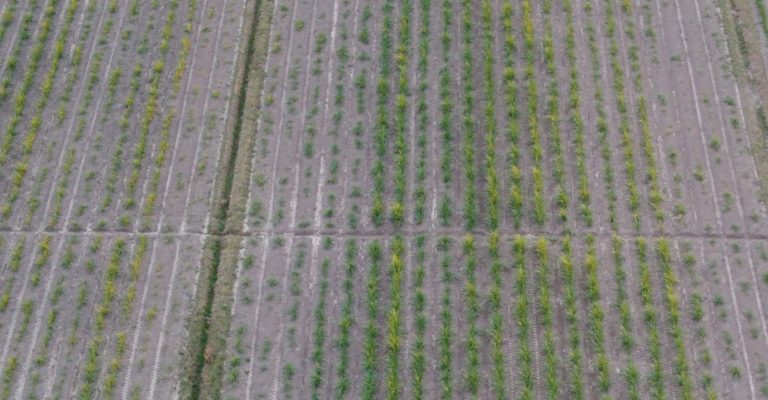
In case you’re curious, TWK stands for Transvaal Wattle Growers. Tracing its roots to 1940, the company now operates a timber division (ranging from forests to a chipping mill), a grain division (storage, marketing and processing), a trade division (retail branches selling agricultural products as well as New Holland agencies), a renewable energy division (roof solar solutions), a motors division (dealerships and fuel stations in Piet Retief, Ermelo and Standerton) and a financial services division (financing and insurance solutions to the agricultural industries).

This is clearly an interesting group and one that you may not be familiar with.

The company has released its interim results for the six months to February 2022 and there are some chunky numbers to attract your attention. For example, revenue is up 30.6% to R4.88 billion and the net asset value (NAV) per share has increased by 18.43% to R50.24.

The share is trading at R37.50, a discount of just over 25% to the NAV.

The percentages become a little silly as you move further down the income statement (in a good way). EBITDA is up 111.8% and profit after tax is up 175.5%. Cash is always important and investors will be pleased to note that cash from operating activities (before working capital changes) increased 100.4%.

This is a record interim result that includes strong contributions from the timber and trade divisions in particular. Like in any business, there are also challenges being faced. Guidance from management is strong, with an expectation of outperformance in the second half of the financial year vs. the comparable period.

To help you find out more about this fascinating company, Unlock the Stock will feature the TWK management team at 12pm this Thursday 14th April. The other company on the day will be Mpact, a solid JSE mid-cap business that has proven its resilience during a tough few years in South Africa.

This is a wonderful (and free) opportunity to engage with the management team and ask your questions. Don’t miss out on it!

To attend, you need to REGISTER ON THIS LINK

See you on Thursday!

Life’s EBITDA margin is a mixed bag

Life Healthcare has released a voluntary trading update for the six months to March 2022. This covers the first half of the 2022 financial year.

The business isn’t a rocket when it comes to revenue growth, so investors are looking for improvement in EBITDA margins to help drive profitability.

The South African operations have delivered accordingly. With revenue growth of between 3% and 5% in this period, the increase in EBITDA margin from 16.6% to around 17% is important.

The strength of the rand doesn’t do any favours to the results of Alliance Medical Group (AMG) once converted to Life’s reporting currency. AMG’s primary areas of operation are the UK, Italy and Ireland. Revenue growth was just 1% to 3% in this period. Normalised EBITDA margin has gone the wrong way in that business, down from 24.8% to around 21%. Life attributes this to the ending of COVID-19 contracts with the UK’s National Health Service.

At group level, revenue is up between 3% and 5% and normalised EBITDA margin is 17% vs. 18.6% in the comparable period. This has been dragged down by the AMG result.

It may sound counterintuitive, but hospital groups didn’t do well during the pandemic. Elective surgeries were cancelled and margins suffered as operating leverage worked against these groups. Net debt to EBITDA (a measure of balance sheet strength) has been a focus, so Life reports on this in the update. A net debt to EBITDA of 2.78x as at 31 March 2021 was high, improving to 1.82x by September 2021 and now at around 2x.

Momentum is encouraging, with average occupancies in this period of 58% vs. 57% in the comparable period. More importantly, average occupancies over the last 8 – 10 weeks have been 66% and theatre minutes have increased by 10% year-on-year.

Shareholders should note that the Scanmed S.A. business in Poland was in the comparable period but not in this one, as it was sold to Abris Capital on 26 March 2021. The business contributed 6 cents per share to net earnings in the first half of 2021.

The primary international growth initiative is Life Molecular Imaging (LMI), which has grown revenue by 30% in this period despite delays in drug approvals by regulators in key markets.

Locally, growth initiatives are in the renal dialysis and oncology businesses. Life has completed its first deal in the imaging market, acquiring the imaging assets of the East Coast Radiology practice. The process to build two cyclotrons in South Africa has commenced. Although these may sound like villains in a Transformers movie, they are actually particle accelerators used for imaging procedures.

Detailed results for this period will be released on 26th May. There wasn’t much of a market reaction to this update, so we will see what happens as we head closer to results. The share price is down around 5% this year.

Purple Group: EasyEquities profit growth stalls

Any earnings release by Purple Group is guaranteed to get people excited on Twitter. As the controlling shareholder in Easy Equities, Purple is largely responsible for creating an entire cohort of new retail investors in South Africa.

For that, I will always admire them. In a country with a terrible savings culture, this is exactly what was needed. Based on their love for the product, that army of investors has also piled into Purple’s shares over the past couple of years. This has driven the market cap into the stratosphere, leaving big shoes for the profitability of the group to fill.

The latest news is the release of results for the six months to February 2022.

I’ll start with the unit economics, as this is a growth stock after all. The group needs clients who trade and invest, not clients who sit with small balances and don’t do anything. It helps that the cost to acquire a client is low at R80 per client, down 24.7% vs. the comparable period. The ability to build a large user base at a low cost is core to the bull thesis around Purple.

Despite the improvement in unit economics, group costs increased by 39.7%, ahead of revenue growth of 36%. Still, profit increased by 114.2% to R17.7 million from R8.3 million in the prior period.

If we delve into the segmentals, we see that the much-loved EasyEquities business grew revenue by 27.9% to R108.7 million. The company points out that portfolio turnover has returned to pre-Covid levels, which is to be expected in a more “normal” equity market.

Funded retail accounts increased by a gigantic 85.9% to 966,299 accounts and platform assets increased by 36% to R36.5 billion.

Without losing sleep over the rounding, this implies average assets per funded account of around R38,000. At a 0.25% brokerage fee, this implies revenue of R95 on this account assuming it is fully invested and there is no churn. In other words, assuming it is invested in full and then left alone to grow. This means that EasyEquities is in the green vs. the cost to acquire a client even if there is no churn on the portfolio.

This is a measure of risk of course (e.g. break-even on a new client) rather than revenue growth, but it’s still interesting.

Speaking of growth, I’m afraid that there isn’t much of it at net profit level. Profit after tax of R23.3 million is just 4.3% higher than the comparable period. I suspect that my matchbox calculation above (which reflects a thin profitability layer per new client) and a period of subdued market activity for all clients is to blame. Although revenue grew sharply, so did overall costs despite efficiencies achieved per new client.

If you split out RISE (profit up 601.5% to R3.4 million) then it looks like the core EasyEquities business went backwards in terms of profitability.

EasyCrypto contributed R4.5 million in profit to the EasyEquities Group, representing over 19% of profit. Purple Group has acquired the remaining 49% of EasyCrypto with an effective date of 1 March 2022. This has proven to be an excellent deal for the group, demonstrating the value of building distribution for financial products.

EasyProperties is coming off a small base but is still growing quickly, with revenue up 146.4% and invested clients up 255.89% to 59,330.

Moving on to GT247.com, there’s been a pleasing improvement there. Revenue increased by 98% to R25.9 million and profit after tax was R4.9 million vs. a loss of R3.3 million in the prior period. This swing of R8.2 million explains nearly the entire improvement in group profitability.

Going forward, the company is going to focus on what it does really well: bringing in new clients at a low cost. There are partnerships with Discovery Bank and Telkom launching later this year. The group is also expanding internationally, with operations being rolled out in Kenya and the Philippines.

The share price closed 3.8% lower yesterday. It is up more than 160% in the past 12 months and down 7% this year.

With HEPS in this period of 1.63 cents, then an annualised price/earnings multiple would be over 85x. This makes no sense at all based on current earnings growth rates, so those with a long view on Purple at this price are believing strongly in Purple’s ability to monetise the user base with other financial products.

This is a powerful thesis based on Purple’s low cost to acquire a client, but it is effectively “pricing in” some rather flattering assumptions about how the business might develop.

The bear case is built around the unit economics, as Purple doesn’t make money unless clients are actively trading and investing. When markets are volatile, that’s positive for revenue. In “normalised” markets where a 15% annual return is a solid year, the fear is that many inexperienced investors may run out of patience and disappear.

I am a very happy EasyEquities client. I am not a shareholder in Purple.