
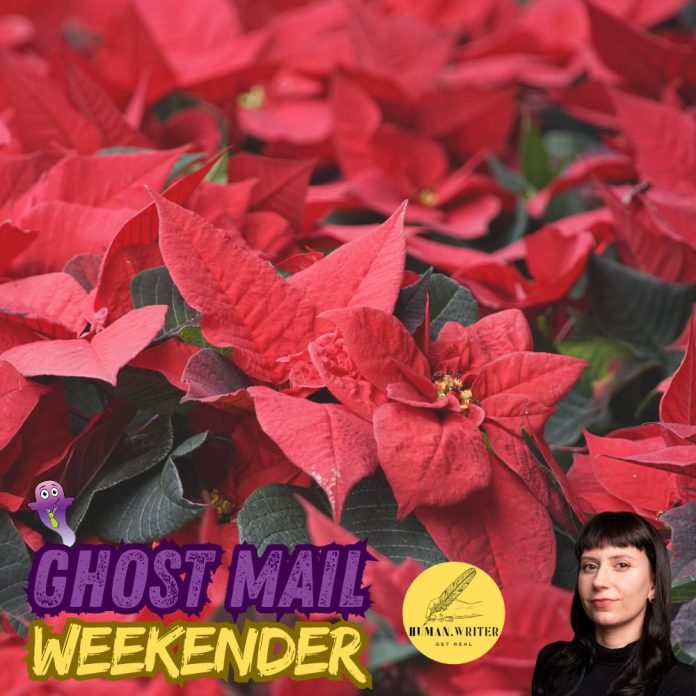
A festive staple with a surprisingly cutthroat backstory, the poinsettia’s rise to Christmas royalty is tangled up with colonial meddling, corporate monopolies, and a global plant arms race. This is the unlikely tale of how a fragile Mexican shrub became one of the most powerful products in the modern holiday economy.
Every year, just after November, it emerges. In great crimson waves, it stakes its claim, conquering territory at nurseries, grocery stores, and reception desks around the country.
Christmas is nigh, because the poinsettia has arrived.
With roughly 200 million plants sold worldwide annually and a retail haul well over the $1 billion mark, the poinsettia is, without exaggeration, one of the most commercially successful plants on Earth. Not bad for a humble Mexican shrub with a name that sounds like something you’d see a podiatrist for.
But those showy red leaves (yes, those are technically leaves, not flowers) are concealing a story absolutely heaving with geopolitics, patent wars, botanical espionage, dethroned monopolies, and a global supply chain so tangled it makes Christmas lights look organised.
So how did cuetlaxochitl – a plant once used to dye cloth and treat fevers – become the undisputed queen of Christmas décor?

A shrub with divine connections
Long before Woolies flooded their checkout displays with them, the poinsettia lived quietly in its native habitat of Southern Mexico. To the local Nahua people of the 14th century, it was less of a festive decoration and more of a practical aid; they mostly used it for dye and medicine.
Everything changed when the Spanish arrived and, in a rare moment of colonial subtlety, didn’t rename it something horrendous like “Royal Scarlet Colonial Flower of His Majesty”.
Instead, Franciscan monks in the 1600s christened it “flor de Nochebuena” – aka “Flower of the Blessed Night”. They incorporated it into Christmas celebrations, drawn to its star-shaped leaf pattern (which they said symbolised the Star of Bethlehem) and its vivid red bracts (representing Christ’s sacrificial blood). The white variants suggested purity. Hence, the plant’s connection with Christmas, one of the most important holidays on the Christian calendar, was firmly established.
For a few centuries, the plant was a local superstar, beloved in Mexico but virtually unknown everywhere else. Then Joel Roberts Poinsett walked onto the scene like the main character and turned everything upside down.
The diplomat who couldn’t stay out of trouble
Poinsett, a wealthy Southern Unionist, slave owner, and America’s very first diplomat to Mexico, had what you might politely call a talent for making himself unwelcome. During his tenure in the late 1820s, he managed to irritate just about everyone – partly because he tried to buy Texas (unsuccessfully), and partly because he simply couldn’t resist meddling.
But in 1828, just before Mexico finally told him to please pack his bags and go home, Poinsett visited the town of Taxco. There, he spotted flor de Nochebuena and had what can only be described as a botanical epiphany. He immediately shipped cuttings of the plant back home to the US.
A few years later, the poinsettia – now renamed after its “inventor” – made its American debut at a flower show in Philadelphia. People lost their minds. No-one had ever seen anything like it. Demand skyrocketed, and supply raced to keep up.
There was just one problem: the early poinsettia was actually terrible at being a commercial product. It wilted after 2–3 days, it hated travel, and it dropped leaves the moment you looked at it funny. Basically, it was the houseplant equivalent of a Victorian child who took ill if the weather changed unexpectedly.
If the poinsettia was going to make it in the big leagues, it was going to need a miracle. Fortunately, it got the Ecke family.
The dynasty that turned poinsettias into Christmas royalty
In 1900, German immigrant Albert Ecke set off for Fiji to open a wellness spa, but never quite made it there. On the way, he stopped in Los Angeles, liked the sunshine, and simply… stayed. His detour would go on to change agricultural history.
Not one to sit on his hands, Ecke built a dairy, then a fruit orchard, then started selling cut flowers, including poinsettias. He therefore had his ear to the ground when the big poinsettia boom started to rumble. Wisely, Ecke diverted his attention and made poinsettias the centre of the business, earning a relatively good living as a result.
His son, Paul Ecke, took over the family flower farm in the 1920s and had two big insights: 1) poinsettias needed better genetics and 2) the public needed better marketing. He introduced a secret grafting technique (a closely guarded method learned from an amateur gardener in Germany) that produced poinsettias with fuller shapes, more branches, sturdier stems, and longer shelf lives. In other words: consumer-proof poinsettias.
Then came the Plant Patent Act of 1930. Ecke immediately registered dozens of his unique cultivars, shutting out copycat competitors faster than you can say “intellectual property rights”. But Paul’s son, Paul Jr., took it even further. Unlike his father, he understood the power of the media. He knew that in order to get people to buy something, you needed to put it where they could see it. He flooded women’s magazines and breakfast television shows with free poinsettia samples. He (and his plants) even appeared on The Tonight Show. In doing so, he transformed the poinsettia from a plant into a seasonal identity.
By the 1990s, the Ecke empire was moving 500 000+ potted plants and more than 25 million cuttings a year. Their market share was a staggering 90%. As one journalist at the time so succinctly put it: “The Eckes of Southern California are to poinsettias what De Beers is to diamonds.”
But just like diamonds, that dominance was about to crack.
The graduate student who broke the monopoly
In 1992, a graduate student named John Dole got his hands on an Ecke cutting and did what graduate students have always done best: he tinkered. Piece by piece, experiment by experiment, he worried at the problem until the industry’s most closely guarded secret finally gave way. Dole had reverse-engineered Ecke’s top-secret grafting method – and instead of locking it back up, he published it. The effect was immediate and explosive.
Once the technique was no longer proprietary, the mystique vanished overnight. Anyone could now grow poinsettias with the same full, lush form that had defined Ecke plants for decades. Competitors rushed in, and the 1990s turned into a kind of poinsettia renaissance. Breeders pushed boundaries, colours multiplied, sizes shifted, patterns grew bolder, and varieties emerged with names that sounded less like plants and more like 80s rock bands – think Premium Picasso, Monet Twilight, and the like.
Then the big-box retailers arrived, and the tone of the industry changed again. Home Depot, Lowe’s, and Walmart recognised poinsettias as the ideal holiday loss leader: seasonal, emotional, and disposable enough to sell by the million. Prices plunged, sometimes as low as 99 cents a plant. Margins collapsed. Growers were squeezed hard, small farms disappeared, consolidation accelerated, and production steadily migrated offshore.
By 2012, even the once-invincible Ecke empire could no longer stand apart. It was sold to Dutch giant Dümmen Orange, one of the largest plant breeders in the world. An era ended. In its place, a globalised supply chain took root.
A global empire with one major omission
Today, Dümmen Orange sells roughly 60 million poinsettias a year – more than half of the global supply – which means there’s a good chance the plant sitting on a table at your local nursery traces its lineage back to them. The poinsettia may feel ubiquitous and anonymous now, but behind that familiarity sits an industrial-scale operation quietly dominating a once-fragmented market.
There’s an irony threaded through this success. While the world buys millions of poinsettias every December, the country where the plant originated, Mexico, still struggles to sell its own potted versions in the United States. A century-old soil restriction means Mexican growers are allowed to export cuttings, but not fully grown plants. As a result, Mexico earns around $12 million a year supplying the raw genetic material, while the far more lucrative potted-plant market remains firmly out of reach.
For many growers, the resentment is palpable and understandable. This is, after all, their native plant. Yet the poinsettias filling homes and shopping centres around the world are overwhelmingly patented, branded, and controlled by foreign firms, their value captured far from the soil where the species first evolved.
In Mexico, the tension has even seeped into language. “Poinsettismo” has become a slang insult, used to describe someone arrogant or intrusive. A pointed jab, especially when you remember that the plant’s global fame began with one very intrusive American diplomat.
A holiday icon, no matter the politics
For all the geopolitics, the patents and supply chains, the monopolies and student-led disruptions, the rise of Dutch mega-breeders and the slow grind of global consolidation, one thing has remained stubbornly unchanged: nothing signals Christmas quite like a poinsettia.
What began as a Nahua medicinal dye has become a billion-dollar global holiday symbol – a star-shaped burst of colour that shows up, unfailingly, every December. It’s a reminder that history rarely moves in straight lines, and that the objects we take for granted often carry stories that are stranger, messier, and far more interconnected than we imagine.
About the author: Dominique Olivier

Dominique Olivier is the founder of human.writer, where she uses her love of storytelling and ideation to help brands solve problems.
She is a weekly columnist in Ghost Mail and collaborates with The Finance Ghost on Ghost Mail Weekender, a Sunday publication designed to help you be more interesting. She now also writes a regular column for Daily Maverick.
Dominique can be reached on LinkedIn here.


Sunday Ghost Mail is my favorite read of the weekend. Thanks Dominique.