
A slashed tent, frozen footprints, and injuries with no visible cause. The Dyatlov Pass case has everything a good mystery needs, except a conclusion.
At the end of the 1950s, nine experienced hikers walked into the Ural Mountains in Western Russia. None of them walked out again. What they left behind has puzzled the world for decades: a tent slashed open from the inside, warm clothing and shoes left behind, and bodies scattered across the frozen slopes in various states of undress.
The events that took place on the Dyatlov Pass are shrouded in mystery; we have many theories, but no irrefutable conclusions. Grim though it may be, it has become one of the internet’s favourite enigmas, probably because it has so many tantalizing clues scattered across it.
Proceed with caution, dear reader, and with the knowledge that no straight answers lie in wait at the end of this article.
First, the facts
In January 1959, a 23-year-old radio engineering student named Igor Dyatlov led a group of 9 experienced hikers into the northern Urals on a ski expedition. One member of the group turned back early with joint pain, thereby becoming the only member of the 10 to survive.
The 9 remaining hikers pressed on toward a mountain that the local Mansi people called Kholat Syakhl, which roughly translates to “Dead Mountain”. As far as names go, that one is probably the closest that a mountain can provide in lieu of an actual indemnity form.

The group had arranged to send a telegram to their sports club once they reached the settlement of Vizhai, which they estimated they would get to no later than 12 February. When the date came and went with no sign of a telegram, nobody panicked. After all, there was a great distance to cover and delays were quite normal on such ambitious expeditions. It wasn’t until the 20th of February, when stressed relatives of the hikers started demanding action, that search parties were sent out.
On 26 February, volunteer searchers found the hikers’ tent on the slope of Kholat Syakhl. It was half-collapsed and appeared to have been cut open from the inside. The hikers’ clothing and supplies were still inside, but they were not. Instead, footprints leaving the opening in the tent indicated that they had walked towards the treeline, which was about 1.5 kilometres away, in single file and at a normal pace. What was even stranger was the fact that the footprints revealed that only some of the hikers were wearing boots when they left the tent – some were barefoot, and one set of prints was left by a person wearing only one sock.
They found the first two bodies under a pine tree. They were stripped down to their underwear and huddled around the remains of a small fire. Some distance away from them, three more bodies, slightly better dressed, were found in the snow, in positions that suggested that they were attempting to return to the tent when they died. The final four were only found about two months later, buried under metres of snow in a ravine.
Next comes the inquest
A legal inquest started as soon as the first five bodies were found. A medical examination found no injuries that might have led to their deaths, and it was concluded that they had all died of hypothermia – unsurprising, considering nighttime temperatures in the area were recorded as low as -40 degrees Celsius. It seemed like a relatively open-and-shut case (with the odd inexplicable detail here and there) until the second batch of bodies was recovered from the ravine. At this point, things got a little weird.
Three of the hikers found in the ravine had fatal injuries: one had major skull damage, and two had crushing chest fractures. These were the kinds of internal injuries that coroners usually saw in car crash victims – and they were almost exclusively internal. With the exception of some soft tissue damage to their faces (which is to be expected from being found face-down in running water), none of the four bodies from the ravine had external wounds that aligned with their severe bone fractures.
The Soviet inquest opened in February 1959 and was hastily closed that May with the deliberately hollow verdict that the hikers had died from “a compelling natural force”, whatever that means. The files were then classified and packed away in a secret archive, where they stayed for three decades. Relatives were told only that the group had frozen, and the dead were buried in closed coffins
Now, the theories
Given the combination of unusual circumstances, unanswered questions and unyielding Soviets in charge of the information, human imagination was left to fill in the gaps in this story. And boy, did we produce some colourful theories over the course of the past 67 years.
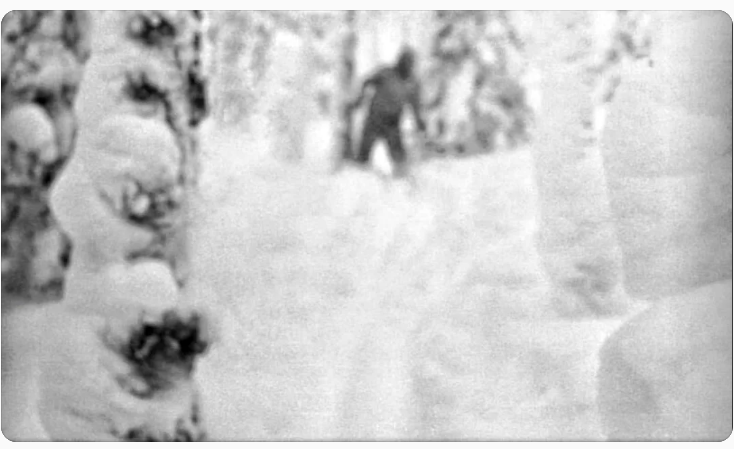
Of course, there’s a Yeti theory, because you can’t have people dying under strange circumstances anywhere near a snowy mountain without invoking a shaggy, slouching cryptid. Proponents of this theory point to the fact that some of the hikers died of physical trauma (they don’t have an explanation for the fact that the hikers had almost no external wounds – maybe the Yeti was wearing gloves that day). What really fanned the flames of this theory was a creepy photograph retrieved from one of the hikers’ film cameras, which showed what appeared to be a dark, blurry figure peering around a tree. There’s every likelihood that this was just another hiker. Unfortunately, the image really is too blurry to say for sure.
One hypothesis, popularised by Donnie Eichar’s 2013 book Dead Mountain, is that wind going around Kholat Syakhl created a Kármán vortex, which can produce infrasound (low frequency acoustic waves) capable of inducing panic attacks in humans. Eichar claims that, because of their panic, the hikers were driven to leave the tent by whatever means necessary and fled down the slope. By the time they were farther down the hill, they would have been out of the infrasound’s path and would have regained their composure, but in the darkness would have been unable to return to their shelter.
Another popular theory is that the campsite fell within the path of a Soviet parachute mine exercise. This theory alleges that the hikers fled the tent in a shoeless panic after being woken by loud explosions overhead. The four found in the ravine were fatally injured by parachute mine concussions.
There’s a bit of meat to this theory, as there are indeed records of parachute mines being tested by the Soviet military around the time the hikers were in the area. Parachute mines detonate while still in the air rather than upon striking the Earth’s surface and produce signature injuries similar to those experienced by the hikers: heavy internal damage with relatively little external trauma. The theory also coincides with reported sightings of glowing, orange orbs floating or falling in the sky within the general vicinity of the hikers. However, mines detonating overhead, or anything striking the ground, should leave traces – and searchers found no metallic shards, no fragments, no blast debris and no craters at the site. There’s also no explanation for why the physical trauma would affect only four out of nine hikers.
And then of course, there are the avalanche theories, of which many different versions exist. The original searchers dismissed the idea almost immediately, and for good reason: there was no debris, no obvious slide path, and the slope looked too gentle to produce one. Experienced hikers like Dyatlov and his group would not have pitched their tent in the path of an obvious avalanche risk.
But in 2021, two scientists at Swiss universities, Alexander Puzrin and Johan Gaume, offered a version that answered those objections. Their model proposed a slab avalanche – not the roaring, tree-flattening wave of the imagination, but a smaller slab of hard-packed snow.
Their theory is that the hikers had cut into the slope to pitch their tent, weakening the snow above them. Over the following hours, fierce katabatic winds loaded fresh snow onto that weak spot until a slab broke loose and slid down onto the tent while they slept. It was small enough to leave almost no trace by morning, which explains why the first searchers saw no avalanche at all.
A compressed slab of snow pressing sleeping bodies against the hard floor of the tent could, the researchers argued, produce exactly those crushing injuries without breaking the skin. The single-file march from the tent and the retreat to the trees reads as the disciplined response of trained mountaineers who knew that disturbing the snow too much could spring another avalanche. The pace of their exit could also have been slowed by the need to carry the injured. How the injured wound up separated from the rest of the group if they couldn’t walk on their own remains a lingering question.
To their credit, Puzrin and Gaume are the first to admit they haven’t closed the case, only made the avalanche theory plausible again. Critics still point out that the slope is shallow and the classic signs were missing. But of all the theories, this one is probably the one that asks us to believe the least.
The mountain is keeping its mystery
So, what happened on the Dyatlov Pass? Even if we trade a supernatural mystery for a natural one, the natural one keeps a few cards face-down. The avalanche model is the most convincing thing we have, but it still can’t fully explain why the group split up, why they cut the tent open instead of using the door, why the Soviets guarded the inquest files so fiercely or what those orange lights in the sky were.
In 1962, a monument bearing the faces of all nine hikers was raised beside their graves in the Mikhaylovskoye cemetery in Yekaterinburg. A year later, a group of climbers fixed a plaque to the mountain itself, with an inscription naming the pass in the group’s honour. It has been called the Dyatlov Pass ever since. Yuri Yudin, whose sore knee sent him home early and saved his life, carried the weight of that luck until he died in 2013. Before his death, he requested to be buried alongside his friends. For the first time in 54 years, Dyatlov’s hiking party rested together again.
If you want to really dig into this story and see more photos, this website is quite a thing.
About the author: Dominique Olivier


Dominique Olivier uses her love of storytelling and ideation to help brands solve problems.
Her first book, Lessons from Loss, has been published by Penguin Random House.
She is a weekly columnist in Ghost Mail and collaborates with The Finance Ghost on Ghost Mail Weekender, a Sunday publication designed to help you be more interesting.
You can learn more about her work at dominiqueolivier.com and she can be reached on LinkedIn here.