
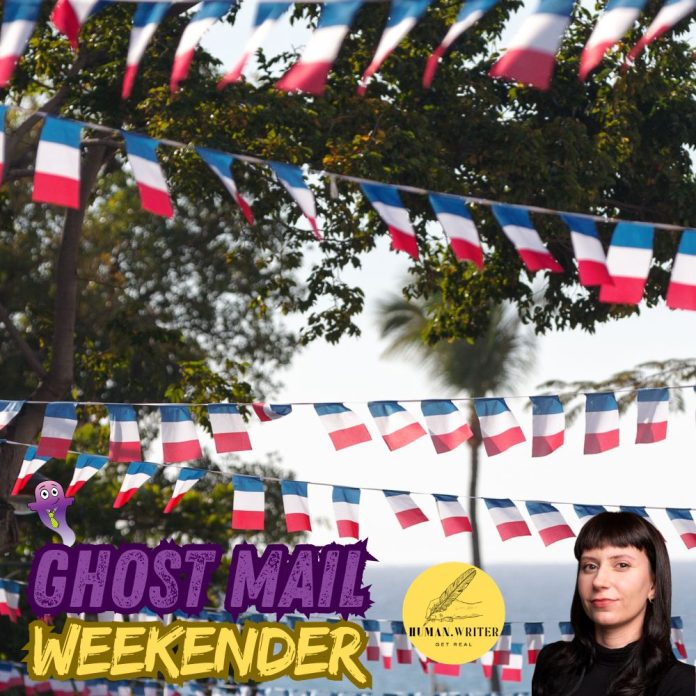
Each July, a little valley on the southern tip of Africa dresses up in tricolour to commemorate a French prison riot that it has no direct connection to. This is the story of how a day that started with gunpowder and ended with a beheading became an excuse to drink excellent wine in Franschhoek.
Last weekend, I woke up in France. Or at least I thought I did. I walked down the central street of a quaint little village, where every tree was wrapped in red, white and blue and bunting that fluttered merrily between lampposts. Everyone was wearing berets, and on one corner a man with a magnificent moustache was playing French café music on an accordion.
I could have been in Europe. But no – I was in Franschhoek.
This was my first experience of the annual Bastille Festival that takes over this little corner of the Winelands in July every year. For two days, the whole town goes capital-letters-FRENCH – from the food to the music to the decor – and people flock to it in numbers. The big drawcard is the winetasting event, of course, but even teetotalers like me will find plenty of interesting things to keep themselves entertained.
Somewhere between market-hopping and cheese-sampling, I took a moment to look around and really consider where I was and what I was seeing. It struck me as a little odd that this town, on the southernmost tip of Africa, should be so invested in another country’s national holiday. Which made me ask the question: how did we get here?
But wait, what are we even celebrating?
You know me – I’m never satisfied to simply wonder about something. Hence, here’s the historical deep-dive you probably knew was coming.
On 14 July 1789, a crowd of roughly 1,000 Parisians marched on the Bastille, a medieval fortress/prison on the eastern edge of the city, and quite literally took it apart. Say what you will about the French, but when they put their minds to something (usually something that annoys them), they get it done. This seminal moment became the founding image of the French Revolution: the people rising up, the dungeon falling, tyranny overthrown by the massed will of the oppressed. Hourra!
The crowd that stormed the Bastille was not actually there for the prisoners. They were there for the gunpowder. Earlier that morning the same crowd had helped itself to some 30,000 muskets from a military hospital across town, which is a great many muskets that are no use whatsoever without powder to fire them. Most of the city’s gunpowder happened to be stored inside the Bastille.
When they got inside, they liberated said gunpowder as well as all seven prisoners. Four were forgers, one had been locked up for reasons of mental illness, one had tried (and failed) to assassinate the king and one was an aristocrat whose own family had asked for him to be detained, presumably because he was becoming difficult at dinner.
Guarding these seven prisoners were 82 invalides, who were essentially army veterans too old or too injured for field service. They were regarded by the locals as largely harmless. They were reinforced at the last minute by a few dozen Swiss soldiers. This ragtag army couldn’t stop the onslaught of a thousand angry Frenchmen. The governor of the fortress, a man named De Launay, opted to surrender rather than blow the powder store and take the neighbourhood with it. For this restraint the crowd killed him and carried his head through the streets on a pike.
The storming of the Bastille left such a strong impression on the collective French consciousness that they have been commemorating it ever since. They stopped just short of mentioning it in their national anthem (which was written three years later), but they did depict it on their currency before Euros took over. And of course it became a national holiday, commemorated with the largest annual military parade in Europe and the oldest ongoing one in the world. Sprinkled over all of that are fireworks, street parties, and the Eiffel Tower lit up in tricolour. It’s a strangely sanitised way to celebrate a day that started with gunpowder and ended with a beheading.
Two and a half centuries later, that same grisly day is the reason why Franschhoek sells out its guest houses every July.
It’s not just Franschhoek, either
I was surprised to learn just how many countries celebrate Bastille Day, especially because a few of them appear at first glance to have nothing to do with France at all.
Start close to the source and it still makes a bit of sense. French Polynesia, which is still overseen by France, took the holiday and made it thoroughly its own. They stretch singing, dancing and drumming competitions across the whole month of July. This is celebration by inheritance: France arrived, France stayed, and the holiday stayed with it.
Move a little further out and it gets stranger, but the thread still holds. In Puducherry – the Indian coastal territory the French once called Pondicherry, and held for the better part of two centuries until 1963 – Bastille Day is a fixture. Retired soldiers march through the streets. The national anthems of both India and France are sung. The French Consul General turns up to lay a wreath. It is a mock-military parade for the fall of a prison in a city on the other side of the planet, staged by people whose grandparents were French subjects and whose passports have not been French for two generations. Nobody involved is confused about this. The French left, but the Indians kept the day.
In Dublin, the biggest 14 July party in the country happens inside a deconsecrated church, decked out in blue, white and red, with a brass band shipped in from Nantes, cancan dancers and French DJs. This one is run by the city’s actual French expatriate community, with the embassy’s backing.
Akaroa, a small town on New Zealand’s South Island, throws a biennial French festival, names its streets rue this and rue that, and runs boulangeries and a boucherie. Their whole claim to Frenchness is a French settlement that arrived in 1840 to colonise the South Island but found that the British had beaten them to it by a matter of days. The colony that was never even officially French still holds the world’s southernmost Bastille Day party.
And then there’s Franschhoek. The valley was settled in the late 1600s by French Huguenots (Protestants fleeing persecution after Louis XIV outlawed their religion) who brought with them the winemaking that still runs the place. So there is a real French thread here, 300 years old and traceable in the surnames on the wine labels. It is just not, strictly speaking, a thread that connects to the Bastille.
That’s because the Huguenots left France a full century before the Revolution, chased out by exactly the kind of royal authority the Revolution later demolished. Celebrating the storming of the Bastille as a tribute to the Huguenots is a little like the descendants of people who were evicted by an evil landlord throwing an annual party to commemorate the day, decades later, that someone finally set fire to his house.
But maybe I’m overthinking it and we’re all just looking for an excuse to drink wine and eat cheese? Could be.
What the party is actually for
Franschhoek is the (so-called, oft-debated) gourmet capital of the Winelands. Like every wine region on earth, it has a problem called winter. The vineyards are bare, the long summer lunches have packed up, and a town whose entire economy runs on people wanting to drink wine in the sunshine suddenly has to persuade them to come out in the cold.
The Bastille Festival, which was first held in Franschhoek in 1993, is the answer to that problem: a reason to fill the guest houses and restaurants in the one season they’d otherwise sit empty. Dress the town in tricolour bunting, put a market and a French Bulldog contest on the main road, and suddenly the low season starts paying rent.
I would be remiss not to at least mention the tinge of irony under all of this. The festival commemorates the day ordinary people tore down a monument to inherited privilege and aristocratic wealth. It stages this commemoration in a valley of luxury estates, where the questions about who does the work and who owns the land are ever present, and those tensions have occasionally boiled over. On our way into town, we drove past a small group of farm workers holding up cardboard signs, begging not to be evicted by the new owners of the farm they work on.
There’s something about this juxtaposition that reminds me of a lyric from a Vampire Weekend song that I like. It goes like this:
Untrue, unkind and unnatural
How the cruel, with time, becomes classical
The shift from blood to bunting is nothing new. It is simply what happens to every revolution eventually: it becomes a theme. The barricade becomes a photo opportunity. The powder store becomes a wine marquee.
Eat, drink and be merry
In 1789 a crowd went looking for gunpowder and came away with a revolution. By 1880 the revolution had a parade. By the 1990s it had crossed an ocean and set up in a valley founded by people who’d fled France a hundred years too early to care. And now, every July, you can stand in a wintry street in Franschhoek in a red-white-and-blue outfit, holding a glass of something excellent, celebrating the overthrow of a monarchy that the ancestors of half the wine labels around ran away from.
You could call it confused. I say give any event enough time, enough distance, and enough good wine, and the details stop mattering entirely. All that survives is an excuse to gather. Mercifully (this time), sans muskets.
About the author: Dominique Olivier

Dominique Olivier uses her love of storytelling and ideation to help brands solve problems.
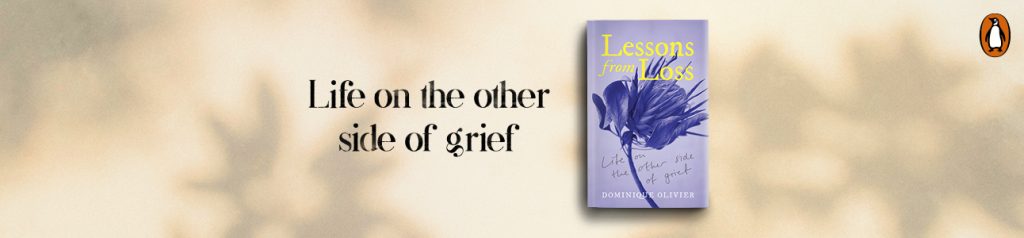
Her first book, Lessons from Loss, has been published by Penguin Random House.
She is a weekly columnist in Ghost Mail and collaborates with The Finance Ghost on Ghost Mail Weekender, a Sunday publication designed to help you be more interesting.
You can learn more about her work at dominiqueolivier.com and she can be reached on LinkedIn here.