

In this edition of Ghost Bites:
- BHP flags worsening economics at the Jansen Project
- Brait’s creative use of the words “value unlock”
- enX attracts an international buyer for New Way Power
- Libstar flags a disappointing interim period
- Reinet is starting to return cash to shareholders
- Sephaku grew earnings despite pressure at Sephaku Cement
- STADIO’s contact learning growth strategy shines through
BHP flags worsening economics at the Jansen Project (JSE: BHG)
First it was delayed – now it’s also going to cost far more than planned
There are two measures of success for large capital projects: on time and on budget. Sadly, BHP’s Jansen Stage 2 project is going to be neither of those things.
When they approved the project in October 2023, the intention was for first production to be in 2029. Understandably, there’s a lot of forecasting risk attached to these estimates.
In 2025, they announced that first production would only be two years later than initially planned, i.e in 2031. That doesn’t do great things for net present value (NPV) calculations.
Now it gets worse, as the initial project cost estimate of $4.9 billion has been blown out of the water by an increase to $6.9 billion. That’s a casual 40% overrun for shareholders to stomach in addition to the two-year delay.

The end result will be a project that contributes 10% of global potash output. That sounds impressive, but the internal rate of return is now only expected to be 11%. This would be in hard currency, but that’s still not an exciting return for a mining project.
And based on the recent trend, how can we be sure that there won’t be further delays and overruns?
Ghost Bite: The Jansen project is being impaired by $2.3 billion. When we are still five years away from production and there are already impairments, the alarm bells are ringing.
Brait’s creative use of the words “value unlock” (JSE: BAT)
I don’t think I’ve ever seen a rights offer alongside promises of a value unlock being in its final stages
According to Brait, they are in the final stages of their value unlock strategy. Goodness knows they still have a lot to do, including the sale of New Look, the listing or sale of Virgin Active and the repayment of residual debt in Brait.
For a company that is close to unlocking value, it’s very unusual to see a capital raise from shareholders. That’s the exact opposite of a value unlock!
The reason is that Virgin Active needs to raise £175 million from shareholders to repay existing debt and achieve a net debt / EBITDA ratio of 2.0x. This is despite EBITDA growing by 37% year-on-year in Virgin Active.
Brait is looking to contribute £108 million of this capital raise. To do it, they need to raise R2.5 billion from existing shareholders at a discount of 25% to the theoretical ex-rights price. This is a massive discount of 43% to the net asset value post the rights offer!
In a shock to absolutely nobody, Titan (Christo Wiese’s company) has underwritten the full rights offer. At least letters of allocation will be tradeable, so shareholders who don’t want to follow their rights might be able to sell those rights to somebody else.
Shareholders will also no doubt be thrilled to learn that Brait will take a further step to facilitate the value unlock strategy by redeeming its convertible bonds for £138 million. This will be done through the residual rights offer proceeds, the cash Brait proceeds from the sale of Premier (JSE: PMR) and the use of a revolving credit facility.
Replacing one type of debt with another is an unusual way to describe a “value unlock” strategy.
At least New Look is making some progress, with the shift to a more digital model contributing to EBITDA of £37 million for the year to March 2026.
Ghost Bite: The share price fell roughly 10% on the news. Value is being unlocked, but in the wrong direction.
enX attracts an international buyer for New Way Power (JSE: ENX)
But with only a small part of the immense cash pile
The enX value unlock continues. The company has announced the potential sale of New Way Power (NWP), the largest remaining asset in the enX portfolio. The deal is far more advanced than merely the negotiation stage, as enX has released a firm intention announcement that sets out the key terms.
This is the business that focuses on generators and renewable energy. For obvious reasons, this was a far more lucrative business during load shedding. Still, they’ve attracted Generac as a buyer, a company listed on the New York Stock Exchange.
I suspect that Generac is primarily interested in the IP, manufacturing capacity and our position as a gateway to Africa, rather than the revenue opportunity in South Africa itself. That’s quite the show of faith in our local economy and particularly our design and manufacturing base!
Together with the property occupied by the business, the price on the table is R220 million. It could go up to R260 million, depending on how adjustments to the purchase price pan out. The initial price is based on R130 million for the business and R90 million for the property.
For context, the balance sheet as at 28 February 2026 reflects net assets in the business of R156.7 million and the property at R93.5 million. Considering they suffered a loss before tax of R4.5 million in the business and generated a profit before tax of only R2.4 million in the property company, getting out of this business at a price this close to net asset value is a good outcome in my view.
Due to the size of the deal, it triggers numerous Takeover Regulation Panel requirements. This includes the appointment of an independent expert to opine on the fairness and reasonableness of the deal. BDO has been appointed and the opinion will be included in the circular once it goes out to shareholders.
Before shareholders count their money, there’s an incentive deal with the CEO of NWP that needs to be settled. It looks like this could be as high as 30% of the adjusted proceeds from the sale of the business (not the property).
It’s a suspensive condition for the entire deal, so shareholders have no choice but to approve it if they want the rest of the deal to go ahead.
Ghost Bite: I don’t think this is an easy business to sell, so shareholders will need to think carefully here about being too greedy. The BDO report should be interesting.
Libstar flags a disappointing interim period (JSE: LBR)
They are running below expectations and profits are under pressure
Libstar has released a voluntary trading update dealing with the 21 weeks to 31 May 2026. They’ve excluded the fresh mushroom operations from the numbers to make things more comparable on a year-on-year basis, as this business was disposed of on 1 December 2025.
They’ve unfortunately come in below expectations, with revenue growth of just 0.9% vs. the prior period. Volumes were up 0.3%, with the rest coming from price and mix effects.
Aside from relatively modest consumer demand (low-single digit growth in the group’s retail basket), they also struggled with production disruptions at the Dickon Hall Foods business. These disruptions were driven by labour challenges and water shortages.
As a further challenge, the Dry Condiments export business was hit by the strength of the rand, the impact of shipment timing and overall weakness in demand in Australia and Asia.
Other areas of the business (like dairy and meat) did well, but not to the extent required to achieve a net growth position for the group. If you exclude Dickon Hall Foods, group revenue was up by 3.5%.
With flat revenue, the group’s profits were a sitting duck in an inflationary environment. Production costs go up and recovery of overheads is weaker when throughput is below expectations (like at Dickon Hall Foods). You also have to consider the spike in fuel prices and related costs of packaging and distribution.
Gross profit margin was down by between 100 and 150 basis points at group level. This is despite margin improvements in the dairy business and a flat performance in meats.
Although operating expense growth was below inflation, it’s clear that this is going to be an unhappy set of interim results for investors.
Despite this pressure, the ongoing generation of cash flow means that Libstar is continuing with share repurchases.
The net debt to EBITDA ratio (calculated using EBITDA on a last-twelve-months basis) is 1.3x, an improvement from 1.6x in the prior period. There are a couple of potential asset disposals that could give further support to the balance sheet if they go ahead.
Ghost Bite: Libstar has disappointed investors many times. It’s a pity that the interim period is going this way.
Reinet is starting to return cash to shareholders (JSE: RNI)
But with only a small part of the immense cash pile
As I jokingly posted on X at the end of May, Reinet has enough cash to acquire both Pepkor and The Foschini Group! I just plucked these names out of the air to show you what a cash balance of R110 billion is capable of buying.
We have no idea what Reinet was actually looking at buying, but we know that they were considering a “potentially very significant investment opportunity” with their mountain of money. The deal isn’t going to happen though, so they are commencing a share buyback programme instead.
The current net asset value (NAV) per share at the fund is €36.31, or around R684 at current exchange rates. Reinet is trading at only R453 per share, so buybacks should be accretive to shareholders.
It’s just a pity that only €500 million (R9.4 billion) is being earmarked for this programme. It’s a start, but it doesn’t make much of a dent in this lazy balance sheet. It’s also going to take time, with only €75 million expected to be used by mid-August 2026.
Ghost Bite: The announcement came out after the market was closed. I expect to see a positive response from the share price once the market can trade on this news.
Sephaku grew earnings despite pressure at Sephaku Cement (JSE: SEP)
Métier Mixed Concrete did the heavy lifting
Sephaku Holdings has two major business interests: wholly-owned subsidiary Métier Mixed Concrete and associate Dangote Cement (known as Sephaku Cement).
In the year ended March 2026, the former was the star of the show. We don’t have all the details yet, but the group has flagged strong growth in both revenue and profit at Métier Mixed Concrete. The same certainly can’t be said for Sephaku Cement, where revenue was down 4% and EBITDA fell by 9%.
Thankfully, the pressure on Sephaku Cement was more than offset by the wholly-owned subsidiary moving in the right direction in this period. This is why group HEPS has increased by between 17% and 22% for the year.
Ghost Bite: We will know more when results are released on 2 July 2026. But the market celebrated in the meantime, with the share price up 8%. I must note that this was on weak volumes, so don’t give too much credit to that move.
STADIO’s contact learning growth strategy shines through (JSE: SDO)
They are on track to meet the 2026 goal
At STADIO’s AGM, company management gave an update on the recent trading performance. As at June 2026, they’ve managed year-on-year growth of 8% in distance learning students and 15% in contact learning. This combines into growth of 9% at group level.
The contact learning numbers have been boosted by the STADIO Durbanville campus, with over 1,300 students. The STADIO Centurion campus sits at more than 2,300 students.
It can’t all be good news, of course. Milpark is lagging, which creates a negative impact on growth in distance learning numbers. In Namibia, there’s the announcement of free higher education at state-owned facilities that they need to contend with. Difficulties in the film industry also impacted student numbers in related courses.
But with 55,854 students on the books, STADIO is on track to achieve the promise made in the pre-listing statement of having 56,000 students by 2026. The bigger goal is to reach 80,000 students by 2030. They believe that they can grow to more than 100,000 students.
Ghost Bite: With the share price up 40% over 12 months and a P/E multiple of almost 30x, the STADIO growth story isn’t exactly an uncovered gem. The market puts a lot of faith in this management team and the track record of delivery shows you exactly why that is. Interestingly, the stock is nearly 16% off the 52-week high.
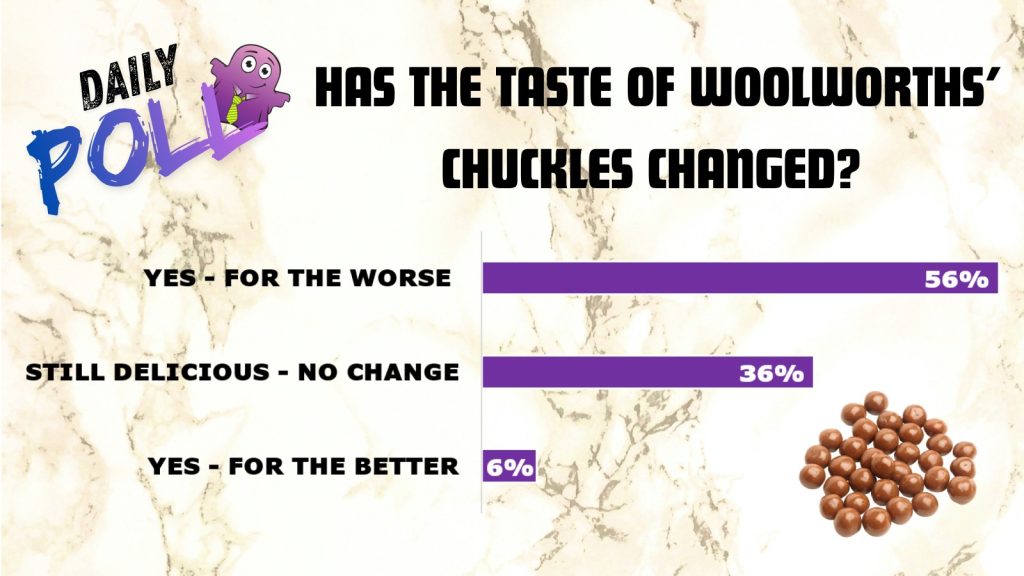
Results of previous poll:
Nibbles:
- Director dealings:
- The CEO of Life Healthcare (JSE: LHC) bought shares worth R11.3 million. The company has been struggling to get positive investor attention recently, so this is an important show of faith by the CEO.
- The Deputy CEO of WeBuyCars (JSE: WBC) and an associate bought shares worth a total of around R436k.
- Not a traditional director dealing, but still worth noting – the CEO of Fortress Real Estate (JSE: FFB), who is also a non-executive director of NEPI Rockcastle (JSE: NRP), has a loan for which shares in both companies are pledged. He’s increased the size of that facility from R34 million to R50 million. No additional shares in either company have been pledged.
- Marshall Monteagle (JSE: MMP), one of the more obscure names on the JSE, released a trading statement for the year ended March 2026. HEPS has jumped tremendously from 2.2 US cents to 25.6 US cents. They attribute this to the equity portfolio and to currency movements. Detailed numbers are due for release on 26 June.
- Balwin (JSE: BWN) still needs to release the circular related to the offer to shareholders by Bidco (backed by the PIC). The Takeover Regulation Panel (TRP) has granted an extension for the circular to be posted by no later than 17 July 2026. It’s not uncommon to see extensions like these.
- The acquisition of Bank Zero by Lesaka Technologies (JSE: LSK) is taking longer than planned. The parties have agreed to extend the long-stop date from 6th August 2026 to 31st January 2027. Whenever a banking licence is involved, there are complex regulatory hurdles to jump over.
- In a significant milestone for Capitec (JSE: CPI), Dr Chris Otto (one of the founding directors) will be retiring from the board on 31 July 2026. He’s literally been on the board since the very beginning, most recently in a non-executive capacity. What an extraordinary career!
- Shuka Minerals (JSE: SKA) has reported another set of drilling results. They had to terminate the fourth drill hole at a shallower depth than planned due to the risk of losing equipment. Still, the CEO seems happy with the results in terms of the grades of the ore body.
- I’m not convinced that it’s even worth mentioning, but Novus (JSE: NVS) has bought another R401.7k worth of shares in Mustek (JSE: MST). This takes the directly held stake from 50.39% to 50.44%. Inch by inch, hey.
- If you are a shareholder in Visual International (JSE: VIS), then be aware that the company has scheduled the general meeting of shareholders for the RAL Trust transaction for 16th July. The circular should also be available, but I couldn’t find it on the website.