
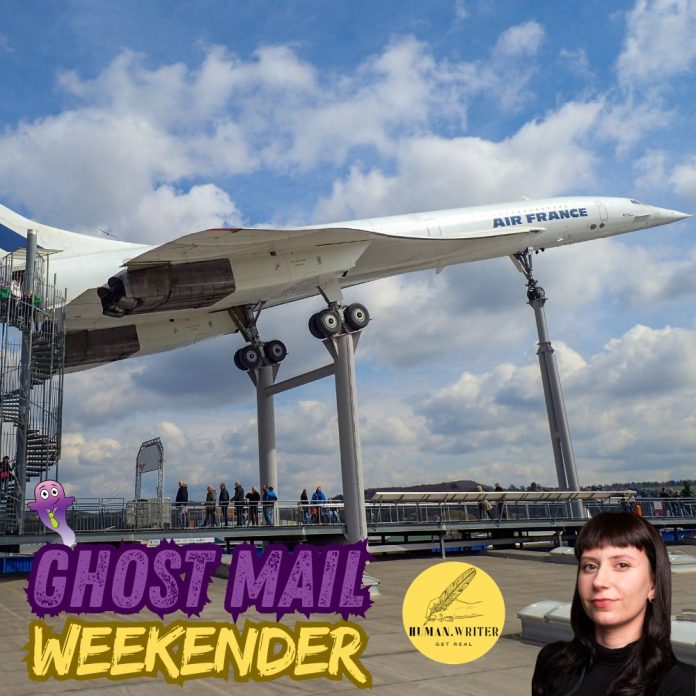
Why the fastest passenger plane in history disappeared, while slower ones took over the world
Somewhere high over the equator, in that strange stretch of time where night refuses to end and morning takes its time arriving, I realised something mildly inconvenient about myself: I just cannot sleep on a plane.
Not properly, anyway. Not the kind of sleep that resets you. At best, I drift. At worst, I sit there, eyes closed, mind wide awake, tracking the slow, almost stubborn progress of a long-haul flight. Eight hours to destination becomes seven. Seven becomes six. The little picture of the plane on the map moves, but only just. Time in the sky doesn’t pass so much as it lingers.
It’s in that half-aware, slightly restless state that my brain starts looking for shortcuts. And, more often than not, it lands in the same place: the Concorde.
Every time I remember that we used to cross the Atlantic in just over three hours, the question feels ridiculous. If we’ve been capable of doing that since the 1970s, then why aren’t we still doing it now?
A future that gleamed
In 1962, best-of-enemies Britain and France signed an agreement to jointly develop the world’s first supersonic passenger aircraft, pooling resources in a bid to push the boundaries of what commercial aviation could achieve. The name itself – Concorde – means “agreement” or “harmony” as a nod to that cooperation.

When the first prototype took flight in 1969, it delivered in spectacular fashion. This was not an incremental improvement on existing aircraft. It was something entirely different: for the first time in history, ordinary people – not astronauts or military pilots – were flying at more than twice the speed of sound and cruising high enough to see the curvature of the Earth as they moved across it.
The implications felt immediate. Mach 2 became so easily accessible. A journey that once stretched across most of a day could now be completed in less than half the time – London to New York in just over three hours. For a moment, it seemed entirely plausible that this was where the future of aviation was heading. Faster, higher, more extreme. Not just better, but fundamentally different.
Speed at a price
But speed, especially at that scale, doesn’t exist in isolation. It brings its own set of constraints, and they’re not the kind that can be easily smoothed over with time.
Concorde was never going to carry hundreds of passengers per plane, and it was never going to operate cheaply. The physics alone made sure of that: it burned through fuel at a rate that only made sense at smaller volumes, and the sonic booms it produced meant it couldn’t fly over land without causing disruption. Its routes were limited before they even began.
These weren’t minor inefficiencies waiting to be optimised. They were structural realities that were bound up in the very thing that made Concorde extraordinary in the first place. So it found its place elsewhere.
By the time British Airways and Air France introduced commercial Concorde flights in the mid-1970s, Concorde had already begun to shift from technological breakthrough to something closer to a luxury experience. The passengers who filled its seats weren’t looking for affordability; they were buying time, and, just as importantly, what that time represented.
Flying Concorde became a signal of access, of status, of proximity to a certain version of the future. The champagne, the narrow cabin, the first-class service all reinforced the idea that this wasn’t simply a faster way to travel. It was a different category entirely. And, for a while, it worked. British Airways, in particular, managed to turn that positioning into something commercially viable. Not broadly profitable in the way mass-market aviation aims to be, but stable enough. Just stable enough.
Still, it was always a narrow path. High costs, limited routes, and a relatively small customer base left very little room for disruption. There wasn’t much margin for error, and even less for anything unexpected. Which is why, when something did go wrong, the consequences were dire.
The crash that changed the conversation
On 25 July 2000, Air France Flight 4590 departed from Paris en route to New York. Moments after take-off, a chain of events unfolded that would come to define the final chapter of Concorde’s story. A piece of metal debris left on the runway punctured one of the aircraft’s tyres. The resulting explosion sent fragments into the fuel tank, triggering a leak and a subsequent fire. Within minutes, the aircraft lost power and crashed into a hotel in Gonesse.
Everyone on board was killed, along with four people on the ground. It was the first fatal crash involving the Concorde. It would also be the last.
In purely statistical terms, the Concorde’s safety record was almost faultless. For close to three decades, it had operated without a single passenger fatality, earning a reputation for reliability that, if anything, exceeded that of many conventional airliners. Yet the nature of the crash, combined with the visibility and the perceived “luxe” status of the Concorde brand, had an outsized impact on public perception.
Flights were grounded. Investigations followed. Technical modifications were introduced, including reinforced fuel tanks and improved tyres. Service eventually resumed, but by the time the Concorde returned, the world it re-entered had changed. In the wake of 9/11, the early 2000s brought with them an overall downturn in global air travel, heightened sensitivity to risk, and increasing scrutiny of high-cost operations that served relatively few passengers.
By 2003, both Air France and British Airways had retired their Concorde fleets. The official reasons pointed to rising maintenance costs, declining demand, and broader industry pressures. An aircraft that was expensive to run, limited in application, and suddenly more vulnerable in the public imagination simply became harder to justify.
Meanwhile, at 35,000 feet
While Concorde was exiting stage left, the rest of the aviation industry continued to evolve along more… conventional lines. Subsonic aircraft became more efficient, more accessible, and more deeply embedded in global transport systems. At the centre of this ecosystem sat companies like Boeing, whose aircraft formed the backbone of commercial aviation for decades.
For much of its history, Boeing represented a certain standard. Founded in 1916, the company built its reputation on engineering excellence and a commitment to safety that became almost synonymous with its brand. The phrase “If it’s not Boeing, I’m not going” was not just a clever marketing line; it reflected a level of trust that had been earned over generations.
Of course, that trust has been tested in recent years. I wrote a longer piece about Boeing’s struggles (and how they came to be) here, but I’ll give you the TL;DR: between 2018 and 2019, two Boeing 737 Max 8 aircraft were involved in fatal crashes shortly after take-off – one in Indonesia, the other in Ethiopia. Investigations revealed issues with the aircraft’s MCAS system, which relied on faulty sensor data and repeatedly forced the planes into nose-down positions that pilots struggled to counteract. In total, 346 people lost their lives across the two incidents.
Regulators moved to ground the 737 Max fleet, resulting in the longest suspension of a US airliner in history. Boeing faced billions in fines, compensation claims, and lost orders, along with a level of scrutiny that extended far beyond technical fixes.
Even after the aircraft was recertified and returned to service, the headlines did not entirely subside. In 2024, a 737 Max 9 experienced a mid-flight decompression event when a section of the fuselage detached, forcing an emergency landing. No fatalities occurred, but the incident reinforced the narrative that Boeing was struggling to maintain the standards that had once defined it.
And yet, despite all of this, Boeing did not go the way of the Concorde. The embattled aircraft builder remains central to global aviation today.
The resilience of scale
I find the contrast between Concorde and Boeing fascinating. One aircraft, with a near-pristine safety record, is effectively retired after a single fatal incident. Another, associated with multiple crises and systemic issues, continues to operate at scale.
The explanation lies less in the specifics of each case and more in the broader systems they inhabit. Boeing’s aircraft are not niche products. They are integral to the functioning of global air travel. Airlines build fleets around them, train pilots to operate them, and structure entire route networks on the assumption that these planes will remain in service. When problems arise, the consequences are severe – but so is the incentive to resolve them. Grounding a fleet of that scale is disruptive. Replacing it entirely is, in most cases, impractical.
Concorde, by contrast, existed at the margins of this system. It was a technological outlier, admired for its capabilities – loved, even – but not essential to the day-to-day movement of people and goods. When it encountered a crisis, there was no broader dependency forcing its return. The world did not need Concorde to keep moving, which is why it simply moved on without it.
The Concorde belonged to an era that was more willing to invest in symbolic technological achievements, even when the commercial case was uncertain. Its heyday – in the 1990s – saw roughly 1.5 billion commercial airline passengers take to the skies annually. In 2024, that number had more than tripled, sitting at an estimated 5 billion seats sold per year. Today’s aviation industry operates under different constraints, where efficiency, scale, and cost control tend to outweigh spectacle.
That doesn’t mean the dream has disappeared entirely. There are still companies exploring supersonic travel, promising quieter engines and more sustainable designs. The idea of crossing oceans in a matter of hours continues to hold a certain appeal (and not just to me).
For now, though, it remains just that – an idea, waiting for the right conditions to take hold again. Why did we stop flying faster than sound? The answer is not that we forgot how. It’s that we couldn’t quite make it work for enough people, for long enough, to justify keeping it alive.
Concorde showed us what the future might look like. Boeing, for better or worse, shows us what the present requires.
About the author: Dominique Olivier

Dominique Olivier is the founder of human.writer, where she uses her love of storytelling and ideation to help brands solve problems.
Her first book, Lessons from Loss, has been published by Penguin Random House.
She is a weekly columnist in Ghost Mail and collaborates with The Finance Ghost on Ghost Mail Weekender, a Sunday publication designed to help you be more interesting.
Dominique can be reached on LinkedIn here.


Just read your superb article about Concorde, Boeing and air travel. Superb. Keep up the good work!!
Super article again Dominique. Always something in your articles that I did not know, but you also put the story out so well.
Thoughtful, interesting and relevant article, Dominique. I’ve been an aviation enthusiast for 50+ years, and always enjoy articles on aircraft. But your article is more than that – it’s history and context. Well researched and well presented. As always
Always loved the Concorde and the tech behind it. I still have hope that one day, supersonic travel will be back. Love your article. Hope you have a fruitfull trip wherever you are going…