
Tariffs, trade wars and toddler tantrums have more in common than you’d think. The curious history of mohair explains why, with surprising relevance for South Africa.
When my daughter was about two years old, I would take her on playdates with other children of her age. Sometimes, these playdates would be in public places, like restaurants or parks. Other times, they would be hosted at a house, either ours or the friend’s. And it was during these in-house playdates that I got to observe a ritual as old as humanity itself, played out on a much smaller (and slightly more emotionally volatile) scale.
Nine times out of 10, my daughter would bring a toy along to the playdate. Inevitably, this would lead to a moment where my daughter and the other toddler present would become completely engrossed in examining each other’s treasures. It would start with shy curiosity, then move into frank admiration, and finally devolve into territorial greed. Almost without exception, the situation would escalate to the point where both toddlers would be red-faced and screaming, wrestling their toys out of each other’s grip while shouting “MINE!”
Humans are territorial about the things they value – and apparently that instinct is present even before we learn to use the bathroom independently.
Maybe I’m strange for thinking this way (the odds are good), but this toddler exchange almost always makes me think of global trade.
Countries have been squabbling over trade for about as long as there has been trade to squabble over. In the 17th century, England and the Dutch Republic walloped each other across three naval wars, largely over who got to control the world’s shipping routes. In the 1800s, Britain went to war with China (twice) to keep the opium trade flowing in its favour. And in 1930, the US passed the Smoot-Hawley Tariff Act (which I wrote about here), slapping duties on thousands of imported goods and inviting a wave of retaliation that helped drag the world deeper into the Great Depression.

History, it turns out, loves a sequel.
Remember last year, when South Africa found itself on the receiving end of a 30% “Liberation Day” tariff from the United States? It kicked in in August, and for months, local exporters of everything from citrus to wine were left wondering whether their American customers would still be buying. Not exactly a “liberating” experience.
South Africa chose not to retaliate, which is just as well, because in February this year the US Supreme Court struck down the sweeping tariffs. Crisis averted, mostly (Washington did respond with a lower, broader levy).
Another thing we can learn about toddler tussles, if you want to take the metaphor further, is that the toy rarely stays with whoever brought it. Someone gets distracted, someone else wanders off with the prize, and by home time, ownership may well have changed hands. Global trade works in much the same way.
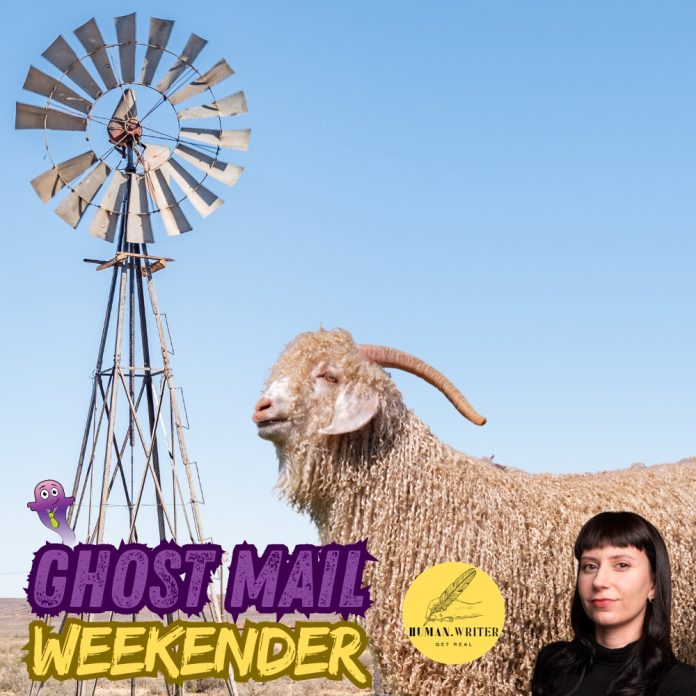
Take mohair, for example. The world’s most famous luxury goat fibre was born in Turkey, and for centuries, Turkey did everything in its power to keep it there. Today, its home is a lot closer to ours.
The GOAT of goats
First, let me clarify something that is needlessly confusing: mohair – the soft, fluffy, wooly stuff – comes from Angora goats. So what is angora wool then? Well, that’s the stuff that comes off Angora rabbits. And no, the rabbits and the goats are not somehow distantly related. The only thing they have in common is their fabulously fluffy hair, and the fact that they were both named after a Turkish city.
Mohair is lustrous and takes dye beautifully. It keeps you warm in winter and cool in summer, and it’s naturally elastic, crease-resistant and even flame-resistant. Like cashmere and silk, it’s considered a luxury fibre, and it’s priced accordingly.
The goats that produce the stuff originally came from central Anatolia, around the city we now call Ankara (once known as – you guessed it – Angora). Nobody knows exactly when they were first domesticated, but between the 16th and 18th centuries, mohair was the backbone of Ankara’s economy, and the fine, silky cloth woven from it dressed the Ottoman upper classes in kaftans and robes.
Europe caught wind of the goats and their fancy fleece in the mid-1500s, partly thanks to Flemish diplomat Ogier Ghiselin de Busbecq, who is credited with introducing several treasures of the Levant to Europe – the tulip, the lilac and the Angora goat among them.
Not that Turkey was making mohair’s introduction to the world very easy. The Ottomans knew exactly what they had, and expressly banned the export of both the goats and raw mohair. For centuries, if you wanted the fibre, you bought it on Turkish terms and at Turkish prices. A few enterprising foreigners managed to smuggle goats out, but the stolen herds rarely thrived in gloomy English and European climates.
So how did mohair finally make its way out of Asia? Through the front door, as it happens.
In 1838, Britain and the Ottoman Empire signed the Treaty of Balta Liman, a trade agreement that flung Ottoman markets open and let raw mohair flow out. The mills of Bradford, in Yorkshire, England, would soon be ready. Armed with new combing machines that could handle tricky fibres like mohair and alpaca, Bradford became the mohair capital of the world, and Turkey’s traditional hand-spinners simply couldn’t keep up.
But the same year that treaty was signed, something far more consequential was happening on a ship bound for the Cape.
The “oopsie” that changed it all
In 1838, 12 Angora rams and one ewe set sail for the Cape. Whether they were a gift from the Sultan or a shrewd purchase by a British colonel depends on who’s telling the story. These weren’t the first Angoras to leave Turkey; a few had made it to Spain, France and even Australia in prior years, but none had reproduced successfully on new shores.
Sounds like Turkish generosity, right? Not quite.
The rams had (reportedly) been neutered, which meant the Cape could enjoy a handful of seasons of local mohair production, but it couldn’t start a herd of its own. What the Turks didn’t know was that the singular, sneaky ewe was pregnant. Somewhere on the voyage south, she gave birth to a ram kid. If she had given birth to another ewe, the story would have ended there. Instead, the first bleating of that unlikely little ram signified the birth of South Africa’s mohair industry.
(A note for those who are concerned about goat incest – the ram was crossed with local goats, not his mother, and more Angoras were imported later).
The goats eventually found their way to the Karoo, and the Karoo turned out to be exactly what they needed. Unlike every European herd before them, they thrived, and local mohair production boomed. By the last quarter of the 19th century, South African mohair had become a serious rival to the Turkish product.
Meanwhile, back in Anatolia, the price of mohair collapsed to a fifth of its former value. In 1918, after decades of on-and-off bans, the Ottomans finally passed a law to stop breeding goats being sold abroad. One wonders why, when it appears they were a good 80 years too late. That’s what you call closing the barn door after the goat has bolted.
Today, South Africa is the world’s biggest mohair producer, supplying more than half of global production, most of it farmed in the Eastern Cape. About 90% of what we produce is exported, the bulk of it to China and Italy. Nelson Mandela Bay is now the processing capital of the mohair world, putting even Bradford’s famous mills to shame. Mohair grown in other countries is now shipped to the Eastern Cape to be processed, and then sent back out again.
Industry research done a few years ago positioned mohair as South Africa’s sixth largest agricultural export. The industry supports roughly 30,000 jobs. Not bad for a family tree that started with a surprise pregnancy.
Mine, mine, mine
Toddlers eventually learn to share. Countries, it seems, are still working on it.
The tariff drama of 2025 was a reminder that in a globalised world, nobody gets to shout “MINE!” for very long. Turkey tried for centuries – export bans, embargoes, a few reportedly neutered rams – and still the toy changed hands. South Africa, meanwhile, owes one of its most valuable exports to a goat that was never supposed to exist. It’s a useful thing to keep in mind the next time a bigger kid on the playground starts setting the rules.
About the author: Dominique Olivier


Dominique Olivier uses her love of storytelling and ideation to help brands solve problems.
Her first book, Lessons from Loss, has been published by Penguin Random House.
She is a weekly columnist in Ghost Mail and collaborates with The Finance Ghost on Ghost Mail Weekender, a Sunday publication designed to help you be more interesting.
You can learn more about her work at dominiqueolivier.com and she can be reached on LinkedIn here.