

We’ve never had more access to information, and we’ve also never been more anxious. It turns out a frightened population is very good for business.
In the early 1970s, a man named George Gerbner became concerned about what television was doing to people’s perception of the world. So he used his experience as a communications scholar to establish the Cultural Indicators Project, a study aimed at documenting trends in television programming and how these trends changed or affected viewers’ ideas about society.
What he discovered was striking: people who watched large amounts of television were more inclined to believe that the world around them was dangerous, violent or hostile.
Regular TV watchers believed that strangers were threatening, so they didn’t interact with them. They believed that cities were unsafe, so they avoided them. They believed that the future was bleak, which steadily eroded their optimism until many started showing signs of cynicism.
Gerbner named the phenomenon “mean world syndrome”.
By the time he coined the term, Gerbner’s Cultural Indicators Project had catalogued over 3,000 television programmes and 35,000 characters. That was everything that could be found on a handful of channels on 1970s network television. Half a century later in 2026, what we watch and how we watch it would probably blow Gerbner’s mind. We now live in a media environment far more saturated than anything he could have imagined: on-demand streaming services, twenty-four-hour news cycles, ever-present social media. We have access to more entertainment and information than any generation before us.
We’re also more anxious than we’ve ever been. Coincidence?
Seeing is believing
Gerbner’s broader idea was called cultivation theory, and its premise was that media cultivates our worldview as much as it entertains us. Over time, the stories we absorb – whether works of fiction or real news – build a map of what we think reality looks like. Mean world syndrome is what happens when that map turns grim: steeped in violent and frightening stories, we come to believe the world itself must be dangerous. Cultivation theory is the mechanism, and mean world syndrome is one of its symptoms.
Part of why the cultivation theory mechanism works can be explained by the availability heuristic, a mental shortcut first described by psychologists Amos Tversky and Daniel Kahneman in 1973. The availability heuristic means that we judge how common something is by how easily examples of it come to mind. The brain essentially takes a shortcut, and instead of calculating actual odds, it reaches for whatever it can recall most readily and treats that ease of recall as a rough measure of frequency.
It’s an efficient trick most of the time, but there’s a pretty big loophole in it, because how easily something comes to mind has less to do with how often it happens and more with how vivid, recent, or heavily repeated it was.
Say for instance you read a story of a shark attack, which is described in vivid detail. The next time you visit the beach, you may hesitate to get into the water. Even if there has never been a shark attack on that particular stretch of coast, the vividness of the story you read will push the image of a lurking shark to the front of your mind, where it can impact your decision-making.
If you’ve seen ten crime reports this week, break-ins are top of mind and robberies suddenly start to feel commonplace. This is true even if the break-ins were in other countries and your own town is safer than it’s ever been. The footage doesn’t have to be local, or recent, or even representative to shape your sense of the odds. It only has to be memorable.
Then there’s also negativity bias to take into account. Human beings are wired to notice and remember threats more readily than good news. That’s why the story of a neighbour’s kind deed may charm us for a moment, but a report of a violent attack can leave us feeling unsettled for days. This instinct no doubt helped our ancestors to stay alive. But in a saturated media environment, it means the frightening images are the ones that lodge deep and linger longer.
Mad world
Worldwide, an estimated 4.4% of the population lives with an anxiety disorder – around 359 million people as of 2021 (an outdated statistic), which makes it the most common mental disorder on the planet. Women are affected at roughly 1.5 to 2 times the rate of men, and only about 1 in 4 people who need treatment actually receive it. For most of the anxious, in other words, the condition simply goes unaddressed.
South Africa carries a heavier load than the global average. Between 16-20% of people here will experience an anxiety disorder at some point in their lives, and in under-resourced communities the treatment gap yawns wider still.
Data from the Global Burden of Disease study, which tracks health trends across more than 200 countries, shows the number of people with anxiety disorders climbing steadily since 1990. Then came COVID-19, which sent anxiety and depression rates lurching upward across the world in the early 2020s.
The steepest increases show up among the young: teenagers and adults under 30 now report anxiety at markedly higher rates than their elders. The median age of onset is just 11 years old.
Gerbner watched a mean world take shape on a handful of channels. The children of the feed grow up with it streaming, unfiltered and unending, from the moment they can focus on a screen.
The business of being afraid
A mean world is more than just a psychological condition. It’s also a market.
Anxiety, it turns out, is enormously good for business, because a frightened person is a motivated buyer. Fear creates a need, and where there’s a need, someone will build a product to meet it (or at least promise to). Entire industries have reorganised themselves around the management of our unease, and since 2020 they have been booming.
Start with the most obvious: the wellness apps. Calm, Headspace and their many imitators have turned meditation – a practice that is, strictly speaking, free – into a subscription economy worth billions. The Calm app alone was downloaded 7.3 million times in 2025. The broader mental-health app market sits north of $9 billion and is forecast to more than quadruple within a decade. The fastest-growing slice of it is “anxiety and depression management”. Therapy platforms like BetterHelp and Talkspace scaled just as fast, meeting a demand for therapy that in-person services could no longer absorb.
The pharmaceutical response followed the same curve. Prescriptions for anti-anxiety and antidepressant medication climbed, and a wave of investment poured into psychedelic therapy like ketamine clinics and companies racing to bring MDMA and psilocybin treatments to market.
But the truly telling growth is at the softer edges, in the vast grey zone of self-soothing where no diagnosis is required and anyone feeling a little frayed is a potential customer. Supplements – whether magnesium, ashwagandha or CBD – became a booming market on the strength of vague promises to take the edge off. So did weighted blankets, aromatherapy diffusers, sleep trackers and mattresses engineered against the insomnia that anxiety breeds.
South Africans know one version of this economy better than most. Private security is one of the country’s great growth industries: some 600,000 registered security officers now outnumber the police by roughly 3 to 1, and the market for smart home security – cameras, sensors, armed-response apps – was worth over $600 million in 2025. It is projected to nearly triple by 2033.
Some of that spending answers a real and rational danger; after all, South Africa’s crime figures are not a media invention. But some of it answers the feeling of danger, which is a different and more elastic thing – the electric fence raised a little higher, the second camera, the security estate that scans every visitor’s license. Each one is an attempt to buy a peace of mind that never quite arrives, because the mean world always has one more threat to show you.
Even our pets are enlisted: enter the fast-growing market in calming supplements for anxious animals. Herbal and natural formulations now make up around 59% of that market, and roughly a third of pet-supplement buyers have reached for CBD to soothe their dog. We’ve become so fluent in the language of anxiety management that we have begun projecting it onto our animals, treating the family dog for a nervousness that probably says more about the household than the hound.
Flip the switch
No one sat in a boardroom and engineered a nervous planet. But the media environment that cultivates the mean world and the industries that sell relief from it are drinking from the same well. A culture that keeps its people mildly yet chronically afraid has, whether it intends to or not, built an industry that runs on that fear.
The uncomfortable truth is that the mean world is, in a narrow sense, accurate. There really are sharks, break-ins, catastrophes and cruelties, and every one of them really happened. The distortion isn’t in the individual facts but in the proportion – the sheer, relentless volume of frightening signals, delivered without context, absorbed by an ancient brain that treats the vivid as the likely and the memorable as the common. We are not being lied to, exactly. We’re just being shown a true thing so often that it becomes a false picture.
The way out isn’t cynicism, and it certainly isn’t pretending the world is gentle when it isn’t.
It’s perspective, and remembering that the shark story is a story, that the crime report is one event and not a climate, that the feed is a curation and not a census. It’s noticing when a product is selling us calm by first topping up our fear. And it’s occasionally, deliberately, doing the one thing the whole apparatus is built to prevent: looking up from the screen, and checking the map against the territory we can actually see.
About the author: Dominique Olivier
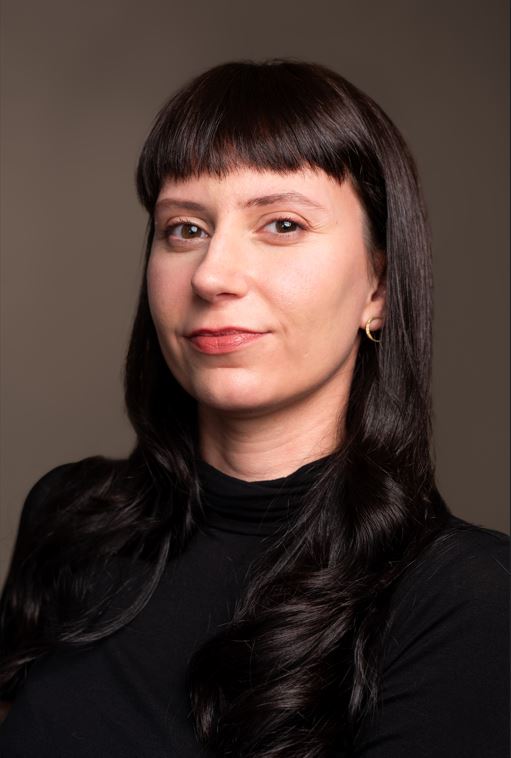
Dominique Olivier uses her love of storytelling and ideation to help brands solve problems.
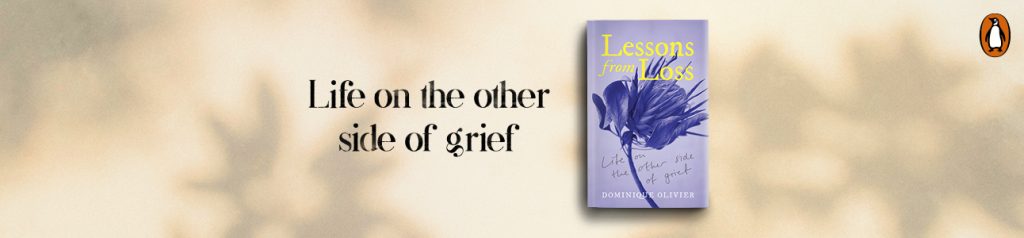
Her first book, Lessons from Loss, has been published by Penguin Random House.
She is a weekly columnist in Ghost Mail and collaborates with The Finance Ghost on Ghost Mail Weekender, a Sunday publication designed to help you be more interesting.
You can learn more about her work at dominiqueolivier.com and she can be reached on LinkedIn here.


Thank you for another excellent article. It will be a great reference when feeling overwhelmed by the negative news that bombards us all the time.
I love your informative and well researched articles. Thank you!
Thanks Dominique. I enjoy your articles. Please keep up the good work.