
When a company gets big enough, the line between the boardroom and the government starts to blur. A Cold War cola deal and a 2026 boardroom scandal have more in common than you’d think.
I don’t own a single NVIDIA share. I couldn’t tell you in any level of detail what a GPU does beyond “makes the AI go”. And yet for 11 days this November, I followed the company’s boardroom drama with the devotion I usually reserve for a good series.
In case you missed it (consider me both incredulous and impressed): on 12 November, Jensen Huang – co-founder of NVIDIA, black leather jacket enthusiast, and the man who spent 33 years turning a graphics card company into the engine room of the AI boom – resigned as CEO, effective immediately.
The reason was that Huang had admitted to an extramarital affair. That alone might have been survivable in Silicon Valley. The problem is that the woman in question is Alice Huang (no relation), a former executive at a Singapore company, and someone that US intelligence agencies are currently investigating as a suspected Chinese intelligence asset.
So not only was his wife upset (I presume, she hasn’t made an official statement), but so were US national security officials.
The market did what markets do when they’re frightened: panic first, think later.
NVIDIA’s shares fell sharply in the wake of the resignation. Ghost will tell you that comparing a company’s value to a country’s GDP is naughty for several reasons, but the fact is that this resignation wiped a lot more off NVIDIA’s value than South Africa’s entire annual GDP.
As other AI stocks tumbled in sympathy, a second affair (this time with a direct report) was revealed, then allegedly a third and even a fourth. Was this the last we’d hear of Jensen Huang before his divorce settlement hit the headlines?
But Jensen wasn’t done; in fact, he announced that he would be “honoured” to come back. A petition to “Stand with Jensen” gathered close to 200,000 signatures. The President of the United States threw his weight behind the comeback. The board said, firmly, that it had no intention of reinstating him. And then, on 23 November, it reinstated him.
In its official announcement, the board explained that it had received input “from senior levels of the US government” before making its decision, and was now confident that Huang’s return posed no national security risk.
A public company, owned by shareholders who in turn appoint the board that runs the company – but checking with Washington first? Who is really in control here?
Blurred lines between corporates and matters of national importance are nothing new. To prove that point, let’s go back to a summer’s day in Moscow in 1959, paper cup of Pepsi in hand.
Tastes like diplomacy
In 1959, at the height of the Cold War, the US and the Soviet Union agreed to a kind of cultural exchange: each would host an exhibition in the other’s country, showing off its way of life. The American National Exhibition in Moscow was essentially a showroom for capitalism, featuring shiny cars, modern kitchens and consumer goods the average Soviet citizen could only dream of.
Coca-Cola, the most famous of America’s fizzy exports, declined the invitation, allegedly because they thought their branding was red enough without being directly associated with communism. Their competitor, Pepsi, did not have the same qualms. Its head of international business, a man named Donald Kendall, saw something in the Soviet Union that few of his colleagues could: not a Red Scare, but a country of more than 200 million people who had never tasted a Pepsi. Many inside the company thought the whole thing was a waste of money. Some called it downright un-American.
On 24 July, US Vice President Richard Nixon toured the fair with Soviet Premier Nikita Khrushchev. The two got into a famously heated argument in a model American kitchen about whose system was superior, not unlike a married couple at a dinner party. Afterwards, Nixon steered his guest towards the Pepsi stand, where Kendall was waiting with two cups: one bottled in New York, one bottled locally in Moscow.
Khrushchev, to nobody’s great surprise, declared the Soviet one better. But he drank it, and the photographers were ready. Overnight, the leader of the communist world became Pepsi’s most famous brand ambassador.
Vodka for cola
Kendall became Pepsi’s CEO in 1963, and he never stopped thinking about the Soviet market. He also never stopped cultivating Nixon. After Nixon lost the 1960 presidential election, Kendall steered Pepsi’s legal work to Nixon’s New York law firm, helping the former vice-president get back on his feet. When Nixon won the presidency in 1968, the favour was returned. Once in the White House, he personally lobbied Soviet officials to welcome a Pepsi trade delegation, headed by Kendall, in 1971.
A soft drink executive and a head of state, each useful to the other. One wanted a market, the other wanted a friendly symbol of a thawing Cold War.
There was just one practical problem: the Soviet rouble couldn’t be exchanged for dollars, so the Soviets had no way of paying for Pepsi. The solution was barter. In 1972, Pepsi became the first American soft drink sold in the USSR. The Soviets got the syrup, which they bottled themselves. In exchange, Pepsi got the exclusive right to sell Stolichnaya vodka in America.
It worked remarkably well. Coca-Cola was locked out of the Soviet market until 1985, and by the late 1980s, Soviet citizens were drinking about a billion servings of Pepsi a year.
Twenty thousand leagues under the soda
Now, barter trade is a wonderful thing, but it only works when both parties are equally interested in each other’s wares. By 1989, the Soviet Union started running out of things the West wanted to buy. Vodka alone could no longer cover the growing Pepsi bill, and the Soviets still didn’t have the cash to cover their soda fix. But what they did have, in abundance, was surplus military hardware.
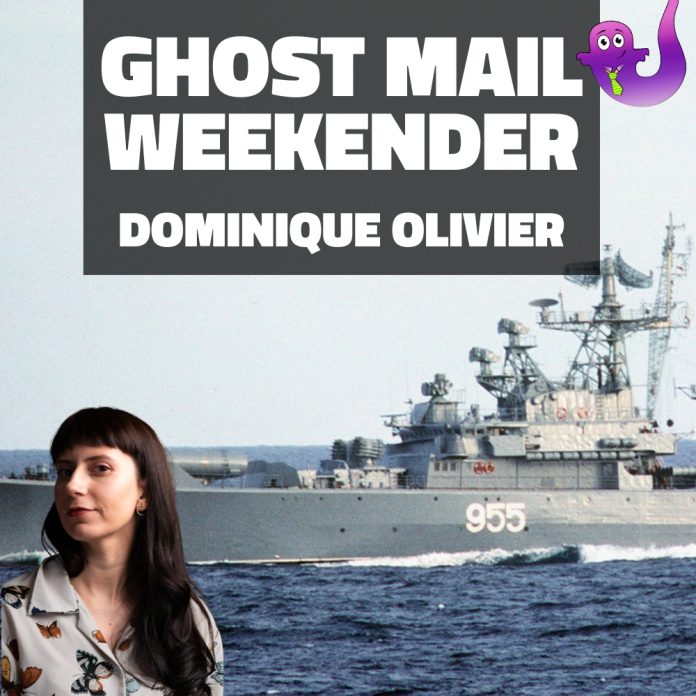
So in the spring of 1989, through a joint venture with a Norwegian company, Pepsi took some of it off their hands: 17 submarines at around $150,000 apiece, plus a cruiser, a frigate and a destroyer.
Somewhere in Atlanta, a Coca-Cola executive presumably read a headline and choked on his coffee. The cola wars, it seemed, had gone naval.
It’s a fun joke, but before you picture a flotilla of warships with Pepsi logos painted on the side, be aware that none of it was fit for service. The submarines were old diesel boats that had already been retired, and the three surface ships had been decommissioned. The whole lot was destined for the breaker’s yard, and everyone knew it. When the deal first made the New York Times in an opinion column in May 1989, the scrapping was mentioned in the very same breath as the purchase.
Pepsi probably never even laid eyes on its fleet. The ships most likely went straight from the Soviet navy to the scrapyard, which then paid Pepsi. The Soviets settled their soda tab, Pepsi got its money, and nobody with a forklift license had to learn how to steer a submarine.
A year later, the arrangement got even bigger. The Soviets still didn’t have any money, but they did have shipyards. So in 1990, Pepsi signed a deal worth more than $3 billion, which was the biggest ever between an American company and the USSR. This time, instead of handing over old warships, the Soviets would build brand-new oil tankers and cargo ships, which Pepsi would sell or rent out on the international market. The money would pay for more bottling plants and, rather whimsically, a Pizza Hut in Moscow.
Then, in 1991, the Soviet Union ceased to exist. Kendall later pointed out (with what I imagine was a weary sigh) that Pepsi now held a multibillion-dollar contract with a country that was no longer there.
Technically there was never really a “Pepsi Navy”. Pepsi was less an admiral than a middleman, with its name on the paperwork somewhere between a navy and a scrapyard. But for a brief, surreal moment, a company that sold caffeinated sugar water owned (on paper at least) a fleet roughly the size of India’s, which at the time was the seventh-largest in the world.
Who’s running the show?
It’s easy to tell these stories as if the companies were the main characters. Pepsi did a deal with the Soviets. NVIDIA answers to Washington. But companies don’t shake hands with presidents; people do.
Pepsi got into the Soviet Union because of Donald Kendall, the man who put a paper cup in Khrushchev’s hand, promised Pepsi’s legal business to whichever law firm gave Nixon a job, and spent the next three decades cultivating a friendship that proved useful to both men.
NVIDIA, on the other hand, should technically have been fine without Jensen Huang. The company’s succession planning is now famously poor, but there was still an interim CEO supported by a seasoned leadership team and a growth forecast most companies would kill for.
The board said, quite firmly, that he wasn’t coming back. Then along came the call from the US government.
So what exactly was Washington protecting?
NVIDIA as a matter of national importance to prevent China and other AI competitors from getting ahead?
Huang himself as the face of America’s lead in AI, a man with the president’s ear (and, as it turned out, the president’s public support) and a rockstar level following in Silicon Valley?
Two weeks earlier, his personal life had been a potential national security risk. Now he’s apparently too important to lose.
Kendall needed Nixon to get Pepsi into Moscow. Huang, it seems, needed Washington to get back into his own company. At what point does a CEO stop being just a CEO, and start being part of foreign policy?
About the author: Dominique Olivier


Dominique Olivier uses her love of storytelling and ideation to help brands solve problems.
Her first book, Lessons from Loss, has been published by Penguin Random House.
She is a weekly columnist in Ghost Mail and collaborates with The Finance Ghost on Ghost Mail Weekender, a Sunday publication designed to help you be more interesting.
You can learn more about her work at dominiqueolivier.com and she can be reached on LinkedIn here.